Heat, drought and wildfires cut European crop forecasts
Extreme heat, prolonged drought and wildfires are reducing forecasts for European grains, oilseeds, vegetables, grapes and olives. Spain expects grain production to fall to just over 18.5 million tonnes in 2026-2027, while the EU has lowered its outlook for several summer crops.
Summer crops bear the heaviest pressure
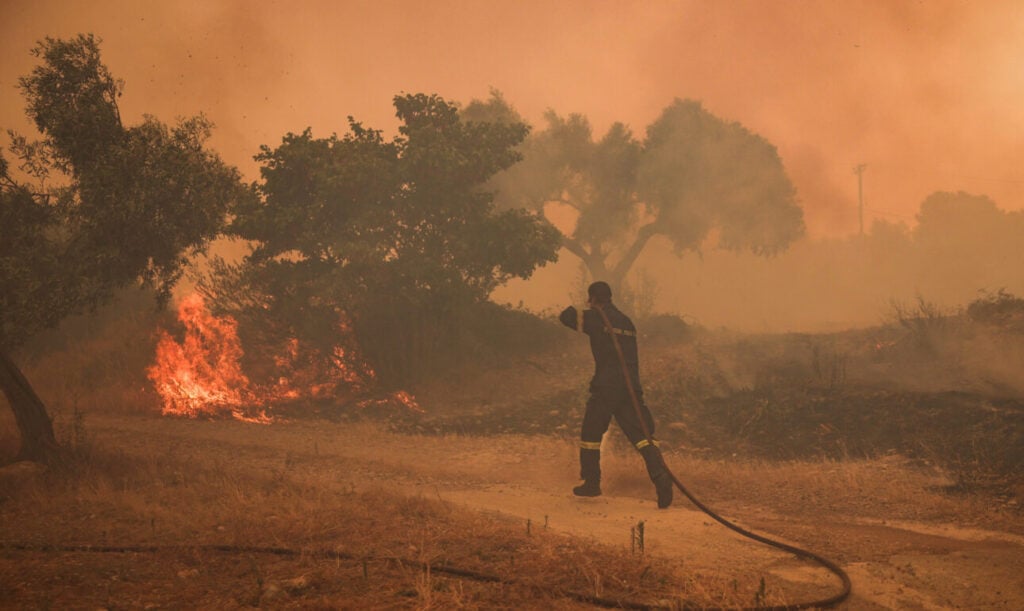
Extreme heat, prolonged drought and wildfires are cutting agricultural output across Europe, raising concern over food prices in the coming months. Protagon, citing reporting by The Guardian, said the effects were already visible in corn, other grains, vegetables, vineyards and olive groves. Summer crops face the greatest immediate risk because water shortages, low soil moisture and high temperatures are hitting plants during flowering.
The European Union has reduced its estimates for several crops. Sunflower output is now expected to be 7% lower and corn production 6% lower, while forecasts for potatoes and soybeans have been cut by 3%. Winter grains are still producing satisfactory yields in several areas, but repeated heatwaves have reduced the size and quality of grain.
Spain’s Agriculture Ministry forecasts the country’s grain harvest at just over 18.5 million tonnes in 2026-2027, down from 24 million tonnes. The estimate was issued before the major wildfires. Spanish farmers have adopted more resilient varieties and extensive irrigation, but the weather continues to constrain production.
Vegetables, vineyards and olive groves report losses
In France, the growers’ association Légumes de France said thousands of tonnes of vegetables worth tens of millions of euros had been lost. Lettuce, carrots, leeks, garlic and onions are among the affected products, with output in some crops expected to decline by as much as 50% because of insufficient rainfall.
Heat is also accelerating vineyard development in Champagne, Bordeaux and Burgundy. Champagne’s grape harvest is expected to begin around 15 August, about one month earlier than several decades ago. Production in the region is forecast to be approximately 10% below last year’s level.
Spain’s ASAJA agricultural organisation reported fire damage to orchards, vineyards, greenhouses and olive groves, affecting citrus fruit, avocados, almonds and vegetables. Water shortages and extreme temperatures have also reduced tomato and corn production. In Greece, Italy and Portugal, fires have damaged olive groves, while smoke, ash, poorer air quality, insects and disease are affecting surviving trees and limiting fruit growth.
Food markets face uneven supply risks
Olive oil producers expect renewed market pressure. International prices had eased after their sharp rise two years ago, but retail prices remain high and are already increasing again. Market participants expect further gains from autumn if extreme weather persists and production declines.
Britain is also dealing with drought-reduced domestic harvests. Importers are relying more heavily on Spain and other suppliers for products including lettuce and broccoli, while British farmers have warned of possible shortages. Spain’s own crop losses could therefore tighten the pool of produce available to the British market.
The outlook is not uniformly negative. Increased rainfall has improved conditions in Romania, while Italian wheat production has shown greater resilience. Turkey’s cool and wet spring produced particularly high winter-grain yields, and Italy and Romania are expected to record stronger wheat and corn results than in previous years. These gains may partly offset losses elsewhere, but they do not remove the pressure on vegetables, summer grains and olive oil in the most severely affected regions.