Heartland Wines enters administration with debts reported near A$3.6 million
South Australia’s Heartland Wines has entered voluntary administration, with reported debts of nearly A$3.6 million. The failure adds to evidence of a widening downturn in Australia’s wine industry and raises fresh concerns for suppliers, distributors and export partners.
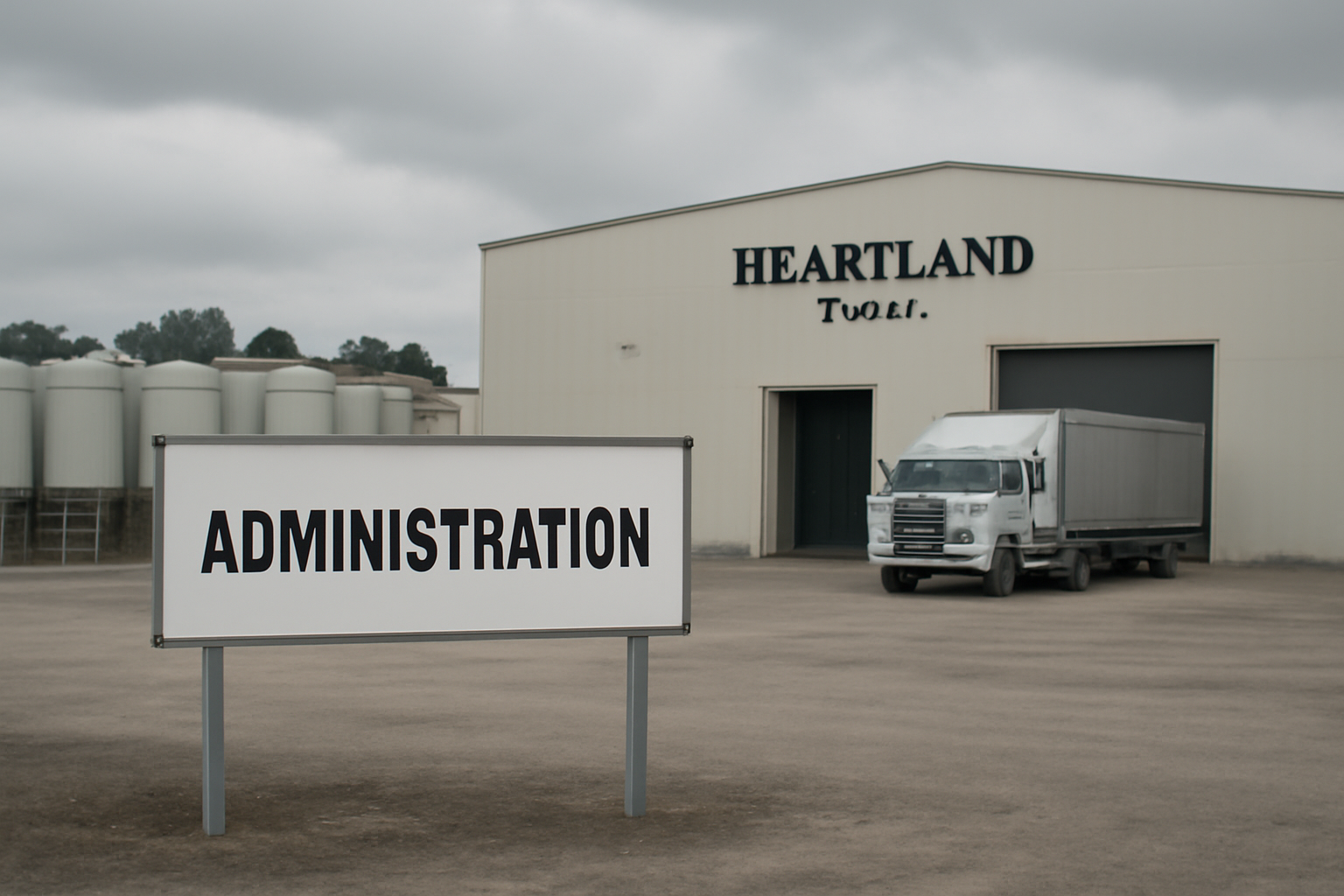
Heartland Wines enters administration
South Australia’s Heartland Wines has entered voluntary administration, becoming the latest producer affected by the downturn spreading through Australia’s wine industry. Reports place the company’s debts at nearly A$3.6 million, although one headline described the collapsed wine label as a A$3.1 million business. The available reports do not explain the difference between those figures.
The administration places the future of the wine label and its obligations under external review. No information has been provided about production volumes, vineyard holdings, employee numbers, export destinations or the identity of major creditors. The reports also do not state whether Heartland Wines will continue trading during the process or whether a buyer is being sought.
Failure adds pressure across the supply chain
For the wine trade, the case matters beyond one South Australian label. A producer entering administration can affect grape growers, packaging companies, logistics providers, distributors and importers that depend on scheduled deliveries or outstanding payments. The size and distribution of Heartland Wines’ liabilities have not been disclosed, so the direct exposure of those counterparties remains unclear.
Importers and distributors carrying the company’s wines will need to monitor product availability and continuity of supply. Any interruption could require replacement purchases from other Australian producers or competing origins. Exporters supplying Heartland Wines with bottles, closures, labels or other physical inputs may also face delayed orders or payment uncertainty, although the reports identify no individual supplier.
The timing is significant because the collapse is being presented as part of a broader Australian wine crisis rather than an isolated corporate event. The source headlines describe an industry being decimated and point to a fading domestic relationship with wine. They provide no national figures for consumption, exports, inventories, grape prices or the number of other insolvencies, preventing a direct measurement of the wider contraction.
Trade implications depend on the administration process
Heartland Wines is based in South Australia, a state closely associated with Australian wine production and international sales. However, the available material does not identify which countries buy the company’s products or how much of its business depends on exports. It is therefore too early to quantify the effect on any individual overseas market.
The immediate trade issue is contract performance. Importers may need confirmation that existing orders will be produced and shipped, while suppliers will want clarity about unpaid invoices and future purchasing. Distributors may also have to decide whether to preserve shelf space for the brand or redirect it to labels with more predictable supply.
Administration does not by itself establish the final outcome for the company. The reports provide no details about restructuring proposals, asset sales or liquidation. Until administrators disclose the creditor position and trading plan, the reported debt of nearly A$3.6 million remains the main financial measure available to the market.
A warning for Australian wine counterparties
Heartland Wines’ collapse gives buyers and suppliers another reason to examine counterparty risk in the Australian wine sector. Importers will be watching delivery schedules, inventory coverage and payment terms, while exporters and service providers will focus on credit exposure. Without additional financial or trade data, the broader impact cannot yet be calculated, but the administration shows that the industry downturn is reaching established South Australian labels.