Hanwha Qcells and Posco Plan Korean Agrivoltaics Supply Chain
Hanwha Qcells and Posco have signed an MOU to expand agrivoltaic projects and develop a domestic industry ecosystem in South Korea. The companies plan a joint package combining purpose-built solar modules and support structures, followed by a broader alliance covering finance, equipment, construction and electricity sales.
Companies sign agrivoltaics agreement
Hanwha Solutions’ Qcells division, known as Hanwha Qcells, and Posco have agreed to cooperate on expanding agrivoltaic projects in South Korea and developing a domestic industrial ecosystem around the sector. The companies said they signed a memorandum of understanding on the 17th.
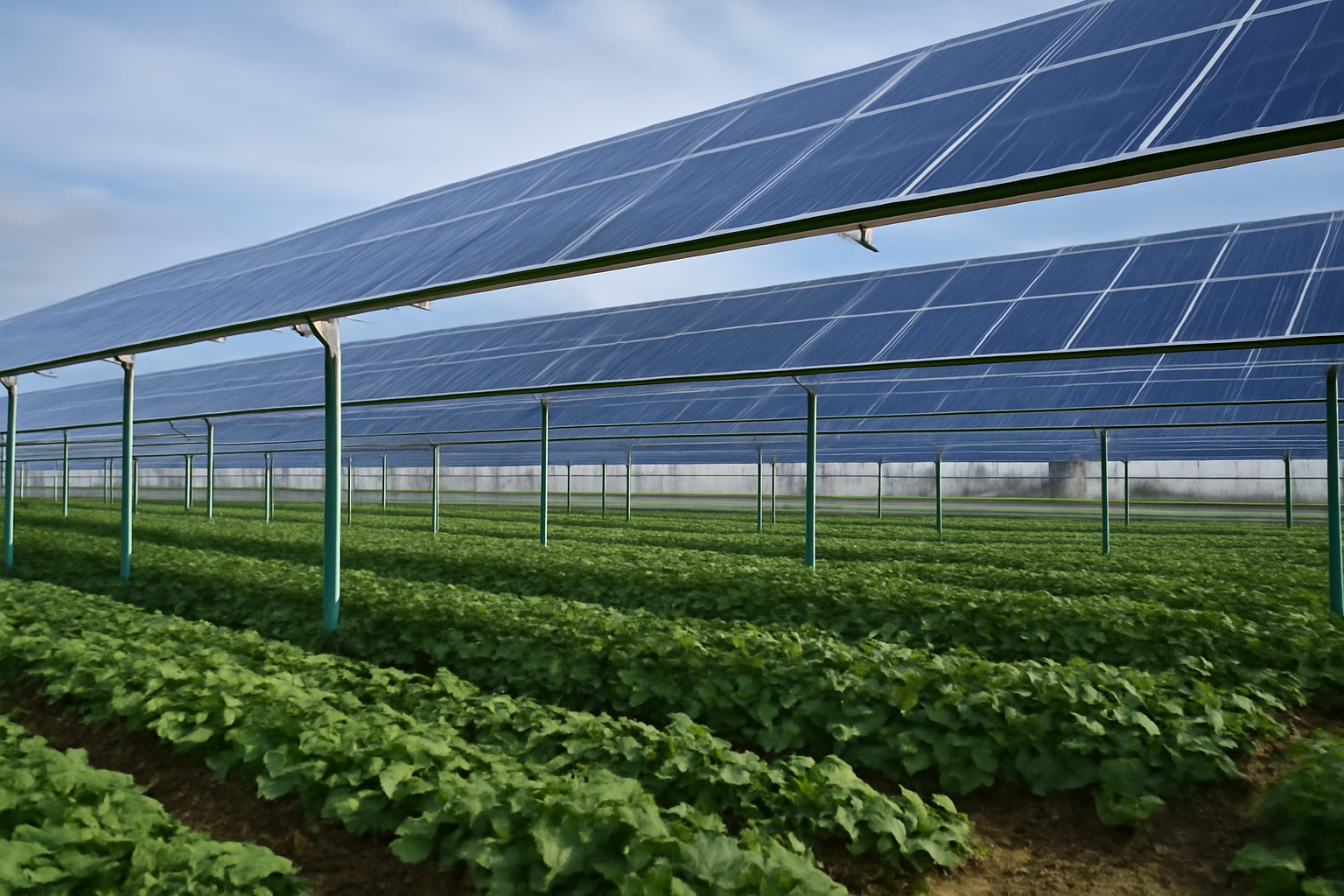
The initiative centers on solar installations designed to operate alongside farming. Unlike a conventional ground-mounted solar project, an agrivoltaic system must accommodate continued agricultural activity. That requirement makes the relationship between the modules, their supporting structures and the farm site central to project design.
The agreement brings together Hanwha Qcells’ solar-module business and Posco’s role in the development of structural components. Their immediate objective is to jointly develop a package of photovoltaic modules and underlying support structures optimized for agrivoltaic applications. The announcement did not disclose planned investment, production capacity, project locations or a timetable for commercial deployment.
Package approach targets project coordination
Combining modules and structures in one package could give developers a more coordinated equipment proposition for farm-based projects. The design of the supporting system determines how panels are positioned above or around cultivated land, while the module configuration affects the electricity-generating portion of the installation. The partnership therefore addresses two closely connected physical components rather than offering them separately.
The companies have not yet provided technical specifications for the planned package. No module output, structural dimensions, material volumes or expected generation figures were included in the announcement. It also remains unclear whether the partners will manufacture every component directly or work with additional suppliers as the program develops.
For equipment manufacturers and engineering companies, the commercial significance will depend on whether the joint package moves from development into repeatable projects. A standardized offering could make procurement and construction easier to coordinate, but each agricultural site may still impose different requirements. The absence of disclosed project volumes means the initial impact on demand for modules and structural materials cannot yet be quantified.
Domestic alliance to cover the wider value chain
Hanwha Qcells and Posco also plan to form an alliance among South Korean companies. According to their outline, the future group would cover financing, equipment, construction and electricity sales. This broadens the initiative beyond hardware development and recognizes that agrivoltaic projects need capital, engineering and construction services, as well as a route to market for the power produced.
The proposed alliance could create opportunities for domestic suppliers across several stages of project delivery. Its practical reach, however, will depend on which companies participate and how responsibilities are allocated. No alliance members beyond Hanwha Qcells and Posco were named, and the companies did not announce specific financing products, construction contracts or power-purchase arrangements.
The MOU establishes a framework for cooperation rather than a completed supply chain. The next indicators for the market will be technical details of the module-and-structure package, the addition of financial and construction partners, and the identification of operating projects. Until those elements are announced, the agreement is best viewed as an effort to organize Korean capabilities around agrivoltaics and create a domestic route from equipment development to electricity sales.