Hail Damage Set to Keep More Than 5,000 Tonnes of Belgian Apples Off Supermarket Shelves
More than 5,000 tonnes of Belgian apples risk going unsold this season because hailstones left marks on the skin of the fruit. The apples are unaffected in taste and storage quality but fall short of the cosmetic requirements supermarkets apply to fresh produce. The country's fruit growers' organisation has criticised the standards.
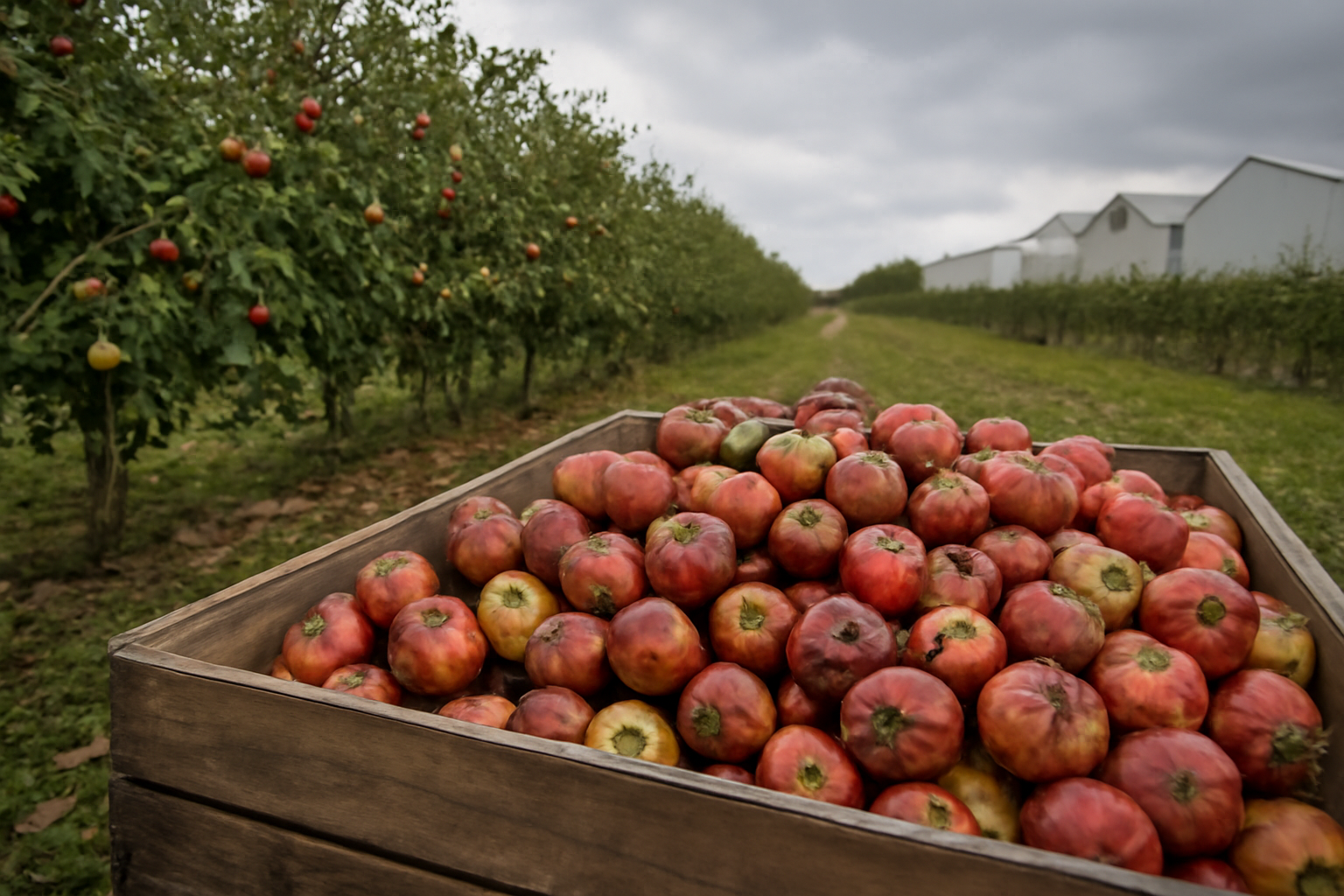
More than 5,000 tonnes of Belgian apples risk going unsold this season because hail has left marks on the skin of the fruit, putting it outside the cosmetic requirements supermarkets apply to fresh produce, the country's fruit growers' organisation says.
The damage is on the surface only. Hailstones struck the apples during the growing season and the resulting scars and spots are still visible at harvest, but the flavour, the sugar content and the keeping quality of the fruit are not affected. What the marks do affect is the grade: retail specifications for fresh apples are built largely around appearance, and blemished fruit is pushed out of the top class regardless of how it eats.
Appearance decides the grade
Fresh apples sold through supermarket chains are bought against a narrow set of visual criteria — colour, calibre, uniformity and the absence of skin defects. A hail scar is a permanent defect: it heals over as a rough, russeted patch and cannot be removed by grading, washing or storage. Sorting lines pick the fruit out, and once it falls below the class the retailer will take, it leaves the fresh channel entirely.
Hail is also a highly localised risk. A single storm cell can strip the commercial value of a crop in one municipality while orchards a few kilometres away are untouched. Losses of this kind are therefore concentrated on a limited number of growers rather than spread evenly across the sector, and the protection against them — anti-hail netting — is a capital investment that has to be made years before the storm arrives.
Where the rejected volume goes
Fruit that fails the fresh-market specification does not disappear from the season's balance sheet, but it moves into channels that pay far less. The usual outlets are:
- industrial processing — juice, concentrate, purée and compote;
- secondary fresh channels such as discount lines, direct farm sales and food aid;
- fruit left unpicked, where harvesting costs more than the volume can earn.
Processing demand is neither unlimited nor generous. Juice and concentrate lines buy on weight and sugar content rather than looks, and they pay a fraction of what the fresh market pays for top-class fruit. For an orchard that has budgeted the season around supermarket sales, redirecting several thousand tonnes into processing does not repair the revenue line.
The loss sits with the growers
The economics are unforgiving because the cost of the orchard year is incurred long before the hail falls. Pruning, thinning, crop protection, labour and packing-house handling are already spent by the time the fruit is graded. Processing prices recover only part of that, so the shortfall lands directly on grower margins in a season when the volume itself was there.
A volume of 5,000 tonnes is also too small to move the national market in the growers' favour: the supply withdrawn from supermarket shelves is not large enough to tighten prices for the apples that do qualify, so the affected producers get no offset from a firmer fresh market. That is the substance of the growers' organisation's complaint — the fruit meets every requirement that matters for eating and fails one that is purely visual. No breakdown of the affected volume by variety, region or share of the total Belgian apple crop has been published.