Guinea’s 7.2-Billion-Tonne Kalia Iron Ore Deposit Still Awaits Development
Guinea’s Kalia deposit contains an estimated 7.2 billion tonnes of iron ore but has yet to become an operating mine. Its potential is increasingly relevant after Simandou entered production in late 2025, following almost three decades of delays.
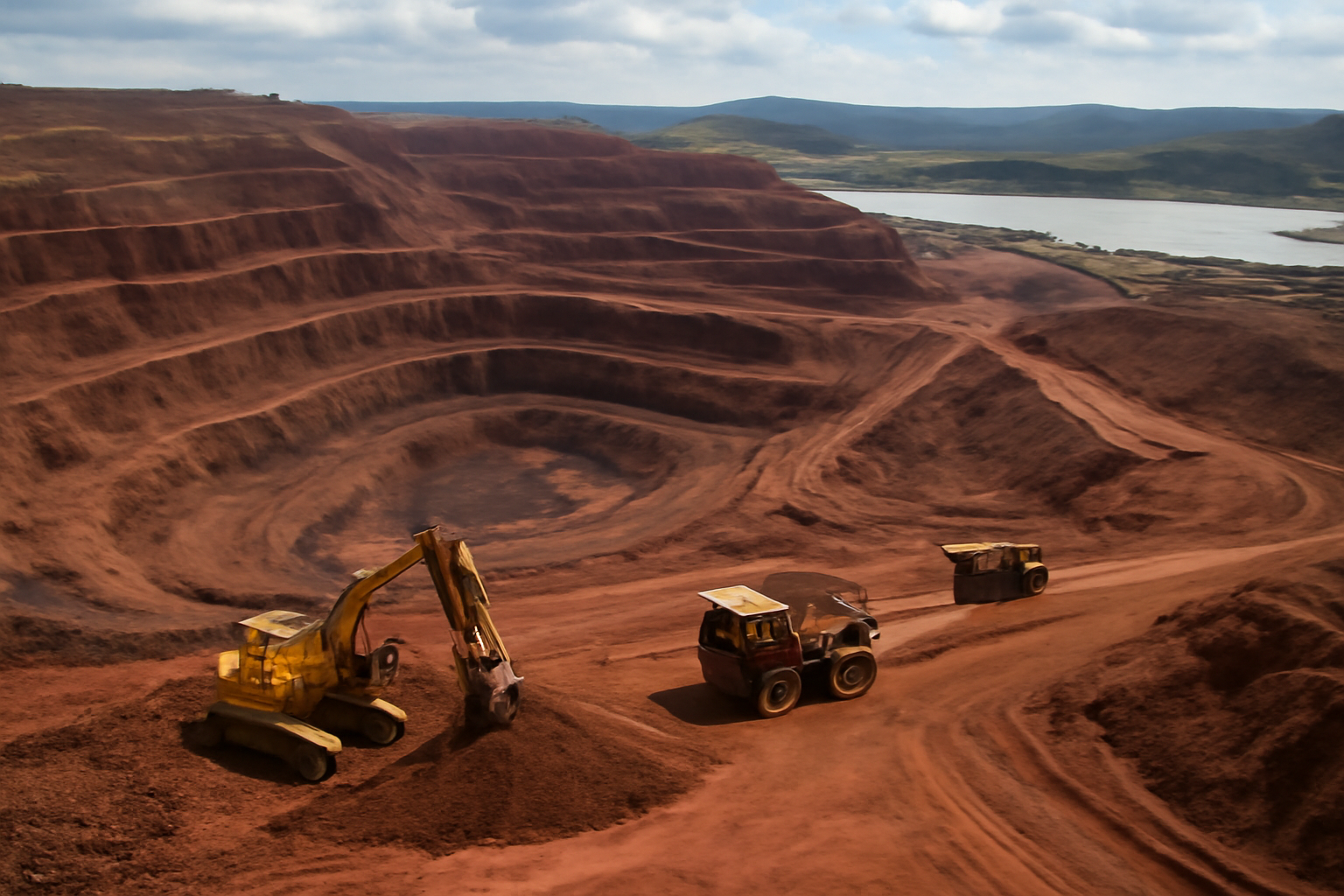
A major resource without an operating mine
Guinea’s Kalia iron ore deposit, estimated at 7.2 billion tonnes, remains undeveloped even as the country enters a new phase in its mining history. Agence Ecofin describes Kalia as a giant resource that is still waiting for its mine, highlighting the gap between geological potential and commercial production.
The available source material does not identify a current development schedule, planned production capacity, project cost or commissioning date for Kalia. It also does not specify which technical, financial or regulatory obstacles are responsible for the delay. For investors and potential customers, those omissions leave the project’s economic timetable and future place in the seaborne iron ore market uncertain.
A large resource estimate alone does not establish how much material can be mined economically. A future project would still need a defined mine plan, processing configuration and route to market. Financing decisions would depend on those elements, as well as the expected quality of the product and the project’s ability to deliver it reliably. Until such parameters are established, Kalia remains a significant resource rather than a confirmed source of supply.
Simandou provides a relevant comparison
Kalia’s status contrasts with Simandou, another major Guinean iron ore development. According to Agence Ecofin, Simandou entered production in late 2025 after almost three decades of waiting. That history illustrates how long the distance can be between identifying a major mineral resource and bringing it into production.
Simandou’s start does not automatically resolve the questions surrounding Kalia. The projects require their own commercial arrangements and development decisions. However, the arrival of production at Simandou changes the context in which Kalia will be assessed. Guinea is no longer viewed only as the location of large undeveloped iron ore deposits; it is now also a producing country through a project that had itself faced a prolonged path to operation.
For Kalia, the central issue is whether its resource can be converted into a bankable project with a credible development sequence. Market participants will need clarity on capacity, infrastructure access, capital requirements and product specifications before they can judge how much additional supply the deposit could eventually contribute.
Potential to broaden Guinea’s supply base
If developed, Kalia could complement Simandou and broaden Guinea’s role in global iron ore supply. A second large producing area would give the country a wider mining base and could offer buyers another source of material. The scale of the 7.2-billion-tonne estimate makes the deposit strategically notable, but the effect on trade would depend on annual output rather than the headline resource figure.
The timing would matter as much as the size. New iron ore supply affects producers, traders and importers only when production volumes, product grades and delivery schedules become visible. Without those details, it is too early to estimate Kalia’s possible share of Guinea’s exports or its impact on international prices and competing suppliers.
Development evidence is the next test
The next meaningful signals would be concrete project milestones: a defined development plan, financing, infrastructure arrangements and a timetable for construction and production. The source material provides none of these for Kalia, so any forecast of first output would be speculative.
Simandou demonstrates both Guinea’s iron ore potential and the patience required to realize it. Kalia’s estimated 7.2 billion tonnes give it scale, but its commercial importance will be determined by execution. Until development commitments emerge, the deposit will remain an option for future supply rather than an active competitor in the global market.