ATAM says Guatemalan sugar is entering Mexico as contraband through Veracruz
The Asociación de Técnicos Azucareros de México (ATAM) says sweetener from Guatemala is infiltrating the Mexican market through customs-evasion schemes, with Veracruz identified as one of the operating points. The association, cited by Imagen de Veracruz, frames the flows as a destabilising factor for the national sugar industry. No volumes, values or company names were disclosed in the report.
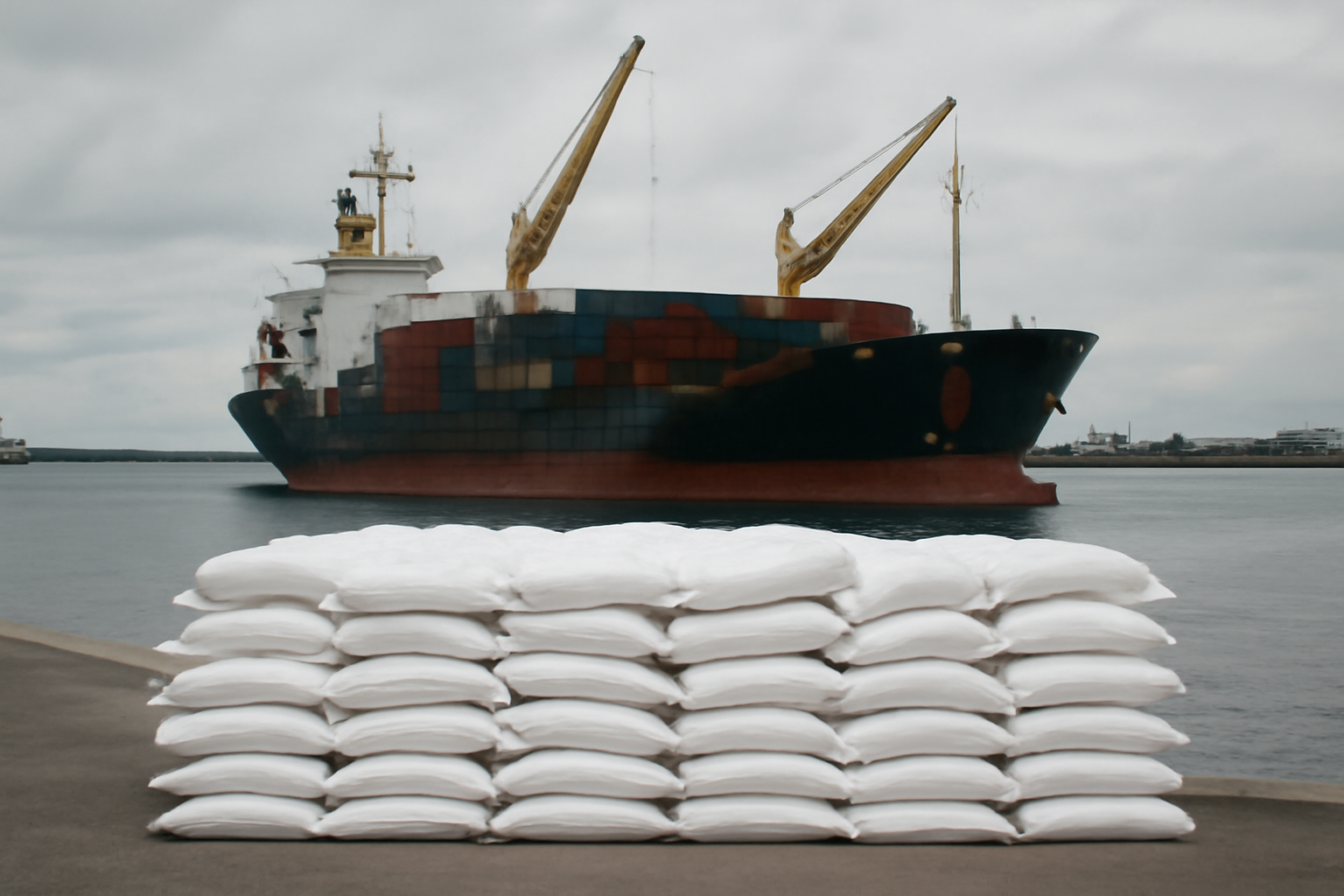
Contraband sugar from Guatemala is entering Mexico through customs-evasion schemes and is destabilising the domestic sugar industry, according to the Asociación de Técnicos Azucareros de México (ATAM), cited by the Veracruz newspaper Imagen de Veracruz. The association identifies Veracruz, the heart of Mexican cane growing and milling, as one of the points where the operations take shape.
What the industry group alleges
Imagen de Veracruz reports that ATAM describes an infiltration of sweetener from Guatemala into the Mexican market through schemes built to evade customs controls. The association presents the issue as a structural threat to the national industry rather than an isolated smuggling case. Sugar that crosses the southern border outside the formal import regime pays no duty, carries no documented origin and leaves no verifiable sanitary or quality record.
The report does not quantify the volumes involved, nor does it name the companies or individuals allegedly behind the operations. ATAM's central claim concerns the effect: once undeclared product reaches wholesale channels, it circulates at prices that legally imported or domestically produced sugar cannot match, because a significant part of the formal cost base — tariffs, taxes, documentation and compliance — is simply absent.
The Veracruz route
Veracruz is Mexico's largest sugarcane state and concentrates a substantial share of the country's mills, alongside Gulf coast port infrastructure and the highway corridors that link the south-east with central Mexico. That combination makes it both the region most exposed to price disruption and, in ATAM's account, a practical node for moving product that entered the country irregularly. For mills and cane growers in the state, undeclared sugar competes directly with output already committed to domestic buyers.
What it means for the domestic market
- Price formation: undeclared sugar sets a reference price disconnected from production costs, pressuring wholesale quotations in the regions where it lands.
- Mills and growers: lower realised prices feed straight into cane payments, since grower income in Mexico is tied to the value of the sugar produced from their cane.
- Formal importers and traders: operators that import under the applicable rules and pay duties lose ground to volumes that carry none of those costs.
- Traceability: product without documented origin cannot be followed through the supply chain, which matters for industrial buyers with sourcing and food-safety requirements.
ATAM's statement, as reported by Imagen de Veracruz, is a call for customs and enforcement attention rather than a trade-policy complaint against Guatemala, a significant sugar exporter in Central America that sells into multiple markets through legal channels. The distinction matters for the industry: the dispute is with the evasion mechanism, not with imports as such. Without published figures on detected or seized product, the scale of the problem remains an open question for Mexican producers, industrial sweetener buyers and the authorities that would have to act on it.