Guan Chong forecasts global cocoa deficit of up to 400,000 tonnes in 2026/27
Guan Chong expects the global cocoa market to shift from an estimated surplus of about 100,000 tonnes in 2025/26 to a deficit of 300,000-400,000 tonnes in 2026/27. The Malaysian processor cites crop risks from a strengthening El Niño and stabilising demand, although other analysts continue to forecast a smaller surplus.
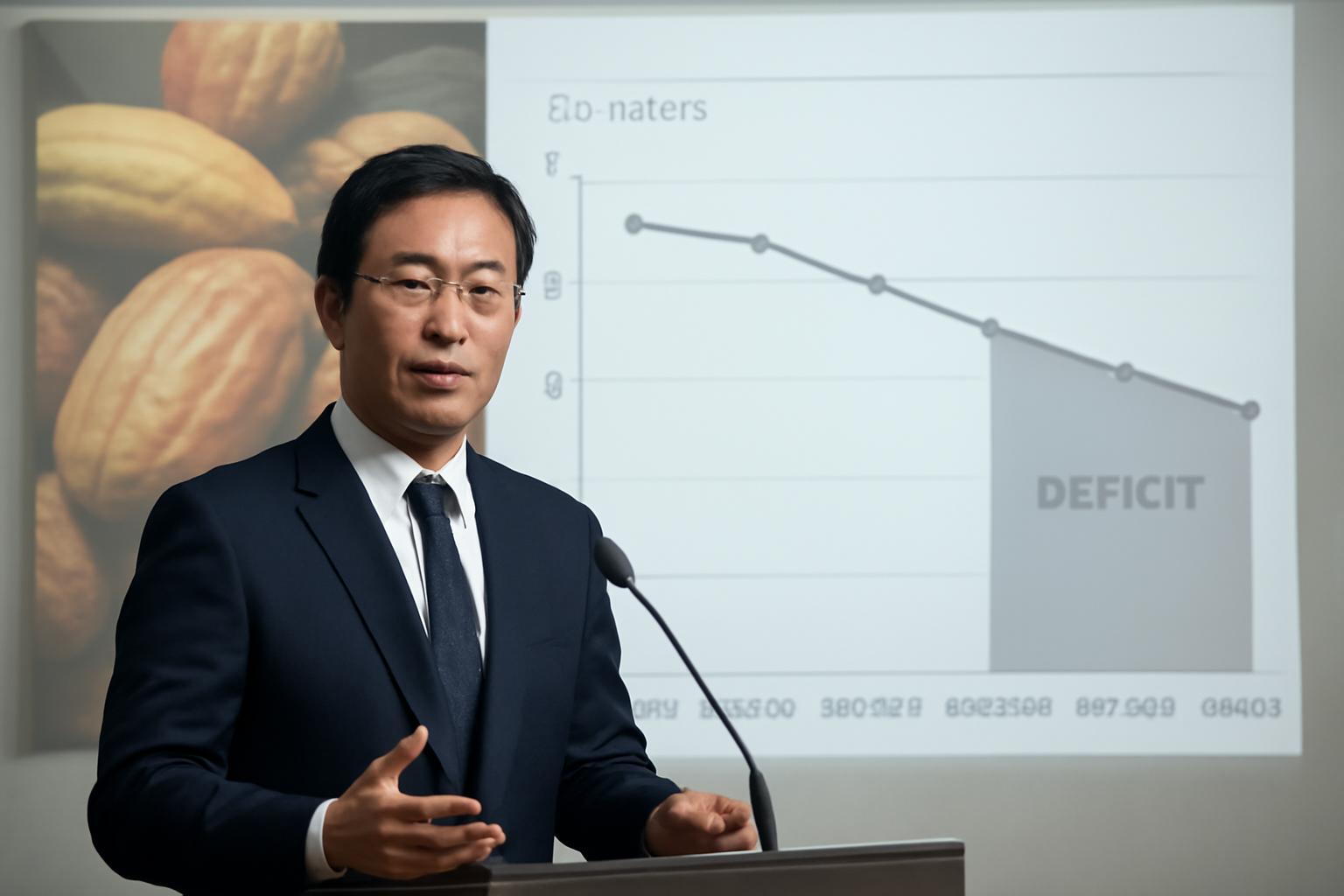
Processor expects the market to return to deficit
The global cocoa market could face a supply deficit of 300,000-400,000 tonnes in the 2026/27 season as El Niño threatens crops in major growing regions, according to Guan Chong Bhd. The Malaysian company is Asia’s largest cocoa processor and the world’s fourth-largest bean grinder.
Chief executive Brandon Tay Hoe Lian presented the forecast in an interview with Bloomberg on the sidelines of the CAA International Cocoa Conference in Singapore. He compared the projected shortage with an estimated surplus of about 100,000 tonnes in 2025/26. If realised, the reversal would produce the first global deficit in three years.
The forecast comes after a highly volatile period for cocoa. The market is expected to record a second consecutive annual surplus after three straight deficits caused by poor harvests in West Africa, the principal source of the world’s cocoa beans. Those earlier shortages drove New York cocoa futures to a record above $11,000 a tonne in late 2024.
El Niño creates risks across producing regions
Tay identified strengthening El Niño conditions as the central threat to the 2026/27 balance. In West Africa, excessive rainfall, waterlogged farms and disease are already creating pressure. El Niño could subsequently intensify the dry Harmattan later in the season, adding another source of risk for yields and bean availability.
The weather threat is not confined to West Africa. Production in other important growing regions could also be affected if El Niño disrupts rainfall. This broad exposure matters for processors and chocolate manufacturers because a simultaneous decline across several origins would leave fewer alternatives for replacing unavailable beans.
Demand is the second part of Guan Chong’s assessment. Tay expects cocoa demand to continue stabilising after the contraction associated with the previous price surge. A recovery in grinding while production weakens would consume the cushion created by the 2025/26 surplus and could tighten the availability of beans for processors. He projected that cocoa futures could reach about $8,000 a tonne by December.
Private forecasts remain sharply divided
Guan Chong’s call is more bearish on supply than several other private forecasts. Analysts at BMI, Hedgepoint Global Markets and StoneX continue to expect a surplus in 2026/27, although they anticipate a smaller excess than in the previous season. The disagreement therefore concerns not only the scale of the tightening but whether global production will exceed processing demand at all.
For producers, a deficit and higher futures prices could improve revenue prospects, subject to local pricing systems and actual crop volumes. For grinders and chocolate manufacturers, the same scenario would increase raw-material costs and make access to beans more competitive. Traders and investors will consequently watch rainfall, disease pressure, West African harvest development and grinding data to determine whether the projected 300,000-400,000-tonne deficit is taking shape or whether the smaller-surplus forecasts prove more accurate.