Grower exodus deepens Riverland wine crisis before another difficult vintage
Wine-grape growers are leaving South Australia’s Riverland as low prices and persistent oversupply undermine vineyard economics. The contraction is reducing regional capacity, but it may also help bring grape supply closer to weak demand.
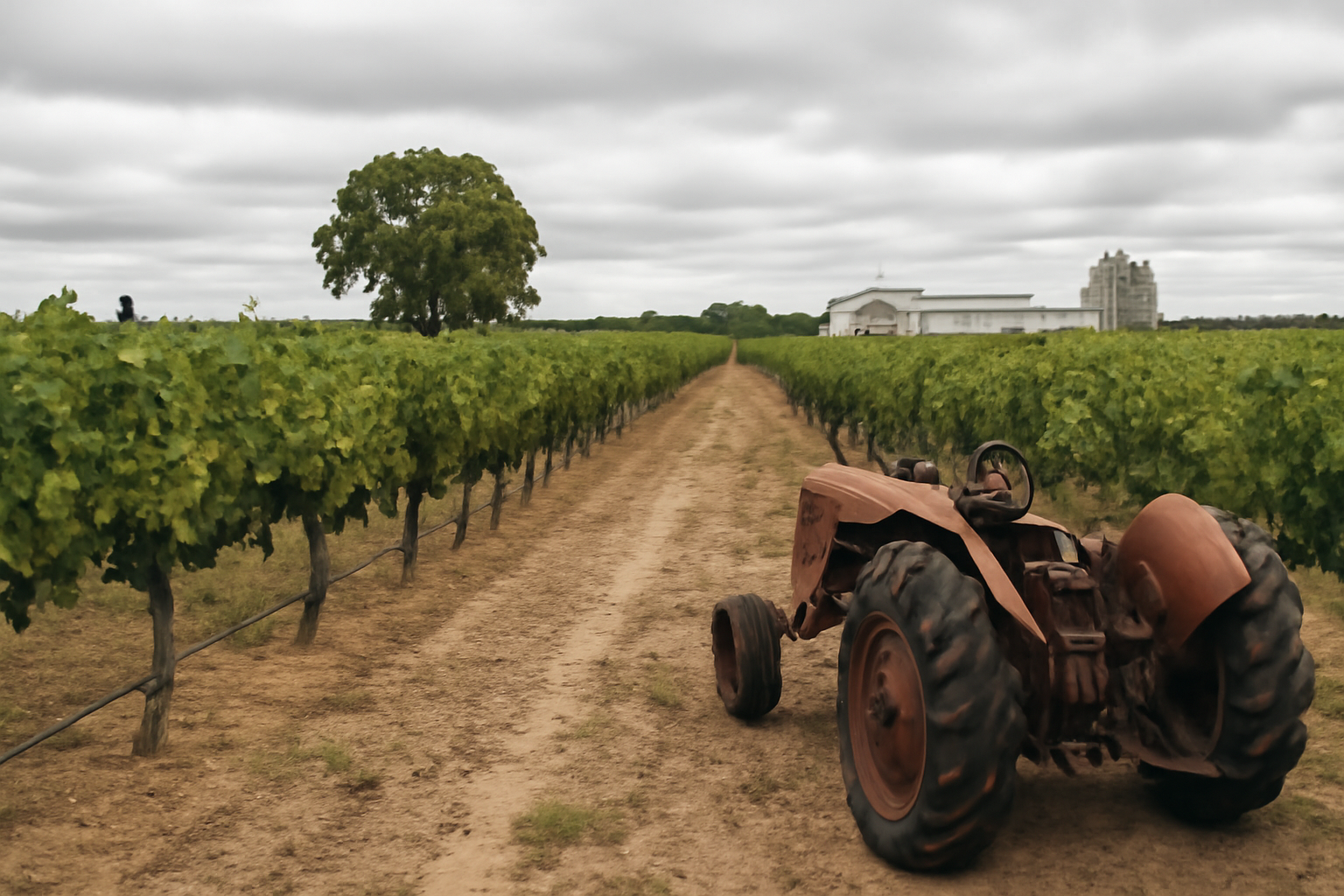
Growers leave as another difficult vintage approaches
South Australia’s Riverland wine industry is heading into another difficult vintage as grape growers abandon vineyards or prepare to leave the sector. The Chronicle reports that the exodus is intensifying in a region already struggling with weak grape demand and depressed returns. The departures threaten to reduce vineyard capacity and reshape the grower base in one of Australia’s most important bulk-wine production areas.
The pressure is visible in the latest harvest figures. The Murray Pioneer reported that the Riverland produced 339,195 tonnes of wine grapes in 2026, down 16% from 2025 and 25% below its five-year average. Australia’s national crush fell to 1.27 million tonnes, the smallest vintage since 2000 and 25% below the 10-year average. South Australia nevertheless remained the country’s largest wine-producing state.
Prices remain below production costs
For many growers, the immediate problem is the gap between grape prices and the cost of maintaining a vineyard. Riverland Wine said early indications for the 2026 vintage put Shiraz prices at A$80-A$120 per tonne, while production costs exceeded A$350 per tonne. White-grape prices had also fallen. At those levels, harvesting additional fruit can increase losses rather than generate cash for debt service, machinery, irrigation and vineyard maintenance.
The imbalance has developed over several vintages. ABC News reported in 2024 that some Riverland wineries were offering as little as A$120 per tonne when estimated production costs were about A$300 per tonne. A Riverland Wine survey conducted in 2023 found that 20% of local growers were considering leaving within the following few years. The industry body later warned that wineries did not expect grape demand or prices to improve for the 2026 vintage because Australia and the wider global market still carried a substantial wine surplus.
China’s tariffs on Australian wine contributed to the earlier accumulation of red-wine stocks, while changing consumer habits and difficult global market conditions added pressure. Although trade conditions can improve, vineyard supply cannot adjust quickly without financial consequences. Vines require continuing expenditure even when grapes cannot be sold profitably, while removal and conversion to other crops require capital.
Exit plans could accelerate vineyard restructuring
Previous attempts to manage Riverland capacity show how difficult an orderly contraction can be. In 2024, Riverland Wine proposed a government-funded package paying A$4,000 per hectare to remove as much as 3,000 hectares of vines. Accolade Wines separately offered members of the CCW Co-operative A$4,000 per hectare to buy out red-wine grape contracts, reduce supply agreements from 15 years to 10 years and cut accepted volumes by 20%. ABC News reported that growers rejected the proposal by 314 votes to 17.
Riverland Wine has since called for support both for growers who want to remain and for those seeking to leave. Its proposals include assistance with vineyard removal, business adaptation and the risks created by abandoned blocks, including biosecurity problems and declining land values. The industry body has also encouraged producers to assess alternative crops and align vineyard output more closely with winery demand.
The grower exodus will reduce grape availability for processors, but lower capacity alone will not guarantee higher prices. Wineries still face surplus inventories and uncertain consumption, while growers who remain must carry fixed costs across a smaller and potentially more volatile market. For Riverland businesses, the central issue is whether vine removals occur through a coordinated transition or through unmanaged abandonment. That distinction will determine how much productive land, infrastructure and specialist knowledge remain when wine demand eventually stabilises.