Greek yogurt strengthens Greece’s food-export position as foreign demand rises
Foreign demand for Greek yogurt is driving sales, exports and profits for Greece’s dairy industry. Producers are reinvesting in production capacity, while the product’s growing commercial value is intensifying calls for stronger protection of its Greek identity.
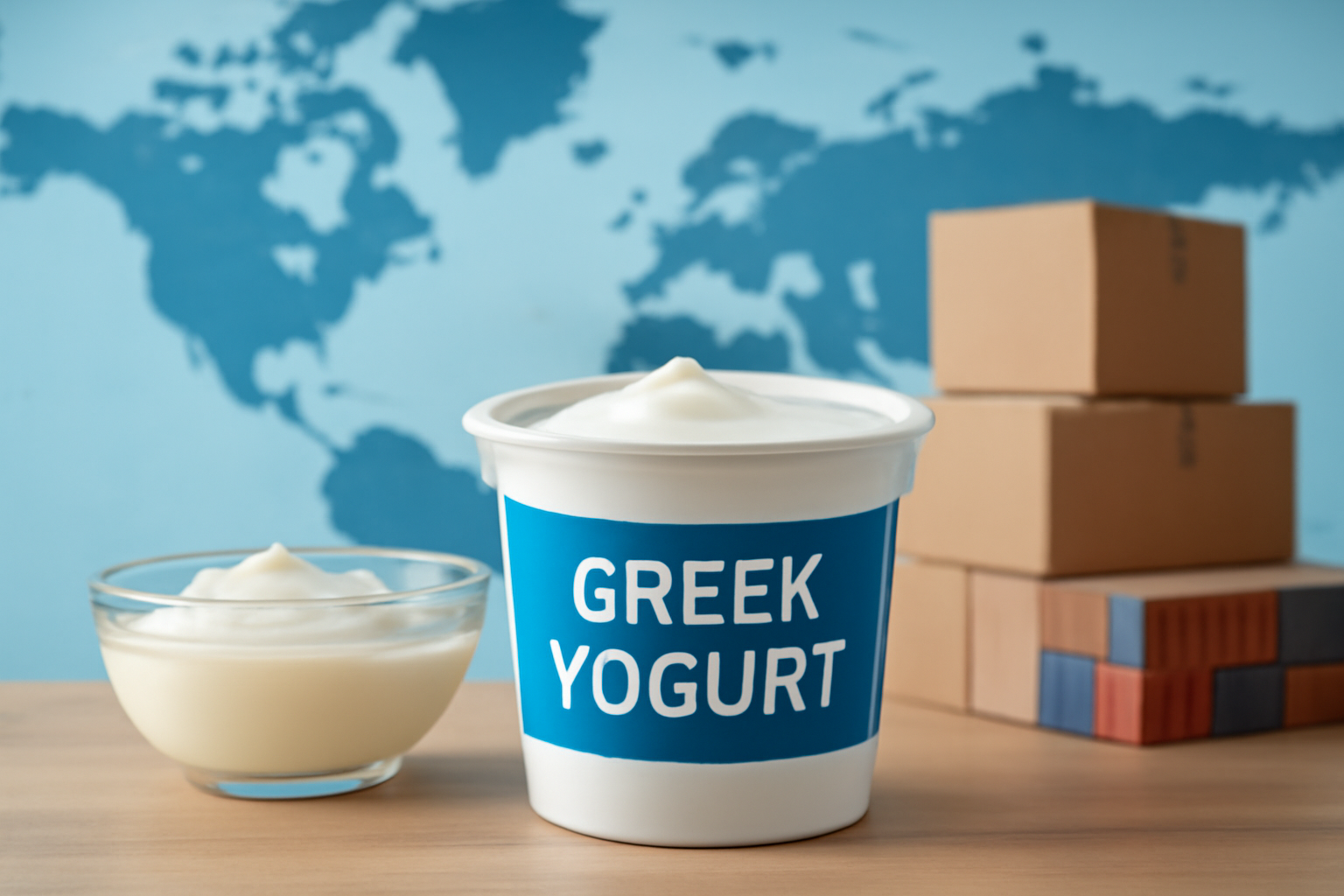
Foreign demand lifts the dairy sector
Greek yogurt has become an increasingly valuable export product for Greece’s dairy industry as demand in foreign markets reaches unprecedented levels, according to Greek business publication OT. Sales are rising from year to year and month to month, widening export activity and supporting higher profits for domestic producers.
The product sold internationally as Greek yogurt is the familiar strained yogurt associated with Greece. Its recent performance reflects a sustained commercial effort rather than a sudden change in consumer preferences. OT reports that the industry spent years investing in production, building positions in foreign markets and maintaining an export presence before the product secured its current place on international retail shelves.
Producers reinvest in capacity
Major Greek dairy companies are responding to the growth by directing profits back into production. Their projects include upgrading and expanding existing production lines as well as opening new factories. The investments indicate that producers expect overseas demand to remain strong and are preparing capacity before further market growth materializes.
Greek yogurt has also benefited from the international shift toward foods associated with high nutritional value and health claims. It entered that trend with an established identity and recognizable quality characteristics that could be marketed abroad. This combination has allowed Greek companies to compete through product value, origin and differentiation instead of relying solely on high production volumes.
For Greece’s wider food industry, the yogurt category offers a model for developing export products that can command higher prices. The experience suggests that long-term investment and consistent work in foreign markets can turn a domestic food into an internationally recognized category. It also underlines the importance of connecting manufacturing investment with a clear product identity rather than treating exports simply as an outlet for surplus production.
Commercial success raises protection issue
Growth has created a parallel challenge. As the commercial value of Greek yogurt increases, producers outside Greece have a stronger incentive to benefit from its Greek identity. OT says an initial level of protection already prevents yogurt not produced in Greece from being presented as Greek yogurt in the European market. The publication argues that pressure for organized protection of the name must continue at European level.
The issue now extends beyond branding. Sales, capital expenditure, factories and jobs are tied to the product’s identity. If the name is used broadly for products without a Greek production link, Greek manufacturers could lose part of the premium built through years of investment and overseas market development.
Stronger protection would therefore affect manufacturers, dairy suppliers, retailers and investors across the value chain. For Greek producers, the priority is to preserve the link between the name and origin while continuing to expand capacity and distribution. For policymakers, the category demonstrates how quality, investment and a stable export presence can support international growth for other foods associated with Greece.