Greek Yogurt Market Reaches €440 Million as Protein and Lactose-Free Lines Expand
Greece’s €440 million yogurt market is growing at a double-digit rate as high-protein and lactose-free products gain shelf space. Major dairy companies are increasing activity in Greece and abroad, intensifying competition around product development and capacity.
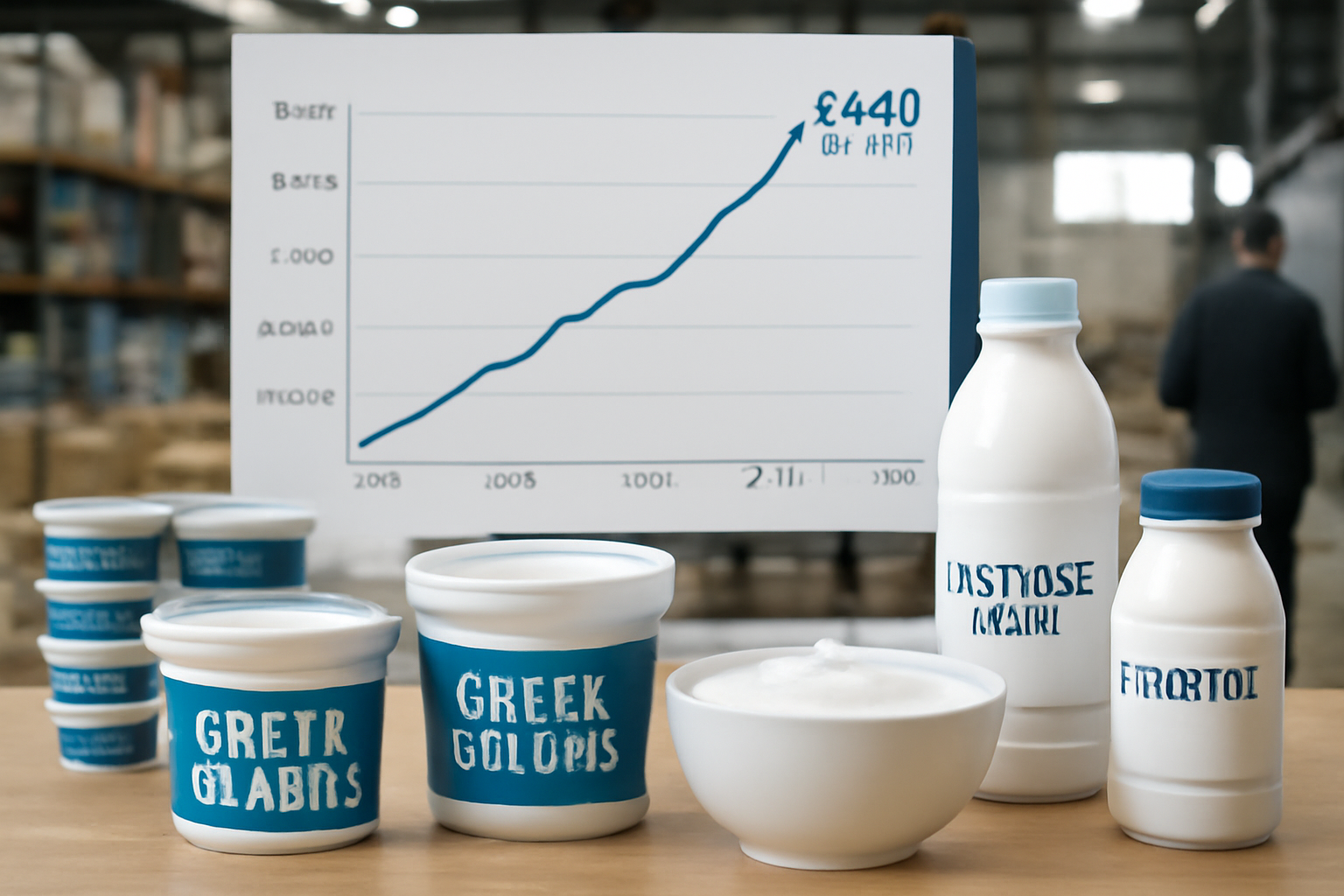
A €440 million market accelerates
Greece’s yogurt market has reached €440 million and is expanding at a double-digit rate, creating a more competitive environment for the country’s dairy companies. The growth is being shaped by demand for products positioned around protein content and by the increasing presence of lactose-free yogurt on retail shelves.
The combination of market growth and changing product preferences is encouraging major dairy producers to increase their activity. Companies are moving faster both inside Greece and in international markets, making yogurt a focus for product development, investment and commercial expansion. The available information does not identify individual companies or disclose their market shares, production volumes or investment budgets.
Protein changes the product mix
Protein-focused yogurt lines are gaining ground as producers adapt their portfolios to consumer interest in higher-protein foods. For processors, the trend creates opportunities to differentiate products through formulation, portion size and positioning. It also raises the competitive importance of milk procurement, processing capability, packaging and reliable distribution.
Lactose-free products are changing the shelf at the same time. Their expansion allows dairy companies to address consumers who avoid lactose while remaining within the yogurt category. Producers that can manufacture conventional, protein-focused and lactose-free lines can serve several demand segments, although the source material provides no figures for the sales contribution or growth rate of each segment.
Competition extends beyond Greece
The leading dairy companies are increasing their pace in Greece and abroad. Domestic growth gives processors a larger base market, while activity outside the country can broaden sales and reduce reliance on one consumer market. The information provided does not specify export destinations, shipment values or the balance between domestic and foreign sales.
For producers, the central challenge is to convert double-digit market growth into durable volume without weakening margins. Faster category growth can attract additional production and marketing expenditure, but it can also intensify competition for shelf space. Retail positioning will be particularly important as traditional yogurt competes with newer protein-rich and lactose-free alternatives.
Importers, distributors and retailers will need to assess which formats are generating repeat demand rather than short-term interest. Product claims, pricing and availability will influence how quickly the newer lines expand. Without disclosed company-level data, it is not possible to determine which producer currently leads the €440 million market or which business is adding capacity most aggressively.
The direction of the market is nevertheless clear from the available facts: yogurt sales in Greece are rising at a double-digit pace, protein has become a central product proposition, and lactose-free ranges are reshaping retail assortments. These forces are pushing large dairy companies to accelerate their plans at home and internationally, setting up a broader contest over innovation, production and access to consumers.