Greek Wine Harvest Starts With Lower Grape Supply and Weaker Bottled-Wine Demand
Greece’s 2026 wine harvest is beginning amid weak demand for quality bottled wine and severe frost losses in Nemea and Mantineia. Scarcity may lift prices for Moschofilero and Santorini Assyrtiko, while wineries retain leverage in regions with normal crops.
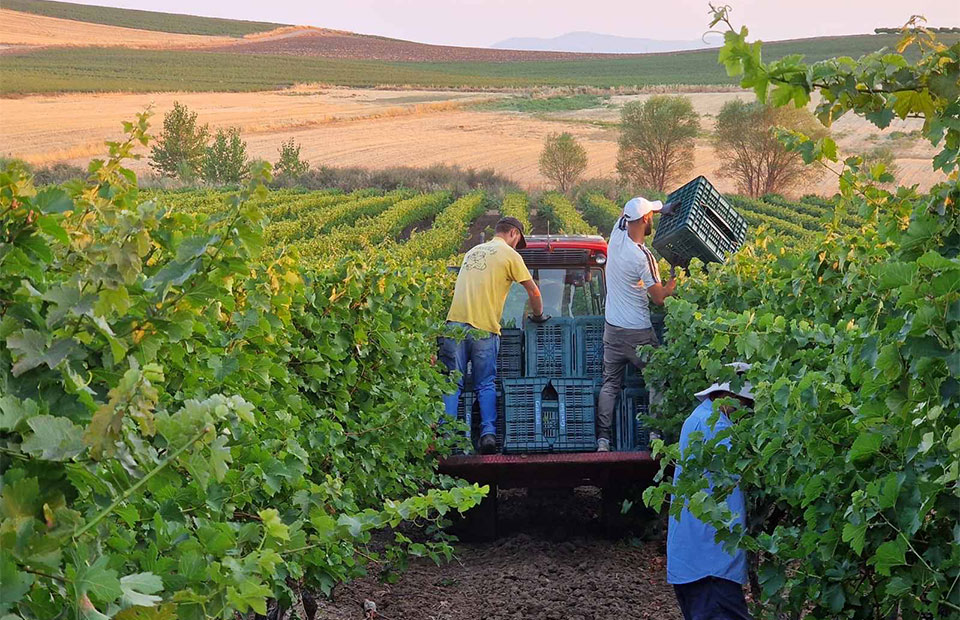
Harvest begins after a difficult summer
Greece’s 2026 grape harvest is starting in the country’s southern regions with wineries facing a difficult combination: less fruit in several important appellations and weaker demand for quality bottled wine. Wine Trails reports that sales softened notably during the summer, particularly in the mid-priced segment that accounts for the largest share of consumption.
The publication links the slowdown to a late start to the tourism season following low early-summer temperatures, disruption to travel caused by the Gulf conflict and pressure on the disposable income of middle-class consumers and visitors. Restaurant pricing is another constraint. Many establishments charge about three times the bottle’s purchase price, limiting consumers’ willingness to explore recognized varietal wines. Tighter enforcement of rules on alcohol consumption by drivers has also affected the domestic market.
Frost cuts supplies in Nemea and Mantineia
Growing conditions were broadly favorable where vineyards avoided extreme weather. Normal temperatures and good rainfall during the first half of the year supported vine development. However, frost on May 3 and 4 caused extensive damage in Nemea and Mantineia. Before official ELGA assessments are available, local estimates cited by Wine Trails put production in the worst-hit areas at about one-third of a normal year. Across the two regions, available wine-grape supply could fall to around half its usual level.
The losses are especially significant for Agiorgitiko and Moschofilero, which underpin PDO wine production in Nemea and Mantineia respectively. Hail affected parts of the Tyrnavos zone, including Damasi, but is not expected to create a comparable shortage for local wineries. Downy mildew, powdery mildew and other diseases have also appeared in Kavala and some Cretan wine regions, although the resulting raw-material deficit cannot yet be quantified.
Price negotiations split by region and variety
Growers enter harvest negotiations with higher expenditure on energy, irrigation, fertilizer, crop protection products and machinery. Wine Trails says disruption related to the Gulf crisis has added to diesel and electricity costs. At the same time, large wineries remain in the stronger negotiating position and may reduce wine or spirits output to avoid accumulating stocks while demand is subdued.
Market conditions vary sharply. In regions with normal production and limited winery demand, grape prices will face pressure from bulk and bag-in-box wine. In Mantineia, frost damage and established winery requirements are expected to produce a substantial increase in Moschofilero prices. Santorini is another tight market: international demand for Assyrtiko remains strong while the island’s vineyard area and yields have declined, supporting exceptionally high grower prices.
Demand favors selected indigenous grapes
Demand for red varieties has fallen significantly, while buying interest in white grapes has become more measured. Indigenous varieties with an established international following are performing better, led by Assyrtiko and Moschofilero, followed by Xinomavro and Mavrotragano. Established branded wines are also gaining ground because consumers with sufficient purchasing power tend to favor familiar labels during uncertain periods.
The harvest therefore presents two different realities. Scarce PDO grapes can command higher prices, but growers in higher-yielding regions face restrained winery buying and competition from low-value anonymous wine. For producers and processors, the immediate challenge is balancing limited demand and rising costs without weakening the investment needed to improve the quality and market position of Greek wine.