Greek bakery and confectionery suppliers invest as inflation squeezes margins
Rodoula has approved a €41.56 million production and storage project, potentially backed by an investment fund. Stelios Kanakis and Puratos Hellas increased revenue in 2025 but reported slightly lower net profit as raw-material, energy and demand risks intensified.
Rodoula approves €41.56 million facility
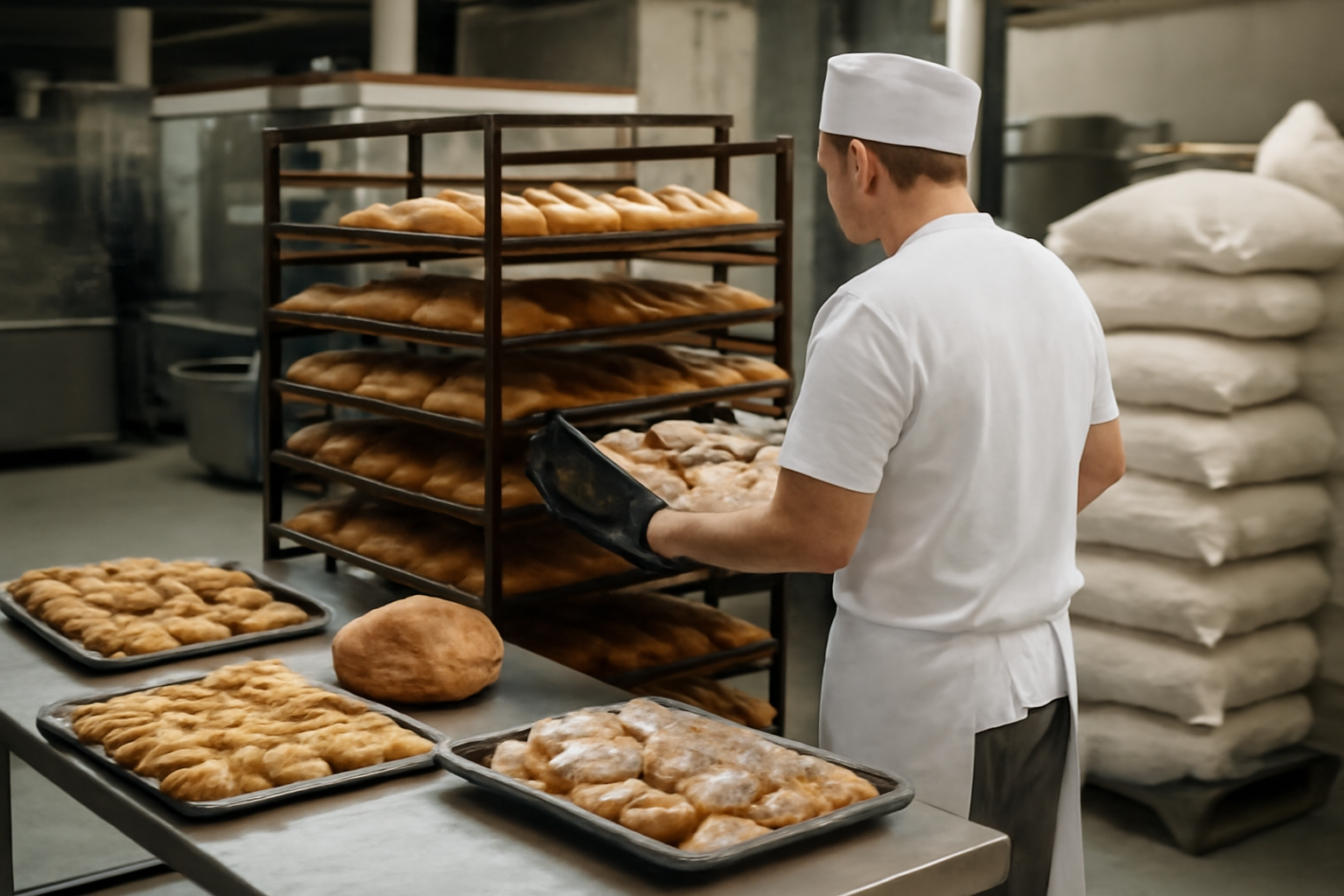
Investment activity is continuing in Greece’s bakery and confectionery ingredients industry despite higher food and energy costs and pressure on consumer demand. Greek business publication OT reports that Rodoula SA has approved a €41.56 million project to construct a multistorey production and storage building with a basement and office space.
The decision was recorded in minutes of Rodoula’s board filed on July 30, 2026. The financing plan provides for €30 million in long-term bank borrowing and €11.56 million from equity. Rodoula intends to obtain all or part of that equity through a capital increase involving an investment fund, potentially bringing a new institutional investor into the company’s expansion.
The project has also received approval for support through a 25% tax exemption worth €10.39 million. The combination of debt, equity and tax relief gives Rodoula a financing framework for adding production and warehousing infrastructure at a time when funds remain interested in food manufacturing and, in particular, suppliers of bakery and confectionery ingredients.
Revenue rises but profits remain under pressure
Other suppliers in the sector are trying to preserve sales growth while defending gross and net margins. Stelios Kanakis SA reported revenue of €32.37 million in 2025, up 6.8% from €30.28 million in 2024. Profit after tax was broadly stable but declined to €2.42 million from €2.48 million. Its objectives for 2026 include strengthening its market position, expanding turnover, maintaining profit margins and limiting operating costs.
The company is also looking for new business opportunities in Greece and, particularly, abroad. Its recent financial statements identify weaker demand caused by the broader consumer downturn and rising raw-material prices as factors that could restrain performance. These risks matter for ingredient distributors and manufacturers because passing higher costs to bakeries, pastry businesses and other food customers may become harder when end-consumer spending is soft.
Puratos Hellas recorded faster sales growth. Its 2025 revenue increased by 11.20% to €44.06 million from €39.62 million a year earlier. Net profit nevertheless edged down to €2.27 million from €2.32 million. Management considers the company’s financial position satisfactory amid the geopolitical crisis, but it is closely monitoring accelerating inflation and the rise in food prices.
Companies focus on cash flow and cost control
Puratos Hellas has prepared initiatives intended to maintain profitability and improve cash flow, according to OT. No detailed measures were disclosed in the source material. The emphasis reflects a wider challenge across the sector: sales can increase in nominal terms while higher input and operating costs prevent that growth from translating into stronger earnings.
International and domestic food-ingredient and energy prices have been unstable since 2025, while the Middle East crisis has added uncertainty. Rodoula’s investment indicates confidence in additional production and storage capacity, but the results of Stelios Kanakis and Puratos Hellas show why cost control remains central. For producers, distributors and investors, the decisive test will be whether higher capacity and sales can generate stronger cash returns without demand erosion or further margin compression.