Taxes Make Up 61% of Greece’s Petrol Price, Second-Highest Share in EU
Taxes accounted for 61% of Greece’s petrol pump price in February 2026, the second-highest share in the EU after Finland. Petrol averaged €1.74 per litre, including €1.04 in indirect taxes and VAT, while diesel cost €1.55 per litre.
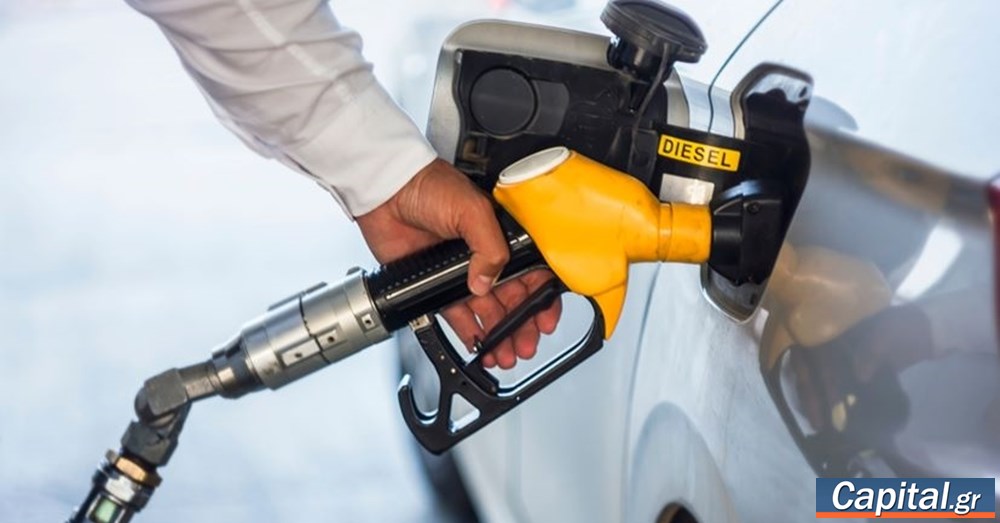
Taxes take €1.04 from every litre of petrol
Greece remains one of Europe’s most heavily taxed fuel markets, with taxes accounting for 61% of the petrol price paid at the pump. According to Capital.gr, citing FuelsEurope’s Statistical Report 2026 and European Commission data, that was the second-highest proportion among the EU’s 27 member states in February 2026.
Petrol in Greece averaged €1.74 per litre. The underlying product represented €0.70, indirect taxes €0.71 and value-added tax another €0.33. The combined tax charge was therefore €1.04 per litre, while the net value of the fuel accounted for less than 40% of the final price.
Only Finland imposed a higher proportional petrol burden, at 63%. Slovenia and Germany were at 60%; Ireland, Estonia and Italy at 59%; and the Netherlands, Latvia and Portugal at 58%. Bulgaria recorded the lowest share at 46%. Across the EU, taxes and charges represented almost half of average pump costs.
Greece ranks among the expensive petrol markets
The tax structure placed Greece among the EU’s most expensive petrol markets, although it did not have the highest absolute price. Petrol cost €2.06 per litre in the Netherlands, €1.94 in Denmark and €1.82 in Germany. Ireland matched Greece at €1.74 per litre.
The position was less extreme for diesel. Greece’s diesel price averaged €1.55 per litre, comprising €0.82 for the product, €0.42 in indirect taxes and €0.30 in VAT. Taxes consequently represented about €0.72 per litre, or 47% of the pump price, the same proportion as in Croatia, the Netherlands and Poland.
Italy had the highest diesel tax share at 58%, followed by Slovenia at 56%. Malta, Belgium and Ireland were at 54%. The comparison shows that Greece’s exceptional position is concentrated in petrol rather than applying equally to all road fuels, an important distinction for distributors and commercial transport operators.
Crude, refining and carbon costs add pressure
FuelsEurope said only part of the pump price becomes refining revenue because refiners must also cover crude purchases, while governments collect most of the tax component. European refining operates between global crude and refined-product markets, whose main benchmarks are denominated in dollars. Refining margins, or crack spreads, also influence wholesale costs.
Fuel prices fell during the pandemic, then climbed as economic activity and demand recovered amid constrained oil supply. Brent reached about $120 per barrel in March 2022 following Russia’s invasion of Ukraine, before declining to around $80 by the end of 2023 and remaining relatively stable until early 2025. The EU banned imports of Russian diesel and other petroleum products in February 2023, but alternative supplies helped contain the market.
Final prices stabilised in 2024 and 2025 above pre-pandemic levels. FuelsEurope linked this to higher energy costs and the restoration of taxes and duties temporarily reduced during the energy crisis. European refiners also face expensive natural gas and carbon: the EU Emissions Trading System averaged $70.5 per tonne of CO2 in 2024, compared with $48.2 in the United Kingdom. These production costs affect the base fuel price, but Greece’s 61% petrol tax share remains the dominant domestic factor shaping what consumers pay and limiting how much falling crude or refining costs can reduce pump prices.