Greece Accounts for 80% of EU Cotton Area and Production
Greece represents about 80% of the European Union’s cotton area and production, according to European Commission data. The country harvested 709,700 tonnes of seed cotton from around 2.11 million stremmas in 2024, while a three-year pilot scheme offers growers €31.7 per stremma to reduce the crop’s carbon footprint.
Greece dominates EU cotton production
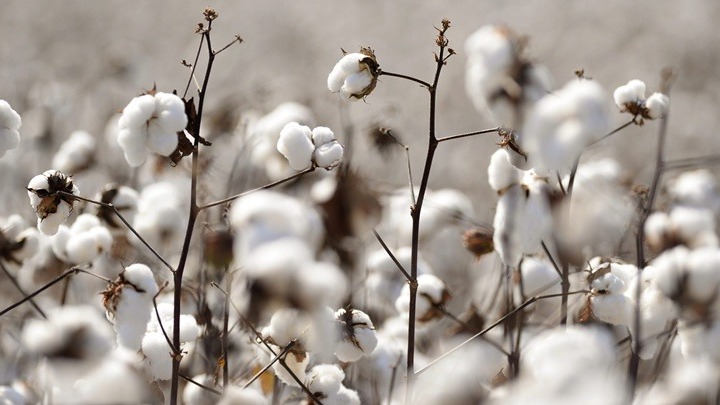
Greece accounts for approximately 80% of both the cotton-growing area and cotton production in the European Union, making it the bloc’s largest producer by a wide margin, according to European Commission data reported by Newpost. The crop occupies almost 6% of the country’s total agricultural land and supports thousands of farms, processing businesses and regional economies.
Production is concentrated in central and northern Greece, particularly in Thessaly, Macedonia and Thrace. Data from the Ministry of Rural Development and Food show that farmers cultivated around 2.11 million stremmas in 2024. The harvest reached 709,700 tonnes of seed cotton and involved 36,682 producers. One stremma is equal to 0.1 hectare, putting the reported planted area at about 211,000 hectares.
Policy shifts toward quality and lower emissions
The ministry has included cotton in a three-year pilot intervention aimed at reducing its carbon footprint. Producers who commit to lowering emissions can receive €31.7 per stremma. Integrated pest-management programs and technical support also continue in the main cotton-producing regions.
The measures reflect a wider effort to extract more commercial value from Greece’s large production base. Policy priorities include product quality, certification, technology, more efficient use of agricultural inputs and water, and adaptation to changing climatic conditions. These factors affect production costs as well as the ability of Greek cotton to retain a strong position in international markets.
Industry focus turns from volume to value
Secretary General for Rural Development and Food Spyros Protopsaltis said Greece’s leading position was an advantage that should be used more effectively. He linked the crop to thousands of producers, local economies, processing companies and a supply chain with a significant international market presence. He also said the next phase required greater attention to quality, certification, technology and sustainable management of natural resources.
The industry’s central challenge is therefore not expanding its already dominant share within the EU, but improving returns from the existing crop. Lower input costs and more efficient water use could support farm margins, while certification and consistent quality may strengthen the position of Greek cotton with processors and overseas buyers. The carbon-reduction payment adds a direct financial incentive, although growers must balance its value against the cost of meeting the program’s commitments.
The figures were highlighted around World Cotton Day, observed annually on 7 October. The event was first celebrated in 2019 and was officially recognized by the United Nations General Assembly in 2021. This year’s central event is being held in Tashkent, Uzbekistan, with trade, the cotton value chain, sustainability and climate finance among its main themes.