Google targets premium PC market with Android-based Gemini laptops
Google is launching its Googlebook platform with hardware from Acer, Asus, Dell, HP and Lenovo. German prices start at €1,199, positioning the Android-based, Gemini-integrated laptops against Windows notebooks and Apple’s MacBook range.
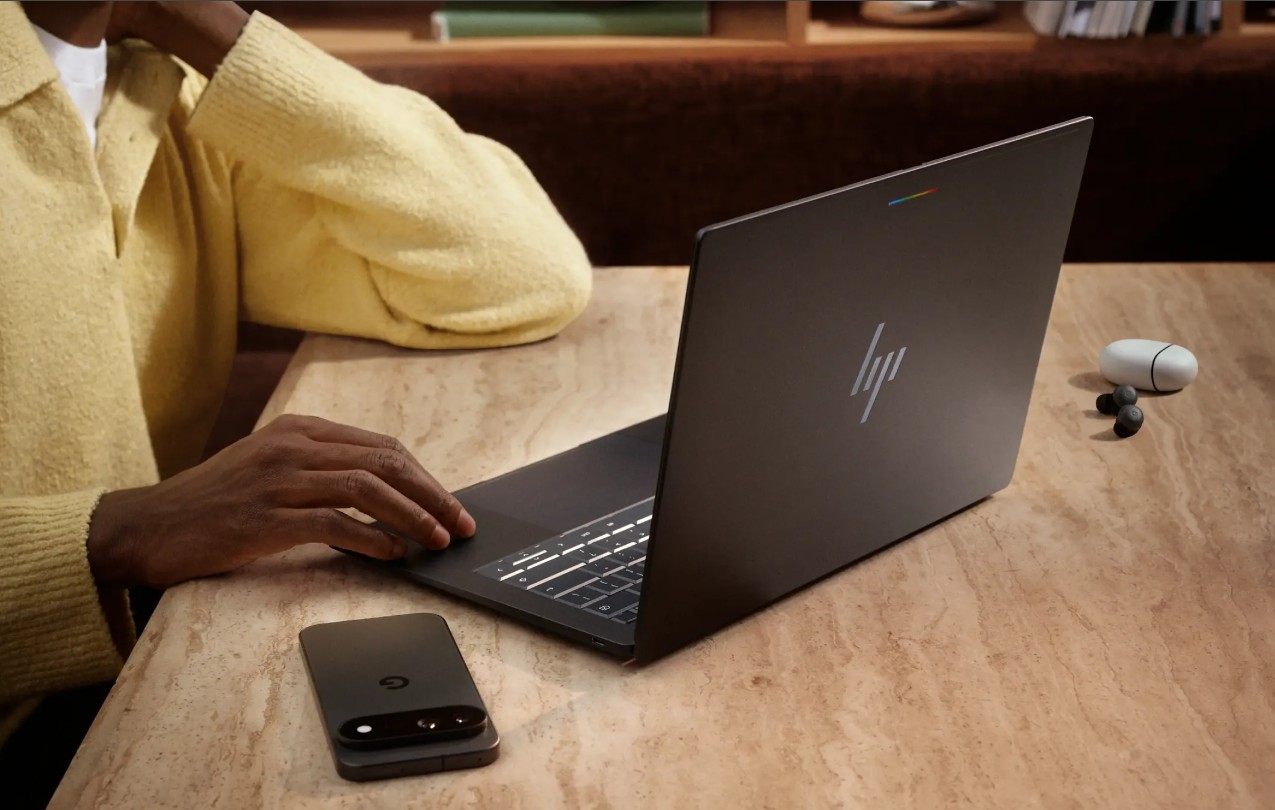
Googlebook moves beyond the Chromebook market
Google is entering premium personal computing with Googlebook, a laptop platform built on the Android technology stack and featuring deeply integrated Gemini artificial intelligence. According to retail-news.de, the first devices will be available in Germany from early October, with prices starting at €1,199.
Acer, Asus, Dell, HP and Lenovo will supply the hardware, while Google controls the operating system, services and AI functions. The arrangement follows the ChromeOS model: Google provides the platform, and established computer manufacturers handle device production, product differentiation and distribution.
The starting price places Googlebook well above the low-cost segment traditionally associated with Chromebooks and the education market. Google is instead presenting the platform as a competitor to premium Windows notebooks and Apple’s MacBook family, supported by higher-end components, metal enclosures and an expanded software package.
Gemini becomes part of the operating interface
Googlebook combines Android with desktop components and security mechanisms drawn from ChromeOS. Smartphone settings, passwords, Wi-Fi credentials and messages can be transferred to the laptop. The planned “Continue On” function will allow users to continue tasks across a phone and computer, while “Cast My Apps” will display smartphone applications on the desktop.
Gemini is intended to operate as part of the interface rather than as a separate application. “Magic Pointer” will use content visible on the screen as context for AI requests. Another function, “Rambler,” is designed to convert spoken thoughts into structured text, lists or summaries. Users will also be able to create customized desktop widgets through natural-language instructions.
This approach defines the AI PC through software interactions as well as dedicated processing capacity. Google’s proposed differentiation rests on the combination of Android applications, Gemini services and a desktop-oriented interface, rather than solely on the presence of an AI accelerator.
Five manufacturers prepare flagship devices
Each participating manufacturer plans an initial flagship model. Acer is preparing a convertible, Asus is focusing on a particularly light device, and Lenovo is developing a 15-inch laptop aimed at productivity users. The source did not provide equivalent design details for the first Dell and HP models.
Planned specifications include touchscreens with resolutions of up to 2.8K, OLED panels, premium trackpads and chassis made from materials including aluminium and magnesium alloys. Processor options will include Intel Core Ultra and Qualcomm Snapdragon X Elite platforms. Neural processing units will deliver more than 45 TOPS, and at least 16 gigabytes of memory will be standard.
Purchasers will receive 12 months of Google AI Pro, including expanded Gemini functions and five terabytes of cloud storage, alongside time-limited offers for other services. Google also promises regular Googlebook OS feature updates for up to ten years.
The multi-vendor launch gives Google access to several laptop formats without requiring the company to establish its own full production and distribution system. For manufacturers and retailers, Googlebook could create another premium category between Windows PCs, MacBooks and Chromebooks. Adoption will depend on whether buyers consider Android continuity and embedded Gemini functions valuable enough to justify a starting price of €1,199.