Goiás pork exports rise 15.3% to 10,800 tonnes in first half of 2026
Goiás exported 10,800 tonnes of pork worth $20 million between January and June 2026. Shipment volume increased 15.3% from the same period of 2025, according to the state government.
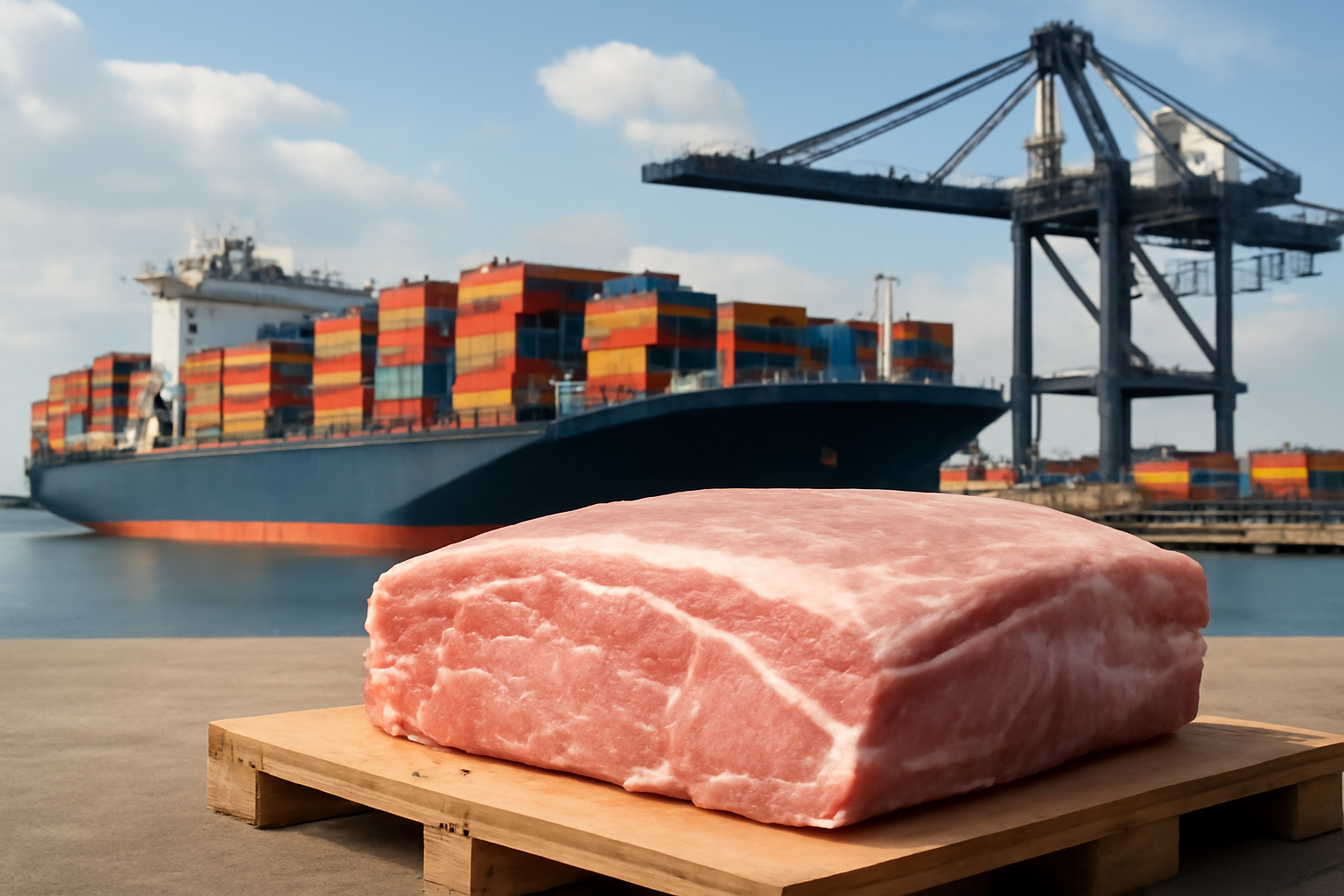
Shipments reach 10,800 tonnes
Pork exports from Goiás increased 15.3% by volume in the first half of 2026 compared with the same period a year earlier, according to a statement from the Brazilian state government reported by BOL. The result indicates that suppliers in the central Brazilian state expanded their presence in international markets during the six months from January through June.
Canal Rural reported that Goiás shipped 10,800 tonnes of pork during the period. Those sales generated $20 million in international revenue. The two figures provide a concrete measure of the state’s export business, covering both the physical volume dispatched and the value received from overseas customers.
The available figures do not specify how export value changed from the first half of 2025. They therefore show clear growth in tonnes but do not establish whether revenue rose at the same pace. Changes in product mix, contract prices, exchange rates and the share of higher-value cuts can all cause shipment value and volume to move differently.
Growth broadens the market for Goiás suppliers
A 15.3% increase in shipments gives pork producers and processors in Goiás a larger international sales channel. For slaughterhouses and meatpackers, higher export volume can support plant utilisation and create an additional outlet alongside Brazil’s domestic market. For livestock suppliers, sustained overseas demand can influence procurement requirements throughout the production chain.
The $20 million generated by exports also shows the commercial relevance of foreign sales for the state’s pork sector. Exporters must coordinate animal supply, processing, cold storage, certification and refrigerated logistics before products reach foreign buyers. Growth in dispatched volume consequently affects more than farms and plants, extending to transport operators and other service providers linked to the cold chain.
The source material does not identify the destination countries or individual companies responsible for the increase. It is therefore not possible to determine whether growth was driven by one large buyer, several markets or a broader expansion in customer demand. That distinction matters to industry participants because concentrated sales may expose exporters to changes in one market, while a diversified destination base can spread commercial and regulatory risk.
Destination and price data remain key
The first-half result establishes a higher export volume but leaves several indicators needed for a fuller market assessment unanswered. Destination-level shipments would show which countries absorbed the additional pork, while company-level data would indicate whether gains were shared across processors or concentrated among a small number of plants.
Price and product data would also help explain the relationship between the 10,800 tonnes shipped and the $20 million earned. Fresh, chilled, frozen and processed pork products can generate different returns, as can cuts sold under different commercial specifications. Without that breakdown, the reported total should be treated as an aggregate measure of Goiás pork exports rather than a direct indicator of producer margins.
Even with those limitations, the year-on-year increase confirms that Goiás sent more pork abroad in the first half of 2026. The next test for producers, processors and traders will be whether the state can maintain that shipment pace while preserving export value and managing its exposure across destination markets.