GM Korea sends 98.1% of July sales abroad as domestic footprint contracts
GM Korea sold 42,119 vehicles in July, with exports accounting for 98.1% of the total as domestic sales fell to 766 units. Strong overseas demand for two compact SUVs contrasts with a shrinking Korean product range and direct service network ahead of the 2028 expiry of its bailout agreement.
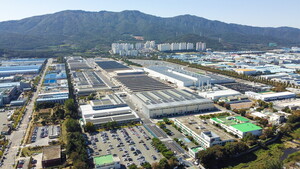
Two SUVs account for all July exports
GM Korea sold 42,119 vehicles across Korea and overseas markets in July, up 30.6% from a year earlier, according to Bloter. The headline growth came almost entirely from exports, which increased 33.3% to 41,353 vehicles. Domestic sales fell 37.5% to 766, leaving overseas markets responsible for 98.1% of the company’s monthly volume.
Two compact sport utility vehicles produced in Korea generated the entire export total. GM Korea shipped 26,822 Trax Crossovers and 14,531 Trailblazers abroad. In its home market, it sold only 584 Trax Crossovers and 173 Trailblazers. The figures show that rising utilization of Korean factories is no longer translating into a comparable position with Korean consumers.
The divergence was also visible over January-July. Exports rose 14.5% to 311,605 vehicles, while domestic sales declined 35.4% to 6,037. Local demand therefore represented just 1.9% of total sales of 317,642 vehicles. GM Korea’s domestic share had already fallen from 30.2% in 2016 to 18.3% in 2019, 14.1% in 2022 and 3.3% in 2025. Domestic volume last year was 15,094 vehicles, 91.6% below the 2016 record of 180,275.
Korean plants operate as a global production base
GM Korea remains a profitable company and GM’s global production center for about 500,000 compact SUVs annually. In March, GM announced a $600 million investment, equivalent to about 880 billion won, for product development and production-equipment improvements at its Korean operations. The investment supports manufacturing capacity, but it does not by itself rebuild the domestic business.
The company’s results now depend heavily on production allocations from GM headquarters and North American demand for compact SUVs. Its mass-market Korean lineup has narrowed after the discontinuation of the Spark, Malibu, Cruze, Damas and Labo. The Trax Crossover and Trailblazer are now the only models manufactured locally and sold in Korea, although the Bupyeong and Changwon plants also produce Buick derivatives mainly for overseas customers.
The contrast with Renault Korea is pronounced. During January-July, GM Korea’s total sales were 8.7 times Renault Korea’s 36,414 vehicles. Yet Renault Korea sold 22,891 vehicles domestically, 3.8 times GM Korea’s volume. Local sales accounted for 62.9% of Renault Korea’s total, against 1.9% at GM Korea.
Service cuts and premium brands test the recovery plan
GM Korea has also reduced its direct service presence. After initially seeking to close nine company-operated repair centers, it retained facilities in Daejeon, Jeonju and Changwon as technical service centers following union opposition and labor-management talks. Those three locations will employ 60 repair workers, with 20 in each region. About 380 partner centers already handle 92% of customer service, but the union warns that fewer direct facilities could weaken the manufacturer’s response to major recalls and complex repairs.
The company is trying to revive its Korean business through Chevrolet, Cadillac, GMC and the planned introduction of Buick. GMC sold 518 vehicles in January-July, while the Acadia and Canyon carry starting prices in the 90 million won and 70 million won ranges respectively. These higher-priced imports may improve margins and brand positioning, but they cannot quickly replace the mass-market volume once supplied by the Spark and Malibu. Buick could reconnect Korean production with local sales if domestically manufactured models are offered, but GM Korea has not yet announced its first model, pricing or volume. The decision comes before the 2028 expiry of the ten-year commitment linked to the 810 billion won in public funds provided by the Korea Development Bank and other creditors in 2018.