Global wine glut deepens as consumption falls to a 60-year low
Global wine consumption has fallen to its lowest level in 60 years, leaving producers with excess supply and weaker prices. Vineyards are being reduced in Europe, Australia and the United States, while Portugal is supporting grape buyers and tightening traceability.
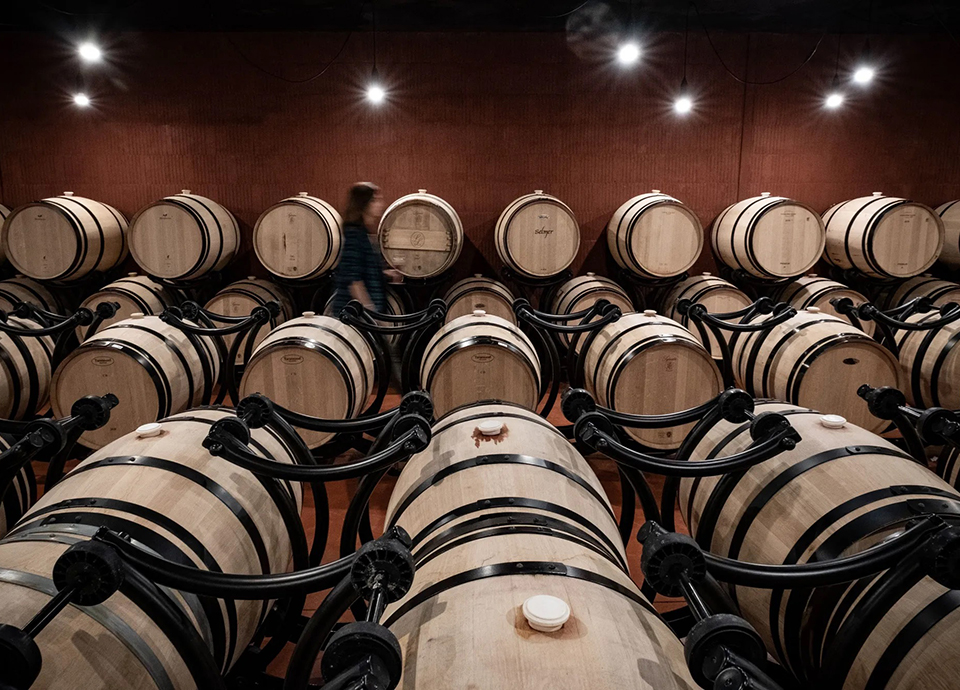
Producers cut vineyards as demand weakens
Global wine consumption has fallen to its lowest level in 60 years, according to the International Organisation of Vine and Wine, leaving the industry with more wine than the market can absorb. Jornal Económico reports that excess supply, changing drinking habits and economic and geopolitical instability are weighing on prices and margins across the sector.
The adjustment has reached vineyards. France is removing vines, while Germany and Austria are introducing measures to align production with demand. Australia and the United States are also reducing productive capacity. These moves indicate that producers increasingly view the imbalance as more than a temporary inventory problem.
Lower consumption and accumulated stocks are transmitting price pressure through the supply chain, from wineries and merchants to grape growers. Cutting vineyard area may eventually reduce output, but it also imposes immediate costs on producers and wine regions whose income and processing infrastructure depend on existing volumes.
Portugal supports buyers and growers
Portugal has proved more resilient than some other European producers, but it remains exposed to the global downturn. National production is recovering this year, and grapes show good levels of sugar, acidity and ripeness. The commercial question is whether buyers can absorb the resulting wine, particularly because about half of Portuguese production is sold in foreign markets.
The government has announced a €110 million credit line for grape buyers, enabling them to finance purchases from growers. It has also created €12 million in extraordinary support for Douro producers unable to find buyers for their grapes, alongside €5 million for restructuring vineyards damaged by storms earlier in the year.
The Confederation of Farmers of Portugal says assistance should extend beyond the Douro to every wine-producing region. It argues that weaker consumption, excess stocks, production costs and falling prices affect the entire industry. CAP secretary-general Luís Mira welcomed support for the Douro but said it must not leave producers elsewhere overlooked.
Imports, labelling and digital traceability
CAP has also called for stronger inspection, control and full traceability of bulk wine arriving from Spain. It does not challenge legal imports or the free movement of goods, but says wine entering below Portuguese production costs adds pressure and could create unfair competition. CAP claims Spanish farmers receive support for energy, fuel, fertiliser and other inputs that is more than 30 times higher than comparable assistance in Portugal.
Francisco Toscano Rico, president of Portugal’s Vine and Wine Institute, acknowledged import pressure but said approximately 100 million fewer litres entered Portugal during the past two years than the 2019-2023 average. Available data through June point to the lowest import level in seven years.
The institute is developing digital traceability for all wine marketed in Portugal, covering Portuguese grapes and wine entering across the border through to its final destination. Expected to become available later this year, the system will use information systems, artificial intelligence and data interoperability with the Tax Authority. A new Vine and Wine Observatory will also consolidate information on production, domestic entries, exports and market conditions.
Portugal has raised public financing for international wine promotion from 50% to 60% and simplified access for smaller projects. Domestic transparency rules introduced in 2024 also require wines blending Portuguese and other EU origins to display those origins more prominently. Toscano Rico said sales of these blends fell about 20% during the following year, compared with a decline of only 2.5% for wine made entirely in Portugal.