Global pork prices soften as excess supply meets weak demand
Global pork prices are under pressure as abundant supply coincides with subdued demand. RaboResearch says disease risks, geopolitical tensions and changing consumer purchasing patterns will keep the industry’s outlook uncertain.
Supply outpaces demand
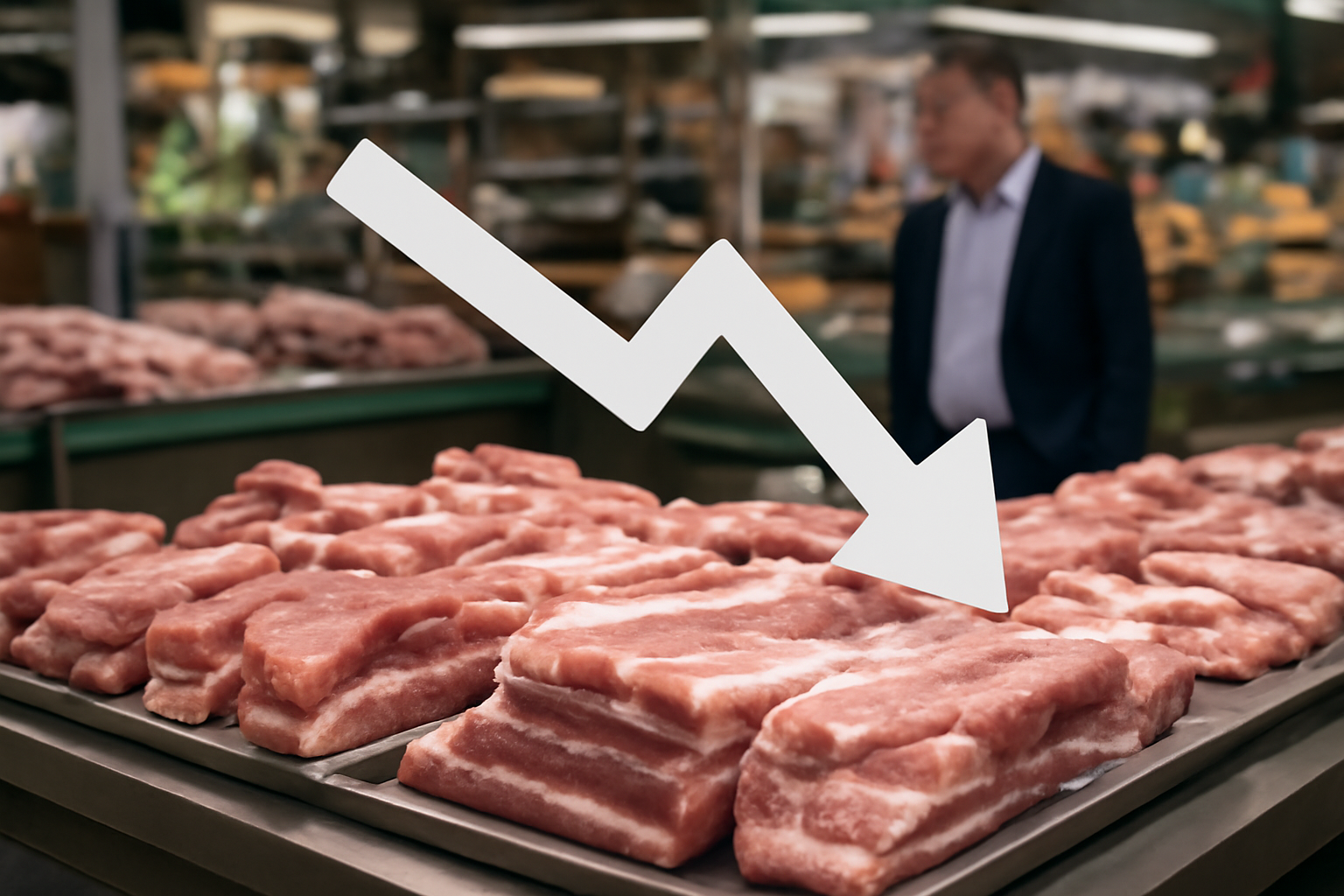
Global pork prices are softening as excess supply meets weak demand, according to a report highlighted by National Hog Farmer. The imbalance is placing pressure on a market in which producers, processors and traders must contend with weaker price support while continuing to manage uncertain consumption patterns.
The available assessment does not identify individual producing countries, price benchmarks or the size of the surplus. It nevertheless points to a broad global imbalance rather than an isolated disruption in one market. When supply exceeds the volume buyers are prepared to absorb, sellers face greater competition and purchasers gain more leverage in negotiations. That can affect prices throughout the chain, from livestock procurement to processed pork sales.
Pressure spreads across the pork chain
For producers, softer pork prices can narrow the room available to absorb operating costs. Processors may benefit from less expensive raw material, but weak demand can also limit their ability to increase sales or protect margins on finished products. Traders must judge whether lower prices will attract additional buying or whether customers will continue to purchase cautiously.
Importers and exporters face a similarly mixed environment. Abundant supply can create sourcing opportunities, but tepid demand makes it harder to place additional volumes without price concessions. The effect will depend on conditions in each destination and on how purchasing behavior develops. The report does not provide country-level trade data, so the extent of the impact on particular routes cannot yet be quantified.
Disease and geopolitics remain key risks
RaboResearch expects uncertainty to persist because of disease risks, geopolitical tensions and evolving consumer purchasing patterns. These factors can pull the market in different directions. Disease can disrupt production and availability, while geopolitical tension can complicate commercial relationships. Changes in household purchasing decisions can alter demand even when physical supply remains abundant.
That combination leaves the sector vulnerable to sudden changes despite the present price weakness. A supply-led decline does not remove the possibility of disruption; it instead makes timing and exposure more important for companies holding animals, meat or contractual commitments. Producers and processors will need to watch whether the current surplus begins to clear, while buyers will assess whether softer prices justify covering more of their requirements.
Market visibility remains limited
The central signal is clear: global pork availability is currently stronger than demand, and prices are responding. What remains unclear is how long the imbalance will persist and whether consumer purchases will recover quickly enough to absorb supply. Without detailed figures for production, inventories, trade or consumption, the market cannot yet determine how deeply the adjustment will affect individual regions.
For industry participants, the immediate focus is therefore on demand signals and risk management. Producers need evidence that purchasing is improving before assuming firmer prices. Processors and importers may find buying opportunities, but taking additional volume carries risk if end-market sales remain weak. RaboResearch’s warning on disease and geopolitical uncertainty also means that decisions based solely on current supply conditions could be exposed to abrupt changes in availability or market access.