Global PC shipments fall 20.1% to 62.7 million units in third quarter
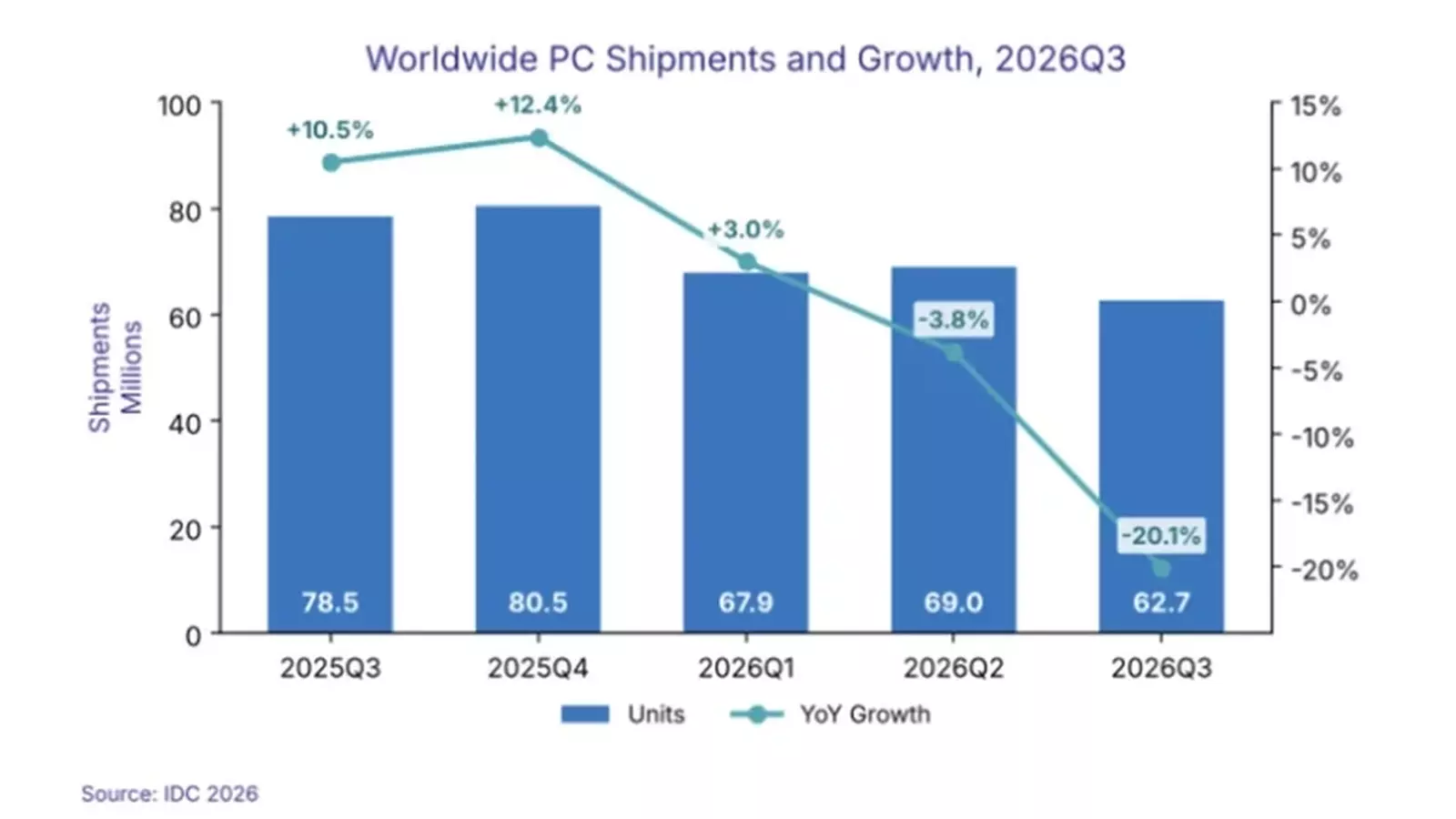
Worldwide PC shipments fell 20.1% year on year to 62.7 million units in the third quarter of 2026, according to IDC data reported by gagadget.de. Excess inventory and weaker demand are weighing on volumes, but rising memory and storage costs are limiting the potential for broad price cuts.
Shipments retreat after early inventory build-up
Worldwide PC shipments fell 20.1% year on year to 62.7 million units in the third quarter of 2026, according to IDC figures reported by gagadget.de. Compared with the second quarter, shipments declined 9.1%. The contraction covers laptop and desktop computers and reflects a sharp reversal for manufacturers and distributors that had stocked up earlier in the year.
Producers and retailers accumulated inventory at the beginning of 2026 to get ahead of expected price increases. Those machines are now sitting in sales channels as demand weakens. The imbalance raises the prospect of selective discounts on existing inventory and older models, but it does not necessarily point to a sustained decline in average PC prices.
IDC expects shipments in the fourth quarter to be about 20% below the previous year and forecasts an 11.3% decline for 2026 as a whole. A weaker economic environment could further restrain purchases by households and businesses. IDC did not provide separate shipment figures for Germany, Austria or Switzerland in the announcement cited by gagadget.de.
Lenovo leads as major vendors contract
Lenovo retained first place with a 23.8% share of the global PC market. HP recorded a 30.9% decline in shipments, indicating a considerably steeper contraction than the market average. The available figures do not specify shipment volumes for either company.
Apple shipped 11% fewer Macs but increased its market share to 9.5%, according to 9to5Mac as cited by gagadget.de. The gain came because competing suppliers contracted faster, rather than because Apple expanded its unit sales. The figures show how a falling market can still redistribute share toward vendors whose shipments decline less sharply.
For manufacturers, the immediate challenge is to control production and channel inventory without relying on extensive discounting. Retailers face a similar calculation: clearing older stock may require promotions, but replacement products could arrive with substantially higher component costs. That reduces the incentive to reset prices across an entire product range.
Component inflation limits price relief
Memory and storage prices are the main constraint on cheaper computers. Gartner estimates that DRAM and SSD prices could rise by around 130% by the end of 2026, potentially increasing average PC prices by 17%, according to gagadget.de. IDC does not expect market conditions to ease before the end of 2027, while the publication says meaningful relief may not emerge until 2028.
IDC analyst Jitesh Ubrani said retailers concerned about excess inventory could offer discounts. However, those reductions would not return computers to the previous year's price level. The likely result is a divided market: older inventory and residual stock may become cheaper temporarily, while newer systems carry higher memory and storage costs.
German sales data also point toward a shift in value rather than a recovery in unit demand. According to CONTEXT, revenue from desktop PCs in Germany rose 32% in the first quarter. Gagadget.de said the increase reflected higher prices and a greater share of premium models, not necessarily more computers sold. For producers, distributors and corporate buyers, shipment volumes will therefore give only a partial picture: product mix, component exposure and inventory age will be equally important through 2027.