Global dairy prices rise as El Niño and European heat threaten supply
Prices increased at the latest global dairy auction as the market assessed potential supply disruption from El Niño. Record temperatures in Europe and possible weather-related pressure on Southern Hemisphere production have raised concerns about internationally traded availability.
Auction prices respond to supply concerns
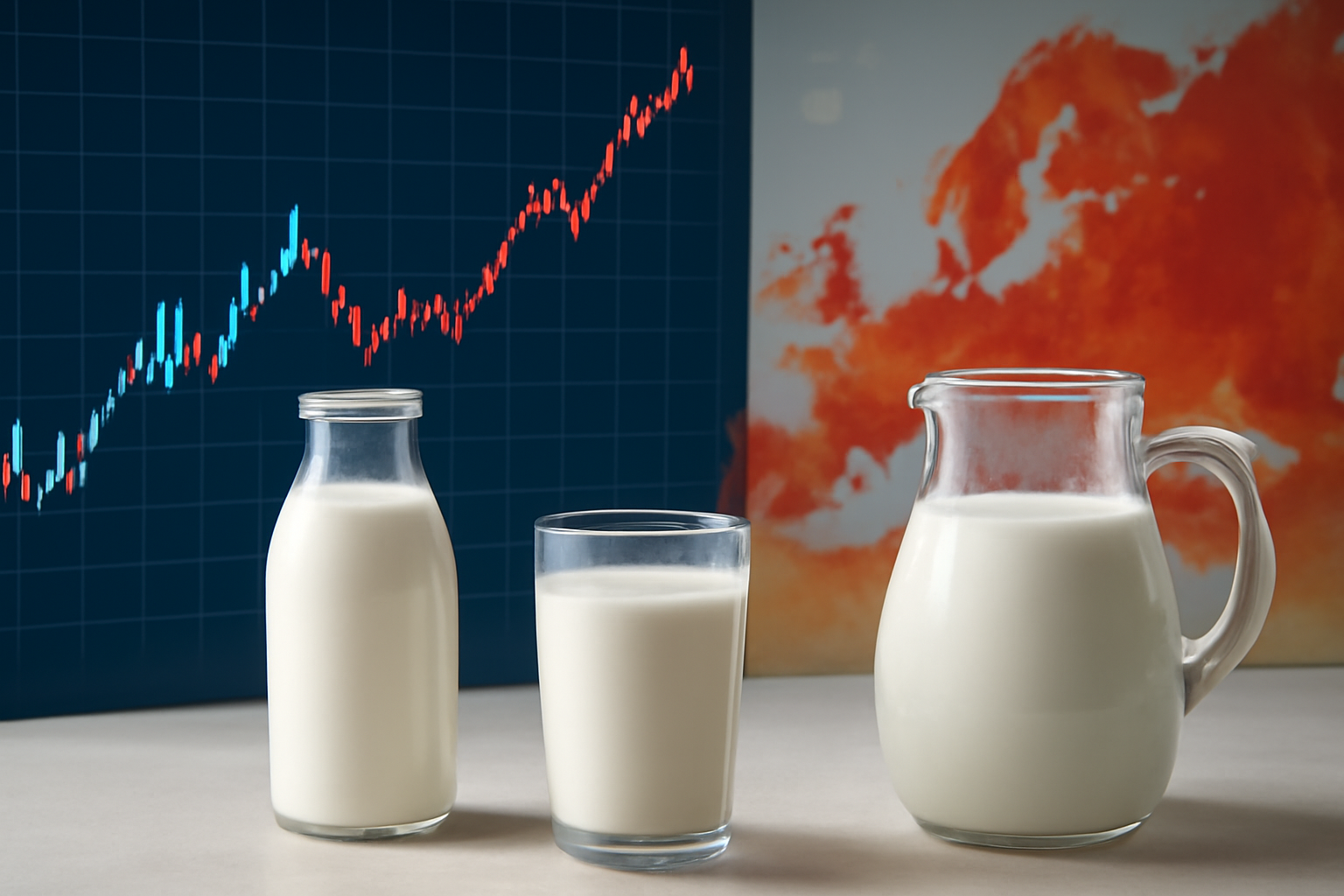
Global dairy prices rallied at the latest auction as buyers and sellers assessed the risk that adverse weather could restrict milk production and internationally traded dairy supply. The available source material does not provide the size of the price increase or a breakdown by product, but identifies two central concerns: record temperatures in Europe and the prospect of several months of El Niño-related disruption in the Southern Hemisphere.
The increase directs attention back to physical availability after a period in which dairy markets have had to balance production conditions against demand from importers. An auction gain does not by itself confirm a lasting shortage. It does, however, show that participants are attaching greater value to near-term supply while uncertainty persists across more than one major producing region.
Weather risks emerge in both hemispheres
Extreme heat in Europe can affect dairy production through pressure on cattle, feed availability and farm operating conditions. The headline source describes European temperatures as record-setting, but provides no country-level production estimates or figures for milk losses. The commercial effect will therefore depend on how long the heat lasts, how widely it is distributed and whether conditions ease before they materially reduce processing volumes.
In the Southern Hemisphere, the risk is less about a single weather event than the possibility of months of disruption associated with El Niño. The source does not identify individual countries or quantify the potential production impact. For exporters, the key issue is whether weather conditions reduce the milk available for processing into products sold internationally. Any decline in exportable output would matter more to global buyers than an equivalent change in markets where most milk is consumed domestically.
Implications for producers, processors and buyers
Higher auction prices can improve revenue expectations for export-oriented processors and, depending on payment systems and costs, may support farmgate returns. The benefit is not automatic. Producers exposed to heat, weaker pasture conditions or higher feed requirements may face rising costs at the same time that commodity values improve. Processors must also judge whether the rally reflects a temporary risk premium or the beginning of tighter supply.
Importers and food manufacturers face the opposite calculation. If weather disruption persists, buyers may seek earlier coverage or spread purchases across products and suppliers. If production remains resilient, part of the price increase could unwind as the perceived supply threat recedes. With no auction percentages, product prices or production forecasts supplied, the strongest conclusion is limited but relevant: weather risk has become a more visible factor in dairy pricing.
Market direction depends on production evidence
The next signal will come from actual milk collections, processing volumes and the persistence of extreme weather rather than from forecasts alone. Market participants will need to distinguish between reduced farm output, lower processing capacity utilization and a genuine contraction in export availability. Those outcomes can affect prices differently even when they begin with the same weather shock.
For now, the rally indicates that the market is paying for uncertainty. Sustained gains would require evidence that European heat or Southern Hemisphere El Niño conditions are materially constraining supply. If that evidence does not emerge, buyers may resist higher prices; if it does, exporters with available product would gain leverage while import-dependent processors would face tighter procurement conditions.