Ghana targets new food and beverage revenue from discarded cashew apples
Ghana is developing food and beverage uses for cashew apples that have traditionally been left to spoil after nut harvesting. Researchers have extended the fresh fruit’s shelf life from 24 hours to about 6 days, but investment, collection networks and consumer demand remain key constraints.
Ghana looks beyond the cashew nut
Ghanaian researchers, farmers and public agencies are working to commercialize cashew apples, the fleshy fruit attached to cashew nuts that has long been left to spoil in producing areas. The effort could give farmers an additional source of income while supplying raw material to domestic food and beverage processors.
Ghana produces about 250,000 tonnes of raw cashew nuts annually, according to CafeBiz. Cashew trees generate a substantially larger volume of apples than harvested nuts, but most of the fruit remains outside commercial value chains because buyers, processing plants and suitable collection systems are scarce.
The challenge is partly logistical. Fresh cashew apples can deteriorate within 24 hours of harvesting, leaving little time to move them from dispersed farms to processors. Their high tannin content can also affect flavor and consumer acceptance, requiring treatment to reduce both astringency and potential anti-nutritional effects.
Research expands the product range
The MA-CASH project, led by the Food Research Institute of Ghana’s Council for Scientific and Industrial Research, has assessed the volume of fruit discarded in producing regions and tested processing options. Project leader and post-harvest technology scientist Francisca Aba Ansah said the work began by measuring losses and evaluating how the apples could be used.
Through research and cooperation with farming communities, the team has developed cashew apple juice, juice blends, sausages, bread and other foods. It has also created technology that extends storage life before transportation from roughly 24 hours to about 6 days. Once the fruit reaches a processing facility, refrigeration can preserve it for use in production.
Farmers are also testing their own products. Samuel Nortey Adumoah has processed cashew apples into pito, a traditional Ghanaian drink, as well as wine and other beverages. He sees commercial potential in these products but says additional capital is required to establish large-scale production.
Scaling requires capital, logistics and buyers
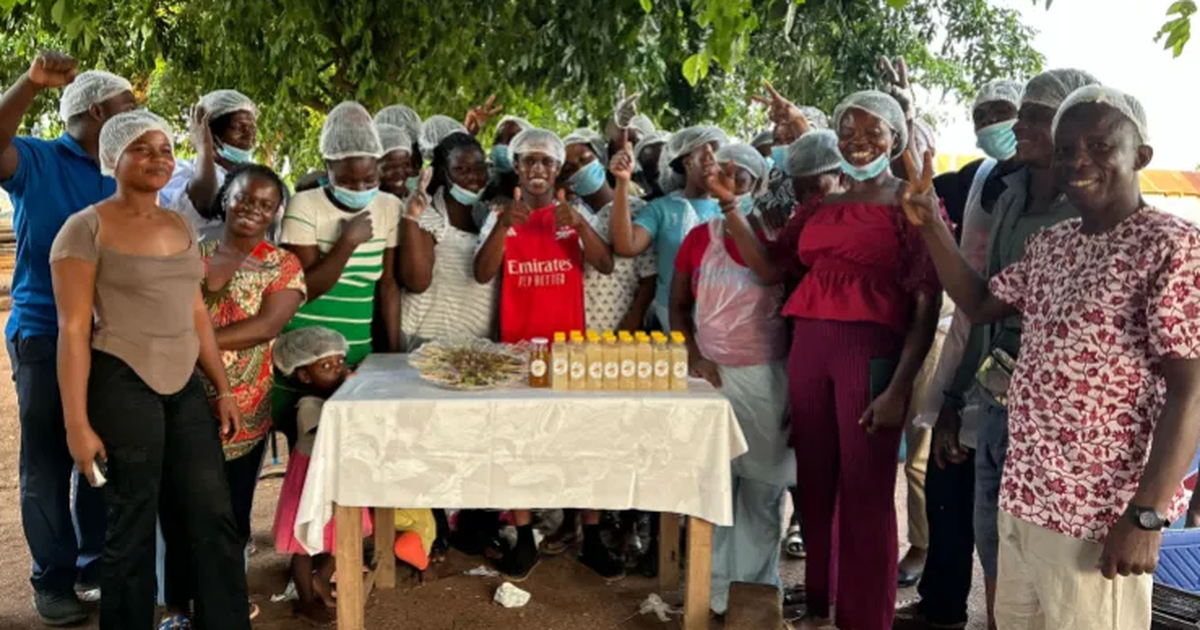
In the Bono region, Cashew Watch Ghana has spent the past two years organizing farmers into groups and teaching them to make juice and other products from cashew apples. National coordinator Raphael Godlove Ahenu’s account points to a community-based model in which initial processing takes place close to farms, reducing the risk that the highly perishable fruit spoils in transit.
The Ghanaian government is considering cashew apple utilization as part of its effort to diversify agricultural income and promote domestic processing. Andrews Osei Okrah, chief executive of the Tree Crops Development Authority, said the fruit is increasingly viewed as a resource that could support agricultural industrialization, employment and rural incomes rather than merely as a byproduct.
Commercial expansion will nevertheless depend on several links developing together. Farmers need reliable buyers and rapid collection, processors require steady fruit volumes and preservation equipment, and producers must build markets for unfamiliar products. Ghana must therefore address capital, technology, logistics and demand before discarded apples can become a dependable revenue stream. Vietnam’s leading position in global cashew exports provides an industry reference point, but Ghana’s immediate opportunity lies in capturing more value from fruit already produced and largely wasted at home.