Ghana and Côte d’Ivoire pledge closer cooperation on cocoa pricing
Ghana and Côte d’Ivoire have signed a joint declaration on farmer pricing, local cocoa processing, environmental protection and scientific cooperation. Coordination between the world’s two largest cocoa producers could influence how value and investment are distributed across the global supply chain.
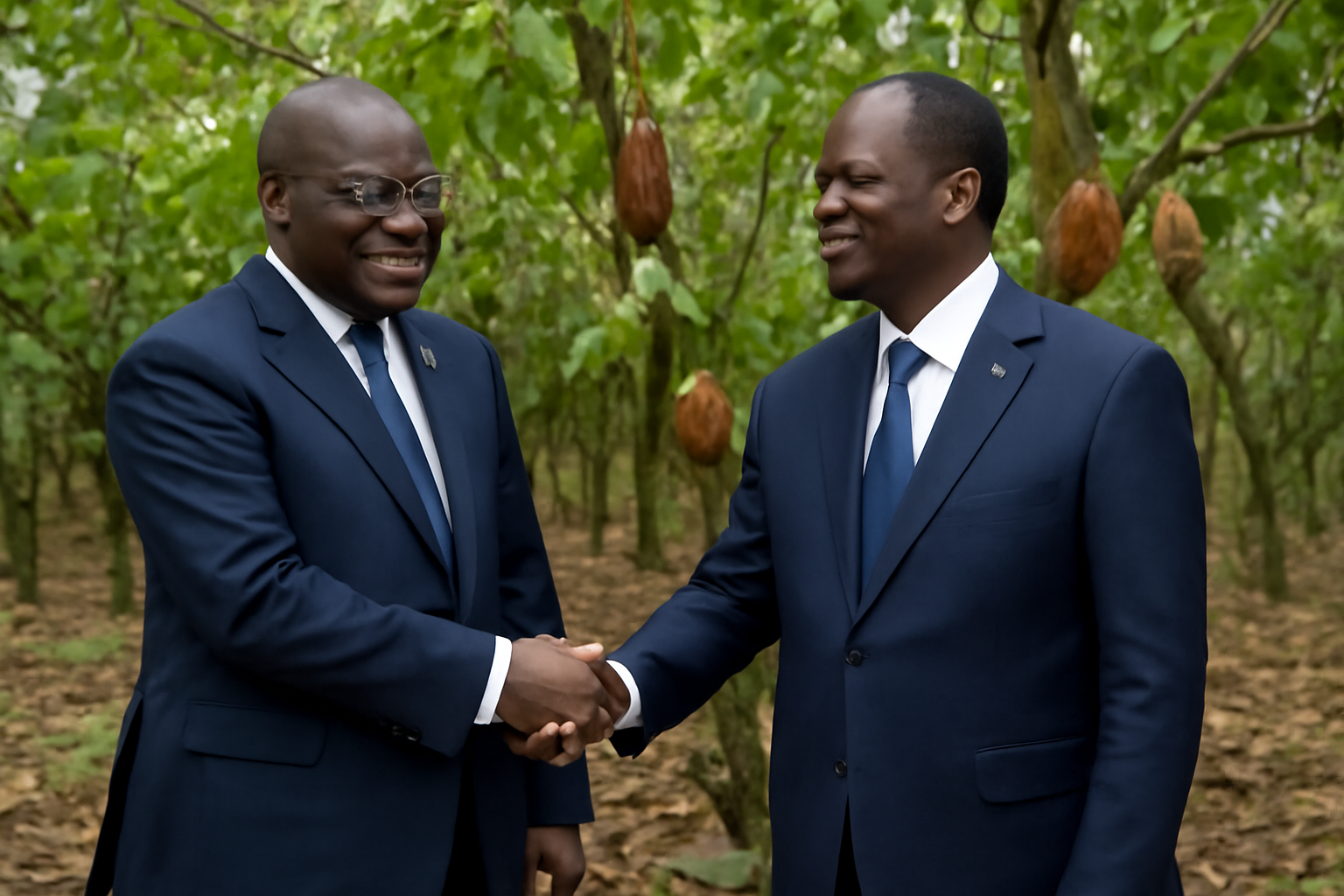
Leading producers align their cocoa policies
Ghana and Côte d’Ivoire, the world’s two largest cocoa-producing countries, have signed a joint declaration pledging closer cooperation across several parts of the industry. The commitments cover fairer prices for farmers, expansion of local processing, environmental protection and scientific cooperation.
The declaration brings the two neighboring West African producers closer together on issues that affect the entire cocoa value chain. Their decisions matter beyond the farm gate because cocoa beans grown in both countries supply processors and chocolate manufacturers serving global consumer markets.
No specific farmer price, production target, processing capacity or implementation timetable was disclosed in the material accompanying the announcement. The declaration therefore establishes a common direction, while its commercial impact will depend on the policies, financing arrangements and enforcement measures adopted by both governments.
Farmer income moves to the center
The pricing commitment is intended to secure fairer returns for cocoa growers. Ghana and Côte d’Ivoire have a shared interest in improving farm income because cooperation can reduce the risk that buyers, traders or processors shift purchases between the two origins in response to different national pricing policies.
Closer coordination could strengthen the producers’ position in discussions with international buyers. However, a declaration alone does not determine the price paid at the farm gate. Export prices, domestic pricing systems, crop quality, financing costs and the practical application of government policy will continue to shape the amount received by farmers.
For traders and processors, greater policy alignment may make procurement rules more consistent across the two origins. It may also limit opportunities to use differences between national systems when negotiating purchases. Market participants will need to monitor how each country translates the joint commitments into buying conditions and supply-chain requirements.
Local processing targets more domestic value
The pledge to support local processing signals an effort to retain a larger share of cocoa-related economic activity in producing countries. Processing beans domestically can extend the industry beyond primary production and create additional demand for industrial facilities, storage, power, transport and technical services.
The declaration does not identify individual plants, investors or new capacity. Its significance for processors will therefore depend on whether the countries introduce incentives, improve infrastructure or establish other measures that make domestic conversion commercially competitive. Exporters may also face a changing product mix if more cocoa is processed before leaving the region.
For global buyers, additional processing at origin could broaden sourcing options, but it could also change the balance between exports of raw beans and processed cocoa products. Logistics providers would need to adapt equipment, warehousing and handling practices to the requirements of different products.
Environmental and scientific commitments
Environmental protection is another part of the joint declaration. This places production practices alongside pricing and industrial development, reflecting the need to consider how cocoa cultivation affects land and natural resources. The practical consequences will depend on the standards selected and the way compliance is verified.
Scientific cooperation could help the two countries share knowledge relevant to production, processing and environmental management. The announcement does not specify research programs or institutions, leaving the scope of this work to future implementation.
The declaration is an important coordinated policy signal from the cocoa sector’s two leading producers, but the next stage will be decisive. Farmers, traders, processors and investors will be looking for concrete rules on pricing, investment and environmental compliance. Those details will determine whether the agreement changes commercial behavior or remains primarily a statement of shared priorities.