Ghana raises cocoa farmgate price, widening gap with Côte d’Ivoire
Ghana will pay cocoa farmers 42,400 cedis per tonne in the 2026–2027 season, 2.4% more than the rate introduced in February. The widening gap with Côte d’Ivoire could encourage cross-border smuggling and disrupt supplies from the two countries that produce more than half of the world’s cocoa.
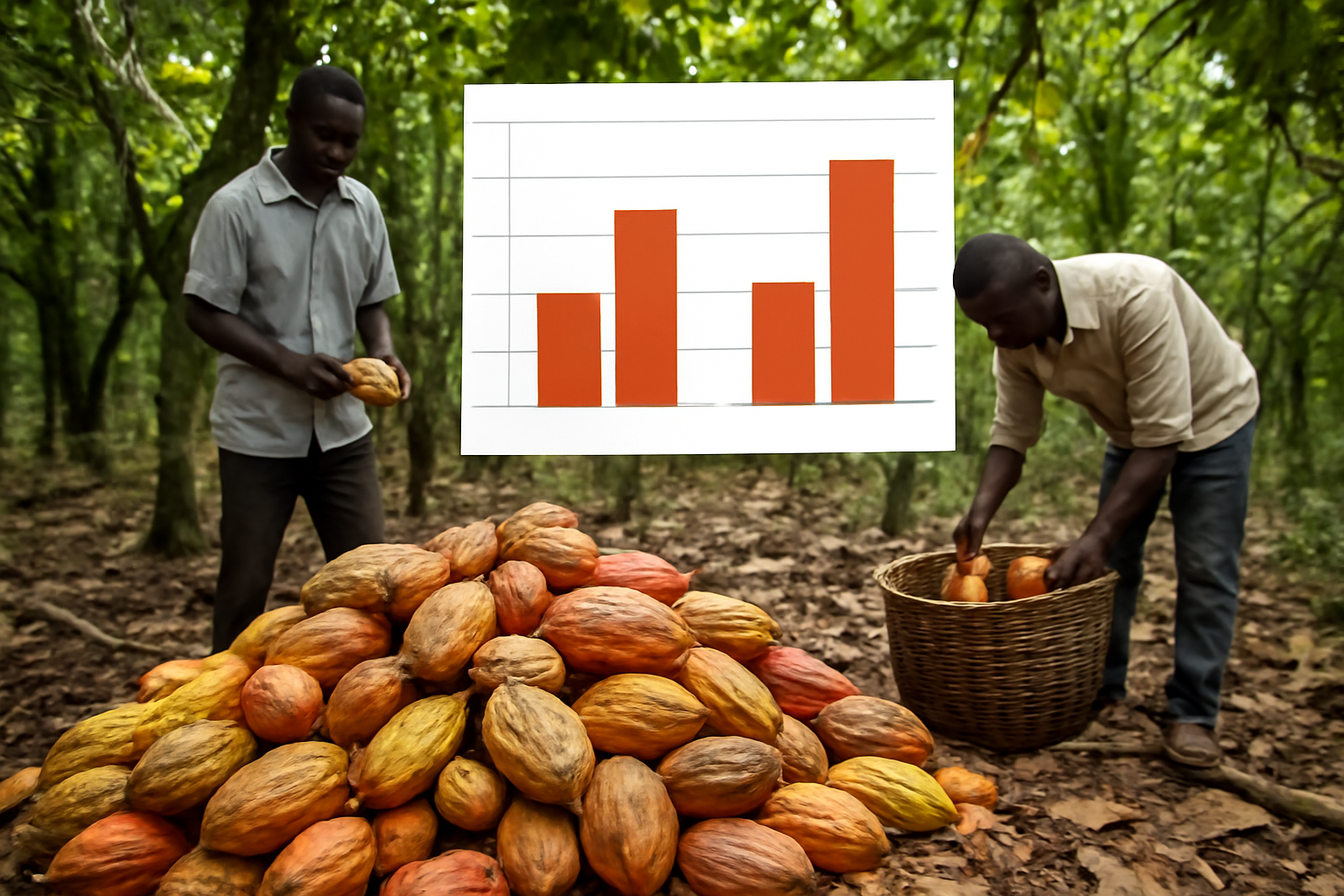
Ghana lifts farmer payments
Ghana has increased the official price paid to cocoa farmers for the 2026–2027 season, widening the difference with neighboring Côte d’Ivoire and raising concerns about cross-border smuggling. The two West African countries together account for more than half of global cocoa supply, making changes in their domestic pricing policies relevant to processors, traders and chocolate manufacturers worldwide.
Farmers in Ghana, the world’s second-largest cocoa producer, will receive 42,400 cedis per tonne when the new harvest starts on October 2. That is 2.4% above the 41,392 cedis per tonne paid since February, according to ZDNet Korea, citing Bloomberg and other international reports. Ghana Cocoa Board Chief Executive Randy Abbey said the new rate represents 71.8% of the free-on-board export price.
The adjustment supports the Ghanaian government’s commitment to give farmers at least 70% of the FOB value of cocoa exports. The policy effectively establishes a floor for the share of export revenue reaching producers, while leaving the state marketing system responsible for managing the difference between farmgate payments and international sales.
Price gap creates a smuggling incentive
Côte d’Ivoire, the world’s largest cocoa producer, kept its farmer price unchanged earlier in September. Its growers currently receive $2,084 per tonne. Ghana’s higher payment therefore creates a strong incentive for beans grown in Côte d’Ivoire to move across borders in search of better returns.
Such movements can alter where cocoa is formally recorded and delivered even if regional production itself does not change. Beans diverted from Côte d’Ivoire would reduce volumes reaching licensed buyers and export channels there, while increasing arrivals in Ghana or other neighboring markets. For international traders, the result could be delayed deliveries, uncertainty over origin and less visibility into available export supply.
Recent Ghanaian figures illustrate how cross-border flows can complicate national crop data. Ghana initially set a production target of 650,000 tonnes for the 2025–2026 season, but actual supplies exceeded 750,000 tonnes. ZDNet Korea reported that beans smuggled from neighboring countries contributed to the higher volume.
Futures rebound as crop risks persist
The price decision comes after a sharp reversal in the international cocoa market. New York cocoa futures fell to their lowest level of the year in February as global demand weakened. Ghana subsequently reduced its farmer price by about one-third to 41,392 cedis per tonne.
Futures have since almost doubled and are trading at around $5,600 per tonne. Prices have risen on expectations that West African production will decline in 2026–2027 because of crop disease and adverse weather. The region may also face a strong El Niño capable of bringing severe floods or drought.
Ghana’s increase improves the immediate return available to its farmers, but the mismatch with Côte d’Ivoire could complicate supply management across the region. If more Ivorian beans move through informal routes, the disruption would affect the timing and location of export availability rather than simply the size of the crop. That creates additional procurement and traceability risks for processors and traders already monitoring weather, disease and weaker consumption.