Germany Seeks Broader EU Trade Defenses as Chinese Automakers Expand
Berlin wants the EU to consider tariffs on Chinese-made plug-in hybrids, European-content requirements and conditions on Chinese investment. The debate carries major consequences for Tunisia, whose automotive industry employs nearly 120,000 people and sends 37% of its sector exports to Germany.
Berlin targets a gap in existing EU defenses
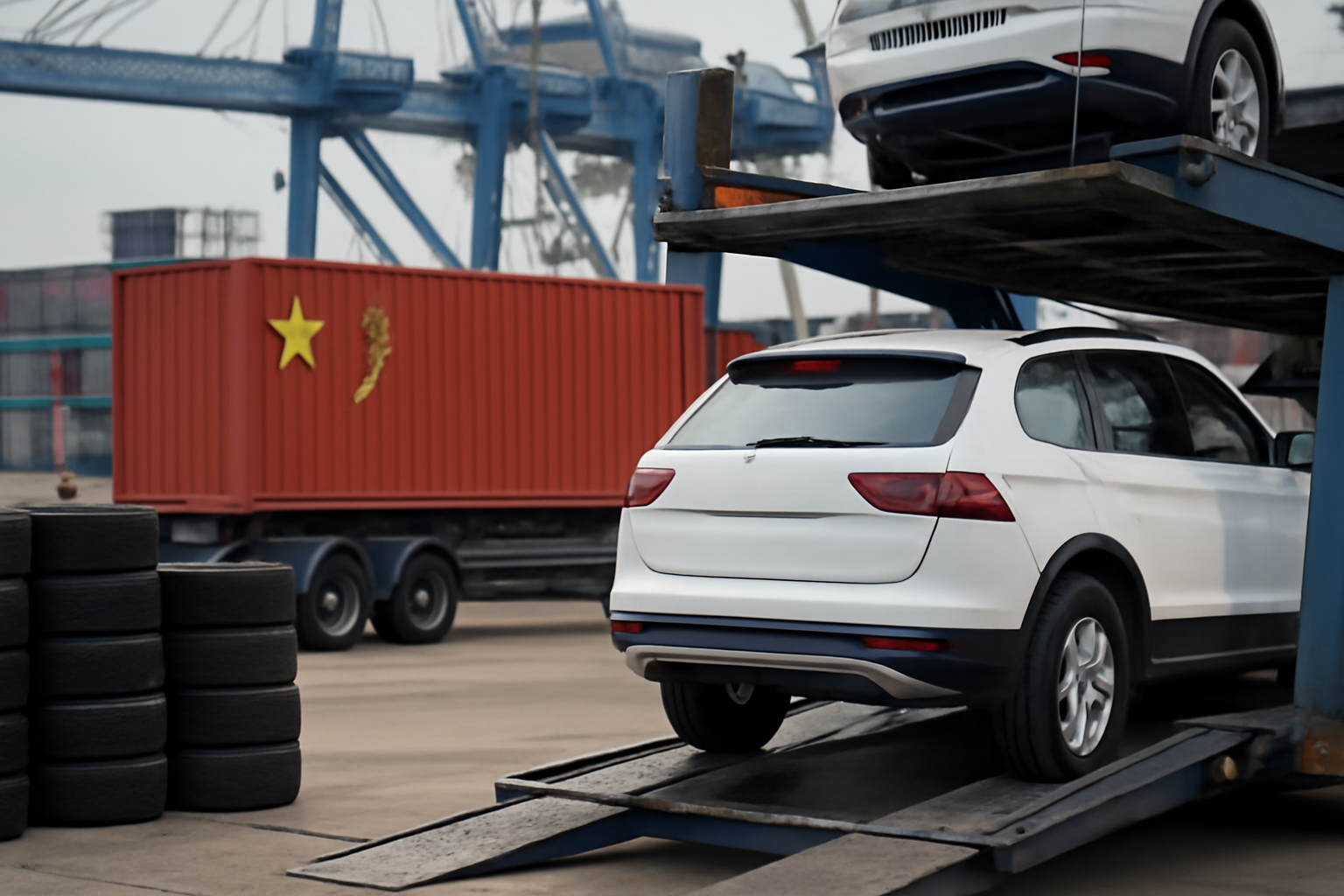
Germany is pressing the European Union to strengthen its trade defenses against rapidly expanding Chinese automakers, with plug-in hybrid vehicles emerging as the next area of scrutiny. German Vice-Chancellor and Finance Minister Lars Klingbeil said in Wolfsburg on 17 September that Berlin wanted a firmer European response to Chinese commercial practices it considers unfair, according to Tunisie Numerique.
The options under discussion include tariffs on plug-in hybrids manufactured in China, a minimum share of European components in vehicles produced locally, countermeasures against Chinese subsidies and possible joint-venture requirements when Chinese manufacturers establish production in the EU. These are proposals rather than finalized rules. Their eventual design would determine whether European protection focuses mainly on imported vehicles or also reshapes investment, sourcing and supplier relationships inside the bloc.
Plug-in hybrids become the new front
The EU has imposed countervailing duties on battery-electric vehicles made in China since October 2024. Tunisie Numerique reports additional rates of 17% for BYD, 18.8% for Geely and 35.3% for SAIC, as well as an individual rate of 7.8% for Tesla Shanghai. These charges are added to the basic 10% tariff on vehicle imports. Plug-in hybrids are not covered by the countervailing measure, giving Chinese producers a route into a fast-growing segment without the additional BEV duties.
Chinese manufacturers captured 28.3% of the European plug-in hybrid market in the first half of 2026. In the EU alone, Chinese brands accounted for about 6% of registrations during the first four months, up from 3.2% a year earlier. Across the broader market comprising the EU, the United Kingdom and EFTA countries, their share reached 9.5% in the first half and 10.9% in June. SAIC registered about 180,015 vehicles in that wider market during the half-year, followed by BYD with 172,628 and Chery with 169,727.
German restructuring raises pressure on suppliers
The policy push comes as German automotive manufacturers and suppliers cut capacity and employment. Volkswagen’s supervisory board approved a plan in early September involving about 50,000 additional job cuts by 2030. Including previously announced reductions, the total could reach about 100,000 positions, or nearly 15% of the group’s workforce. Volkswagen estimates that it has more than 500,000 vehicles of excess production capacity in Europe and is seeking alternatives to closures at Emden, Zwickau, Hanover and Neckarsulm.
Volkswagen is targeting an operating margin of 9% by 2030, compared with 3.8% in the first half of 2026. Bosch, meanwhile, plans to eliminate as many as 13,000 automotive jobs by the end of the decade. Against that background, German regions with large automotive clusters are calling for trade measures, lower industrial and energy costs, less bureaucracy and additional investment.
Tunisia faces a local-content test
Tunisia is closely exposed to these decisions through an automotive sector of about 300 companies and nearly 120,000 jobs. Around 140 companies have foreign participation, while 65% of the industry operates under a fully exporting regime. Sector exports reached approximately €3.9 billion to €4 billion in 2025, and the Tunisian Automotive Association projects more than €4.2 billion by the end of 2026.
Germany receives 37% of Tunisia’s automotive exports, ahead of France at 21%, Romania at 12% and Italy at 11%. Together, these four markets account for about 81%. Tunisia is also Germany’s largest supplier of automotive wiring harnesses, and German imports from the country have increased by 150% compared with 2020. The central question is whether future European-content rules recognize Euro-Mediterranean supply chains. A strict EU-only definition could weaken Tunisian suppliers; a broader approach could preserve their position and allow them to supply new Chinese-European plants. Tunisia could also compete for investment in components, electronics, engineering, software and research and development, although production in Tunisia would not automatically qualify as European content.