German rapeseed crop falls to 3.8 million tonnes as imports top 222,000 tonnes
Drought and summer heat cut German rapeseed yields, with Destatis putting the crop at 3.8 million tonnes against 4 million tonnes in 2025 and the DBV seeing only 3.3 million tonnes. German processors bought 222,000 tonnes from outside the EU between July and 20 August, 20% more than a year earlier. Prices on MATIF are holding near 550 euros per tonne despite larger import flows.
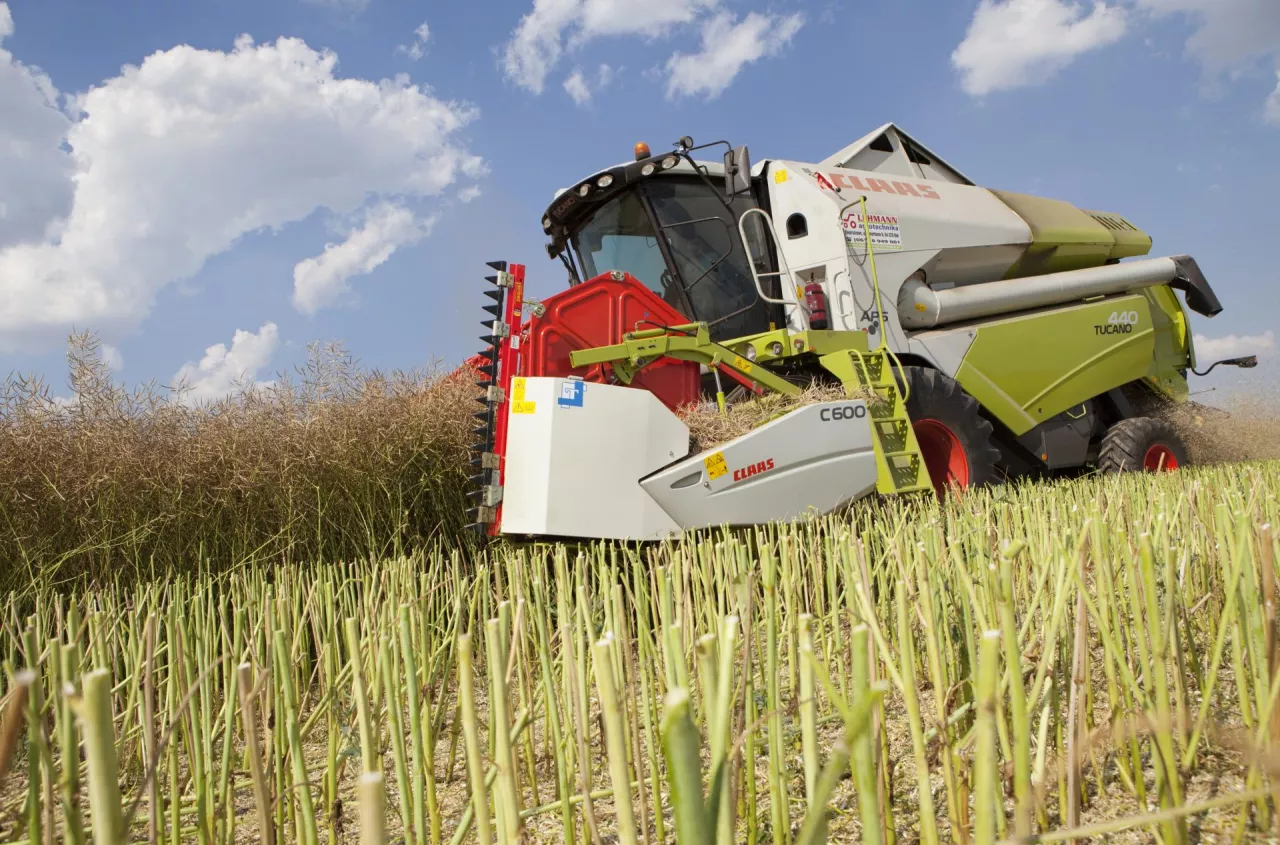
Drought and heat across large parts of Germany have cut rapeseed yields this year, pushing domestic processors into the import market from the opening weeks of the 2026/27 season. Between July and 20 August, Germany bought 222,000 tonnes of rapeseed from outside the European Union, a fifth more than in the same period a year earlier, according to topagrar.pl.
German crushers have relied on imported seed for years. This season the domestic shortfall is deeper and the usual regional suppliers have less to offer.
Estimates diverge on the size of the shortfall
Planted area has not moved. German farmers have kept rapeseed at 1.1 million hectares for several years running. Output has fallen. The Federal Statistical Office (Destatis) puts this year's crop at 3.8 million tonnes, 200,000 tonnes below the 4 million tonnes harvested in 2025, a decline of more than 5%.
Other German institutions are less optimistic. The German Raiffeisen Association (DRV) estimates the 2026/27 rapeseed crop at 3.7 million tonnes, while the German Farmers' Association (DBV) forecasts only 3.3 million tonnes.
Summer heat and drought did the damage, mainly in northern and eastern Germany, where yields came in at or below average. In some federal states average yields fell to around 2.5 tonnes per hectare. In Lower Saxony oil content was also below average, which makes the crop harder to sell efficiently.
At EU level, the USDA cut its rapeseed production estimate by 350,000 tonnes to 20.15 million tonnes, half a million tonnes less than the previous year.
Germany is the second-largest EU importer
Total EU rapeseed imports from outside the bloc reached 826,000 tonnes between July and 20 August, 6% above the same period last season. Germany's 222,000 tonnes put it second among member states:
- Belgium: 278,000 tonnes
- Germany: 222,000 tonnes
- Netherlands: 131,000 tonnes
German buyers lifted volumes by 20% even though supply from Ukraine fell by more than 40,000 tonnes. Ukraine harvested 3.8 million tonnes of rapeseed this year, up 500,000 tonnes year on year, according to European Commission data published in the JRC MARS Bulletin, but a large share of that volume is blocked because it cannot be shipped through Black Sea ports.
Regional competition has tightened. Poland, normally a supplier to German crushers, has little to spare this season, and German and Polish processors are now bidding against each other for Romanian and Czech seed. Polish estimates of the domestic crop vary widely: the European Commission opened the season at 3.28 million tonnes, the KZPRiRB and members of PSPO put it at 2.8 to 3.2 million tonnes, and the statistics office GUS estimated 3.1 million tonnes at the end of July. A pre-final estimate is due at the end of September, and growers in several regions report surprisingly low yields.
Prices hold near 550 euros per tonne
Heavier import flows have not loosened the price. Rapeseed on MATIF ended the previous week below 550 euros per tonne, then gained 6.5 euros on Monday 21 September 2026 to move back above 555 euros per tonne. Corrections followed, and on Thursday 24 September the November contract was quoted at 549.50 euros per tonne, one euro more than a week earlier.
Polish cash prices barely moved. The average purchase price at trading companies rose 3 zloty to 2,354 zloty per tonne, within a range of 2,200 to 2,500 zloty per tonne. At Kosow Lacki, processors quoted 2,470 zloty per tonne and 2,350 zloty per tonne for September/October delivery depending on parameters. Quotations are as of 12:30 on 24 September 2026.