Germany’s new dairy rules clarify when milk may be marketed as “fresh”
Updated German dairy rules clarify the labeling distinction between fresh and ultra-high-temperature milk. The change affects how processors describe products, while food-monitor.de notes that UHT treatment uses temperatures of at least 135°C and has a stronger effect on taste and nutrient content.
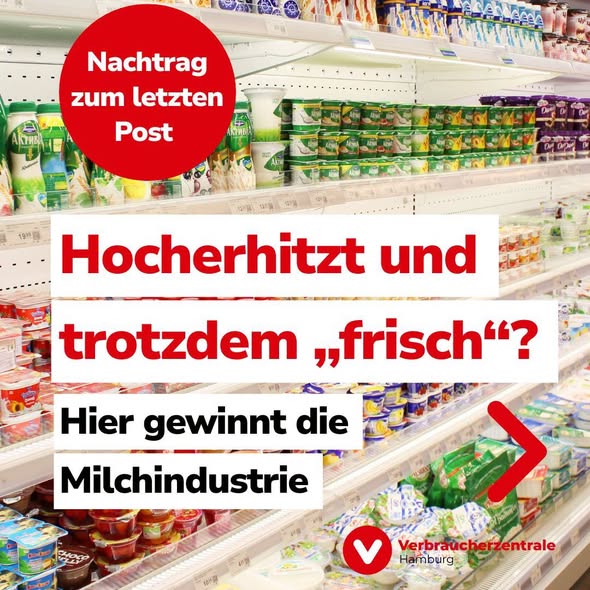
Germany defines the limits of “fresh” milk marketing
Germany’s updated dairy regulation clarifies what the word “fresh” means on milk packaging and distinguishes fresh milk from products treated at ultra-high temperatures. The rules directly affect dairy processors because freshness is both a product characteristic and a prominent marketing claim in the German retail market.
According to food-monitor.de, many consumers regard freshness as a central indicator of milk quality. Producers and retailers therefore have a commercial incentive to emphasize the term on packaging. The new legal framework is intended to make clearer how long milk described as fresh can legitimately retain that designation.
The distinction matters because different heat treatments produce milk with different characteristics. Clearer terminology allows buyers to identify the processing method more easily instead of relying primarily on broad promotional language. For processors, packaging descriptions must now reflect the legally defined category of the product.
UHT processing becomes a key dividing line
Food-monitor.de reports that ultra-high-temperature treatment involves temperatures of at least 135°C. This separates UHT milk from products marketed as fresh and provides a concrete technical basis for the labeling distinction. Heat treatment is central because it determines how the product is processed before reaching wholesalers and retailers.
The publication also states that treatment at such temperatures has a stronger effect on both the taste and nutrient content of milk. The regulation therefore concerns more than wording. It connects the freshness claim with processing conditions that can influence the characteristics consumers associate with quality.
For dairy companies, the distinction may require closer coordination between production, quality assurance and packaging teams. A label must correspond to the treatment used at the plant. Marketing departments will have less room to use freshness terminology independently of the technical classification established during processing.
Implications for processors and retailers
Processors selling both fresh and UHT milk will need to maintain a visible difference between the categories across packaging and product communication. That can affect label design, positioning and the way product ranges are presented to retail customers. The rule also gives retailers a clearer basis for explaining differences between products on the shelf.
The available source material does not specify penalties, implementation deadlines or expected compliance costs. It also provides no figures for German milk production, prices or trade flows. The immediate industry significance is therefore concentrated in product classification, labeling accuracy and the use of “fresh” as a commercial claim.
For producers, the practical issue is whether packaging accurately represents the treatment applied to the milk. For buyers and market analysts, the updated terminology should make comparisons between fresh and UHT categories more consistent. The commercial value of freshness remains, but its use is now tied more explicitly to the product’s processing method.