German machinery orders rise as demand outside Europe offsets regional weakness
German machinery and plant manufacturers recorded a 5% increase in orders in the first half, driven by 16% growth outside Europe. Orders fell 8% in Europe and 2% in Germany, leaving the sector dependent on overseas demand for a broader recovery.
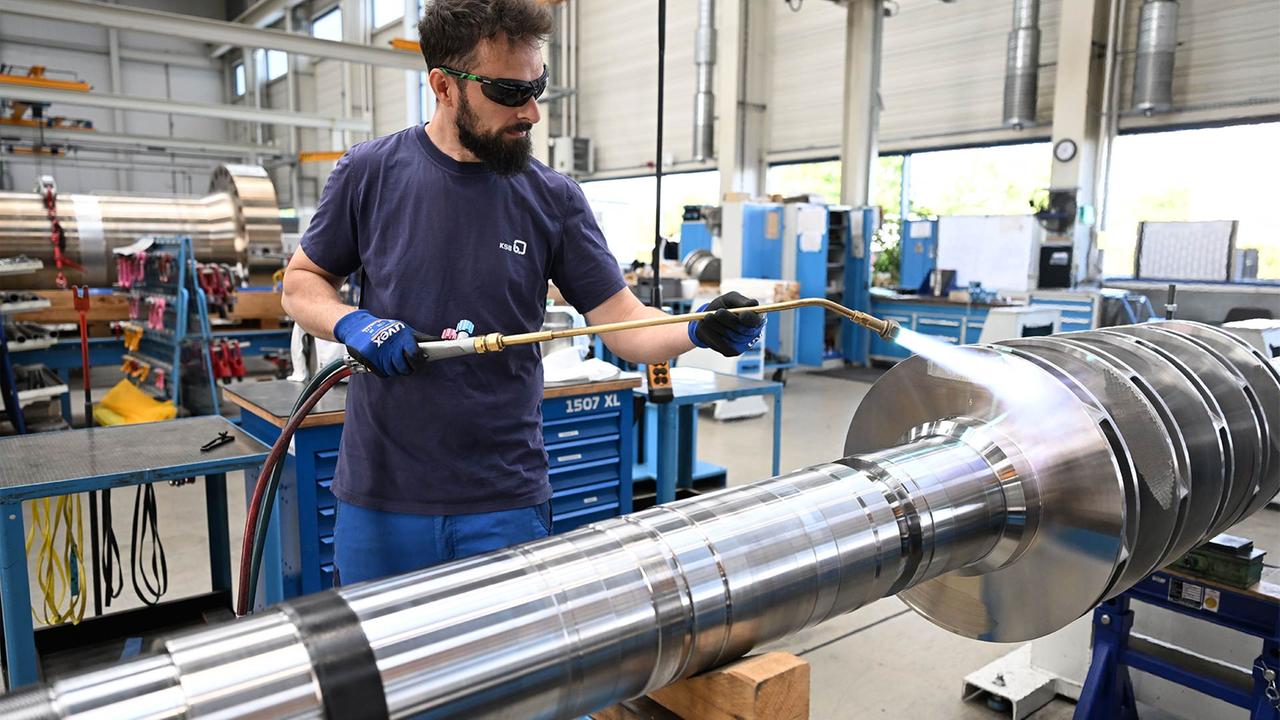
Overseas orders drive first-half growth
German machinery and plant manufacturers recorded a 5% year-on-year increase in orders during the first half, according to figures from the German Machinery and Equipment Manufacturers’ Association, VDMA, reported by Tagesschau. The improvement was led by markets outside Europe, where orders rose 16%.
The figures contrast with continued weakness closer to home. European orders declined 8%, while orders from Germany fell 2%. This divergence makes non-European customers the principal source of growth for a sector operating amid broader pressure on German industry.
Production could follow with a delay
VDMA economist Florian Scholl said the positive movement had already become visible with a slight increase in the final quarter of 2025 and was continuing. Machinery production normally reacts to orders with a delay, meaning part of the first-half improvement could appear in factory output over the following weeks.
Jürgen Matthes, a foreign-trade specialist at the German Economic Institute, said a sustained rise in overseas business could support an upturn in Germany. Strong foreign demand has previously encouraged manufacturers to raise production and subsequently invest more, creating a broader domestic expansion. The latest figures, however, do not yet establish that such a cycle has begun, particularly while European demand remains weak.
United States provides a brighter market
High-precision toolmaker Paul Horn GmbH illustrates the uneven conditions. The family-owned company manufactures primarily high-precision tools across 30,000 square metres in Tübingen and employs 1,500 people worldwide. Its customers include the automotive, aerospace and machinery industries. Managing director Markus Horn told Tagesschau that business in Germany and Europe remained weak, while the company was seeing growth outside Europe.
The United States is performing particularly better for Paul Horn. Matthes linked improving demand there to a stronger US economy and the partial withdrawal of tariffs on machinery products, which reduced the tariff burden and improved the price competitiveness of German suppliers. Paul Horn continues to invest millions in Tübingen despite relying on its international focus to capture growth.
Costs and Chinese competition remain obstacles
Industry representatives cautioned that stronger foreign orders do not remove the sector’s domestic constraints. Matthes identified bureaucracy surrounding implementation of the energy transition as a major obstacle. Scholl pointed to labour costs, arguing that social contributions above 40% were too high. Horn called for additional skilled immigration, financial relief for citizens and stronger federal reforms to enable companies and households to invest more.
Competition from China is another concern. Matthes said Chinese products were entering German and European markets at dumping prices, supported by an undervalued currency and substantial subsidies. He advocated countervailing tariffs to offset that advantage. For machinery producers, the first-half data therefore represent a possible turning point rather than a completed recovery: overseas orders are improving and may lift production, but weak European demand, high domestic costs and international price competition continue to limit the outlook.