German fruit growers warn domestic orchard industry is at risk
Germany’s fruit growers say low prices, rising labor costs and competition from imports are pushing farms out of business. The industry association reports that roughly one fruit-growing operation disappears every two days, while the country expects its lowest open-field strawberry harvest in more than 30 years.
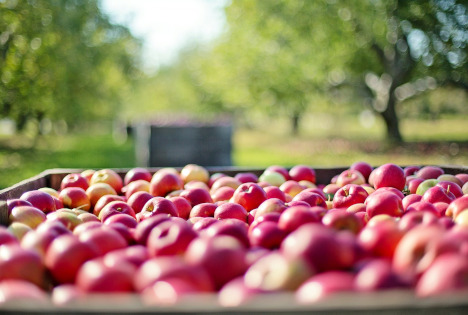
Growers call for action on domestic fruit production
Germany’s fruit-growing industry has warned that worsening economic and regulatory conditions are threatening the survival of domestic farms. In an open letter reported by Fruchtportal, the Bundesfachgruppe Obstbau, Germany’s specialist fruit-growing association, asked whether the country still wants to maintain a domestic fruit sector.
The association said consumers want regional supplies of high-quality, safe and sustainably produced food. However, it argued that low market prices, increasingly demanding requirements, rising financial burdens and a lack of planning certainty are bringing many fruit farms to their limits. Without more reliable operating conditions, it said, a long-term regional supply of high-quality produce will not be viable.
The appeal is directed at policymakers, retailers and consumers. Growers are seeking a clear commitment to fruit production in Germany, backed by purchasing decisions and policies rather than promotional campaigns alone.
Imports and low prices squeeze growers
The association highlighted several examples of pressure across the market. It said thousands of tonnes of German apples can be sent for juice processing in the same facilities where apples from the Southern Hemisphere are packed for retail sale. German sweet cherries, meanwhile, are reportedly being left unharvested because cheaper imports have entered the market.
Plums and blueberries are being traded below production costs, according to the association. As a result, more farms are questioning whether harvesting their crops remains economically worthwhile. Germany is also expected to record its lowest open-field strawberry harvest in more than 30 years this year.
These developments affect different parts of the supply chain. Growers face the immediate risk of selling below cost or abandoning a harvest, while processors may receive domestic fruit that cannot secure a higher-value fresh-market outlet. Retailers and importers continue to have access to foreign supply, but the association warned that replacing domestic production with imported fruit would increase Germany’s dependence on external sources.
Labor costs and regulation intensify pressure
German fruit farms operate under high quality, environmental and social standards, the association said. Producers have invested in biodiversity, water and climate protection, as well as modern methods designed to conserve resources. The sector also supports employment, maintains cultivated landscapes and contributes to regional economic activity through short transport routes.
At the same time, production costs—and wages in particular—are rising sharply. The association said special provisions for labor-intensive specialty crops are lacking. Fruit growers must therefore manage not only weather extremes but also political and economic conditions that the industry considers increasingly unfavorable.
The consequences are already visible. According to the Bundesfachgruppe Obstbau, approximately one fruit-growing business now disappears in Germany every two days. The association rejected the view that the sector is merely passing through a weak market phase, describing the trend as a rapid retreat from domestic fruit production.
Lost capacity may be difficult to restore
The growers acknowledged that Germany cannot produce all the fruit it consumes. Their concern is that domestic fruit is being replaced more frequently even where local production remains possible. They argued that regional sourcing cannot function solely as a marketing claim if retailers and consumers are unwilling to absorb any additional cost associated with German production standards.
The open letter calls on retailers to support domestic fruit through procurement and on consumers to reflect that preference at the checkout. Growers say they remain prepared to invest and produce, but cannot compete indefinitely against rising costs, unfavorable policies and prices they consider destructive.
For the industry, the central issue is productive capacity. Orchards, skilled labor, farm infrastructure and commercial relationships take time to establish. The association warned that farms and production systems lost today cannot simply be rebuilt when market conditions change, leaving Germany with a narrower domestic supply base and greater reliance on imported fruit.