German brewers face deeper sales slump as Oktoberfest masks weak demand
German beer sales fell 6% in 2025, while alcoholic beer volumes declined another 2.2% in the first half of 2026. Oktoberfest remains a powerful showcase for Munich’s six authorized breweries, but discounting, higher costs and a possible sugar tax are increasing pressure on producers.
Beer consumption continues its long decline
Germany’s brewing industry is entering another difficult year as declining consumption combines with higher costs and aggressive retail pricing. Manager Magazin reports that domestic beer sales fell 6% in 2025. In the first half of 2026, sales of alcoholic beer decreased by another 2.2% year on year to about 3.8 billion liters.
The contraction extends a long-term shift in consumer behavior. Annual per-capita consumption has dropped from about 150 liters in the 1970s to less than 90 liters in 2025. Since 2019, 137 breweries have closed, and four insolvencies were recorded in 2026. Fabian Huhle, a senior partner at Roland Berger, told Manager Magazin that permanently declining demand is colliding with sharply higher costs and intense retail price pressure.
Oktoberfest offers visibility, not immunity
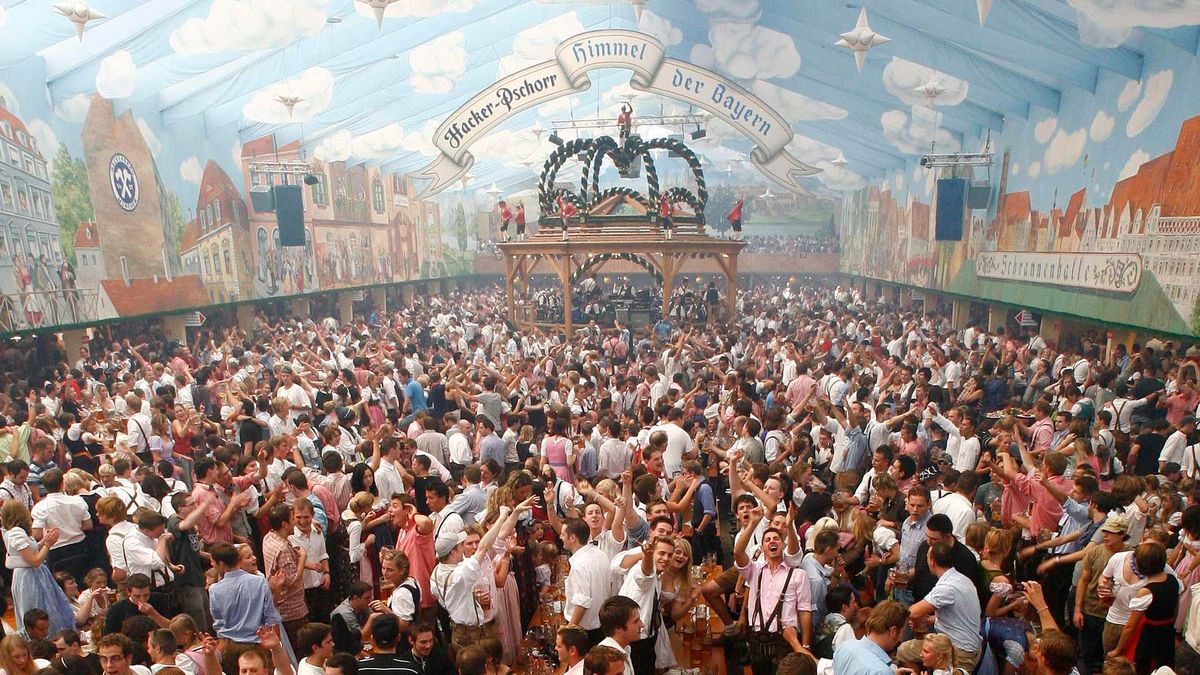
Oktoberfest remains the world’s most visible platform for Munich beer, but the festival reflects the broader slowdown. Its approximately 6.5 million visitors consumed 6.71 million liters in 2025, down from 6.96 million liters in 2024 and well below the 2011 record of 7.92 million liters. A one-liter Maß now costs as much as €15.90.
Only six Munich breweries are authorized to supply the festival, a limit that has remained in place since 1952. They include Augustiner, Paulaner and Hacker-Pschorr. The event gives these producers international brand exposure, although Oktoberfest generally represents only a small share of their annual revenue. Alcohol-free beer accounts for about 5% of beer sold at the festival, compared with more than 10% in German retail.
The six suppliers are not equally exposed to the downturn. Augustiner does not publish current operating figures; its latest available filing showed revenue of about €210 million in the 2020/21 financial year. The Paulaner Brewery Group, owned approximately 70% by the Schörghuber family and 30% by Heineken, increased sales volume by 13.8% to 7.9 million hectoliters in the previous year, according to Lebensmittel Zeitung. Lager-style pale beer and alcohol-free beverages around the Paulaner Spezi brand drove the growth.
Discounts and taxation threaten diversification
The football World Cup provided a temporary lift in June 2026, when sales rose 5.2% from a year earlier. However, discounts of up to 44% around the tournament partly reversed price increases that breweries had worked to secure, according to Huhle. Strong promotional volumes therefore did not necessarily translate into stronger margins.
A possible sugar tax from 2027 could add pressure by covering alcohol-free beer, beer-based mixed drinks and Fassbrause. These categories have become important alternatives as conventional beer demand declines, while some breweries have also expanded into soft drinks. Huhle argues that breweries pursuing consistent cost leadership or building strong premium brands have the best prospects in a contracting market. Oktoberfest can reinforce brand value, but it cannot by itself offset lower consumption, retailer pressure and the cost of adapting product portfolios.