Iran's Agricultural Exports Shift Away From the UAE as Freight Rates Jump Fivefold
Container freight on the Iran-UAE route has risen from about 5,000 to 25,000 dirhams, and Iranian agricultural shipments to the Emirates are down roughly 20%, according to Donya-e-Eqtesad. Part of the cargo is being redirected to Russia, Iraq and Afghanistan, while the sector's trade balance stood at minus $4.6 billion in the first nine months of the Iranian year 1404.
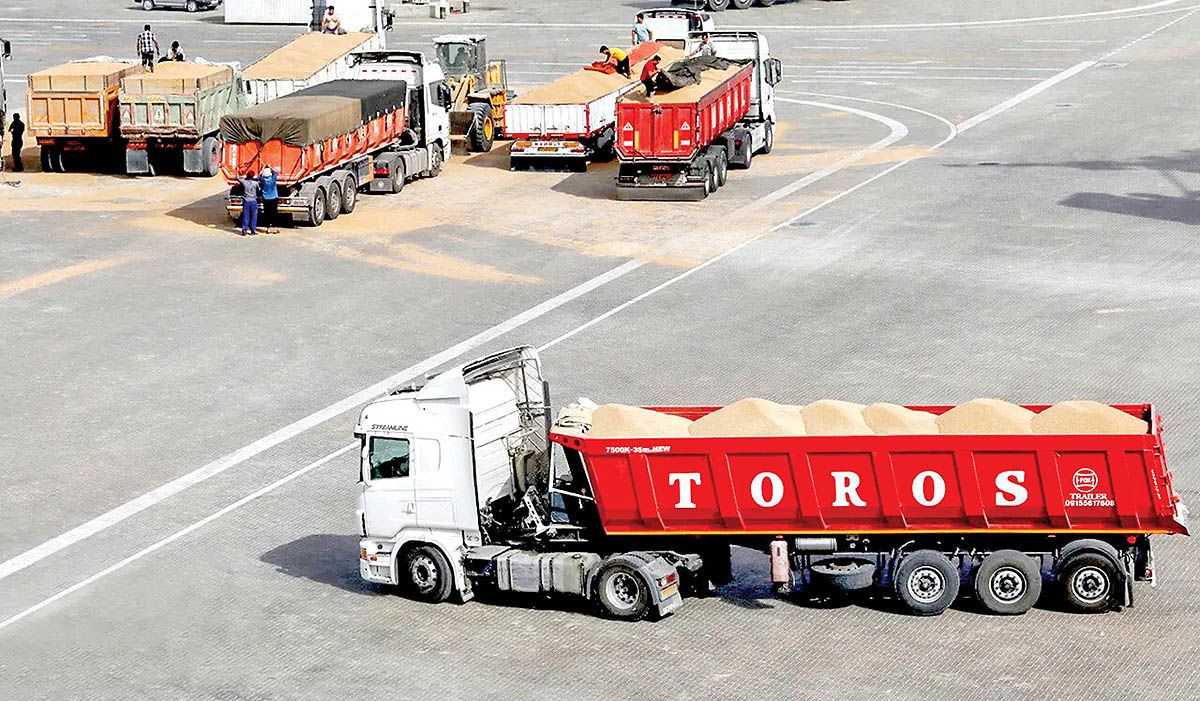
Geopolitical uncertainty is redrawing the map of Iran's agricultural exports. Sharply higher freight rates, reduced access to shipping capacity and growing difficulty in repatriating export earnings have cut shipments to the United Arab Emirates and pushed part of Iran's farm cargo toward Russia, Iraq and Afghanistan, the Tehran business daily Donya-e-Eqtesad reported.
Container rates to the UAE up roughly fivefold
Sadreddin Niavarani, deputy head of the Export Development Commission at the Iran Chamber of Commerce, told Donya-e-Eqtesad that moving one container on the UAE route used to cost about 5,000 dirhams and now costs about 25,000 dirhams. Freight on that corridor has therefore risen by roughly five times, or more than 400%. The increase is far from uniform: on routes to Iraq, he said, rates are up only about 15% to 20%.
Export volumes to the Emirates have fallen by about 20%. Niavarani attributed part of that decline to a shrinking working population in the UAE, as Iranians, Indians and other foreign nationals have left the country, weakening demand. He stressed that the market itself has not closed: Iranian apricots, cherries, lettuce and other vegetables are still on sale in Emirati markets, and export borders remain open.
Border handling has been eased, according to Niavarani, with management largely devolved to the provincial level and customs authorities not holding up consignments. Agricultural exporters currently face no significant delays at crossings.
A concentrated trade structure and a $4.6 billion deficit
Figures from the National Center for Strategic Studies on Agriculture and Water at the Iran Chamber of Commerce, cited by Donya-e-Eqtesad, show the trade balance for agricultural products and the food industry at minus $4.6 billion in the first nine months of the Iranian year 1404. The partner structure is highly concentrated:
- Iraq accounts for 39% of agricultural exports, the single largest destination.
- The UAE accounts for 33% of agricultural imports, the largest source.
- More than 30% of Iran's agricultural imports arrive from the UAE.
- About one-fifth of agricultural exports go to the UAE.
That concentration leaves the supply chain for both basic goods and farm exports exposed to any disruption in relations with the UAE and other southern Gulf states, the newspaper noted.
Volumes shift to Russia, Iraq and Afghanistan
Akbar Fathi, deputy for planning and economic affairs at the Ministry of Agriculture Jihad, told the newspaper that the global food market is not limited to one or a few countries and that alternative outlets must be developed whenever one market becomes problematic. He pointed to Iran's ties with Eurasian states and its status as an observer member of the Eurasian Economic Union, and said Russia had been designated an alternative export destination because of the size of its market.
Fathi said trade with the UAE has not been severed and Iran continues to supply part of that country's needs, so there is no serious concern about the target market. Around 30% of Iran's imports used to come through the UAE, he said, and part of that volume is now sourced from other countries, although some goods still move along the Emirati route. Shifts in shipping routes, he added, have raised freight costs substantially, with a noticeable effect on trade.
Exports continued through the 40-day war, Fathi said, apart from restrictions imposed in the first hour or two to establish order, after which shipments returned to their normal pattern. He acknowledged heavy import dependence for animal feed inputs while saying the ministry is working to improve the trade balance by raising exports relative to imports.
Currency repatriation is the binding constraint
Niavarani identified three main problems for exporters: higher freight rates, fewer available carriers, and difficulty returning money and foreign currency. The last has become the most serious. With banking channels and many transactions in the UAE restricted, simply extending the deadline for meeting currency repatriation obligations will not solve the problem; foreign currency still enters Iran, but part of it returns through unofficial channels.
He called on the central bank to set repatriation terms in line with current trading conditions and urged parliament to remove foreign currency from the scope of the law on combating goods and currency smuggling, arguing that exporters bringing earnings home should not be placed in the same category as smugglers.