FSSAI crackdown revives dispute over rum and whisky labels in India
India’s food-safety regulator has prohibited several well-known rum and whisky labels after tests found neutral alcohol and added flavouring. The action renews scrutiny of molasses-based spirits, ageing claims and the definitions applied to Indian-made foreign liquor.
Popular labels face regulatory action
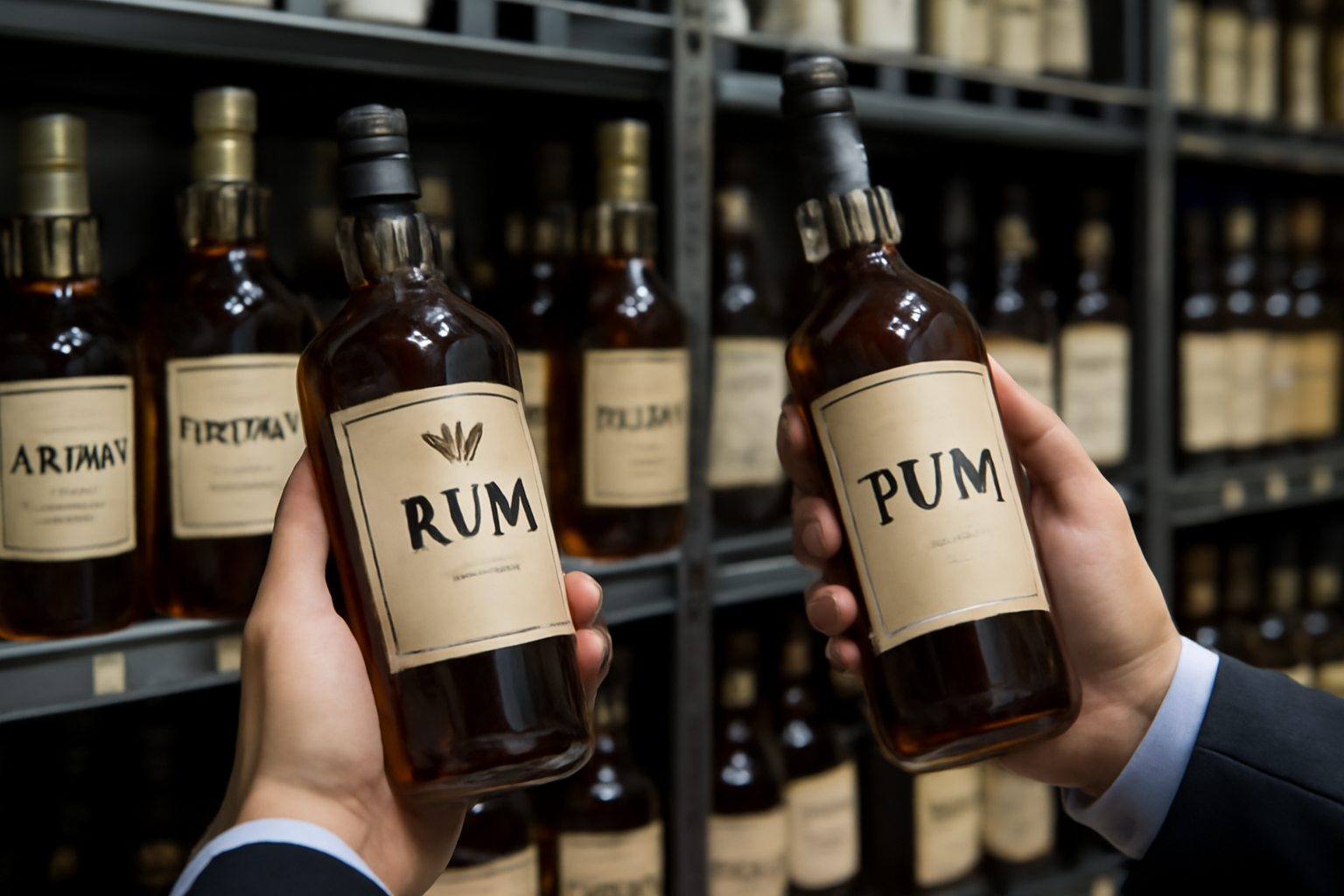
India’s Food Safety and Standards Authority, FSSAI, has prohibited the sale of several popular rum and whisky labels after laboratory tests found neutral alcohol and added flavouring were being used to imitate the declared products, ThePrint reported. The affected labels include Old Monk The Legend, Gold Reserve and XXX Matured Rum, as well as McDowell’s No 1 Rum, Bagpiper Deluxe Whisky, Old Cask Deluxe Rum and Royal Challenge Whisky.
The action has reopened a long-running dispute over how Indian-made foreign liquor is formulated and described. Much of India’s mass-market spirits industry has historically relied on Extra Neutral Alcohol, or ENA, produced by fermenting and distilling sugarcane molasses. ENA is nearly colourless and flavourless, allowing producers to use it as a base for spirits differentiated through flavouring, colouring and blending.
Rum may legitimately be produced from molasses, but regulators and industry specialists are questioning whether some labels accurately disclose their composition and maturation. According to an FSSAI statement cited by ThePrint, Old Monk’s “7 years old blended” rum contained less than 5% matured rum spirit. Spirit caramel is permitted for colouring under Indian food-safety rules; the compliance issue arises when the character or age of the product is misrepresented.
Definitions divide India and overseas markets
Molasses creates a sharper classification problem for whisky. Rakshay Dhariwal, founder of agave-spirit brand Pistola, told ThePrint that a molasses-based blend should not be called whisky. Trade estimates cited by the publication suggest that more than 90% of the product sold as whisky in India would not legally qualify as whisky in the United States or Europe because it does not meet their grain and ageing requirements.
The dispute has affected overseas market access before. In 2002, the European Union said India could sell molasses-based whisky in Europe as rum, but not as whisky. The following year, the EU rejected India’s request for greater market access for the category because molasses-derived alcohol did not qualify. The difference between domestic and foreign definitions has consequently limited the credibility of some Indian brands seeking to move beyond the low-price segment.
Regulation is also tightening around the raw material. Uttar Pradesh’s Excise Policy 2026-27 regulates the allocation, storage and processing of molasses. It stipulates that molasses-based alcohol may be used only for country liquor and rum, while other Indian-made foreign liquor must use grain-based alcohol. Maharashtra issued new molasses rules and a dual-feed ethanol policy in 2025, while Uttar Pradesh amended its molasses-control rules again in 2026.
Premium producers turn to grain and sugarcane juice
A separate premium segment is developing around more clearly defined ingredients and production methods. John Distilleries uses 100% Indian malted barley for its Paul John whisky in Goa, including double distillation in copper pot stills and maturation in charred American oak and selected sherry casks. Newer rums such as Camikara are distilled from fresh sugarcane juice rather than molasses.
Demand is also shifting, although premium products remain a minority of the market. IWSR data cited by ThePrint show that premium spirits volumes increased by about 9% in 2025 from the previous year, while their value rose by 12%. For producers, the FSSAI action raises the cost of ambiguous formulations and labelling. For retailers and distributors, it creates an immediate need to review affected inventory, while grain distillers and transparent premium-rum producers may gain from stronger enforcement of product definitions.