French peach and nectarine output nears 220,000 tonnes despite 2026 heatwaves
France’s preliminary 2026 peach and nectarine harvest reached nearly 220,000 tonnes despite five heatwaves. Sales rose by more than 12% year on year, but pest damage and excess late-season nectarine supply remain concerns.
Production holds up through five heatwaves
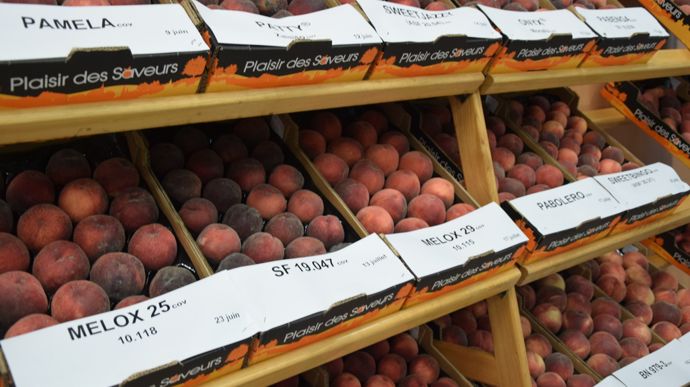
France’s peach and nectarine industry maintained production and strong commercial performance during the preliminary 2026 campaign despite five heatwaves over the summer. La France Agricole reported that orchards were less affected than crops with greater heat sensitivity, while high temperatures supported consumer demand.
Agreste, the statistical service of the French Ministry of Agriculture, said on 9 September 2026 that heat locally reduced fruit size, particularly among late varieties. However, it did not significantly affect overall tonnage because peach orchards are widely irrigated and peach trees tolerate heat relatively well.
Preliminary production is estimated at nearly 220,000 tonnes, close to the 224,000 tonnes forecast by Medfel. Almost 157,000 tonnes are expected to come from members of the national producer association AOP Pêches et Abricots de France, up from 146,000 tonnes in 2025.
Young orchards and strong demand lift the campaign
Raphaël Martinez, director of the AOP, said at a technical meeting on 15 September at the CTIFL centre in Balandran, Gard, that peach production was high and regular at about 4,000 tonnes per week. Nectarine volumes ranged from 6,000 to 7,000 tonnes per week before exceeding 8,000 tonnes at the end of August.
The final harvest could exceed the preliminary estimate. Picking was still under way, and orchard renewal of close to 6% over the previous two winters has brought young, high-yielding plantations into production. Martinez expected volumes to continue growing because temperatures remained high at the end of August and throughout September. The industry has nevertheless urged caution over new planting projects to avoid oversupply, particularly because late-season nectarine availability is already considered excessive.
Commercial results were also favorable. Summer weather and promotional activity, including the AOP’s Peach and Nectarine Festival, helped sales increase by more than 12% from 2025 despite higher prices. Agreste reported that August 2026 prices stabilized at elevated levels, 6% above both 2025 and the 2021-2025 five-year average. Stocks stood at about 6,000 tonnes at the end of August, compared with 7,300 tonnes a year earlier, indicating that the larger flow of fruit was being managed more effectively.
Pests and Spanish competition remain risks
Plant health was the campaign’s main production concern. Orchards faced exceptionally severe attacks by sap-feeding pests, including aphids, rose thrips and leafhoppers. Damage caused losses of up to 25% for nectarines and directly reduced marketable volumes. The producer association said it had mobilized the research and development network to identify solutions and was working with the French national fruit producers’ federation to preserve crop-protection options.
Competitive pressure is also increasing in flat peaches. Spanish producers regained market share at the expense of French round peaches, according to La France Agricole. The French industry is therefore considering how to expand domestic flat-peach production. For growers and marketers, the campaign shows that irrigation, heat tolerance and orchard renewal can protect output, but future planting decisions must account for pest pressure, late-season supply and competition from Spain.