Heat and drought damage French maize; growers trial African sorghum varieties
French producers say almost half of this year's maize harvest is unusable after summer heatwaves and continuing drought hit crops across Europe. Cereal growers are trialling sorghum varieties of African origin as a more heat- and drought-tolerant alternative. The damage has consequences for feed mills, starch processors and buyers across the European Union.
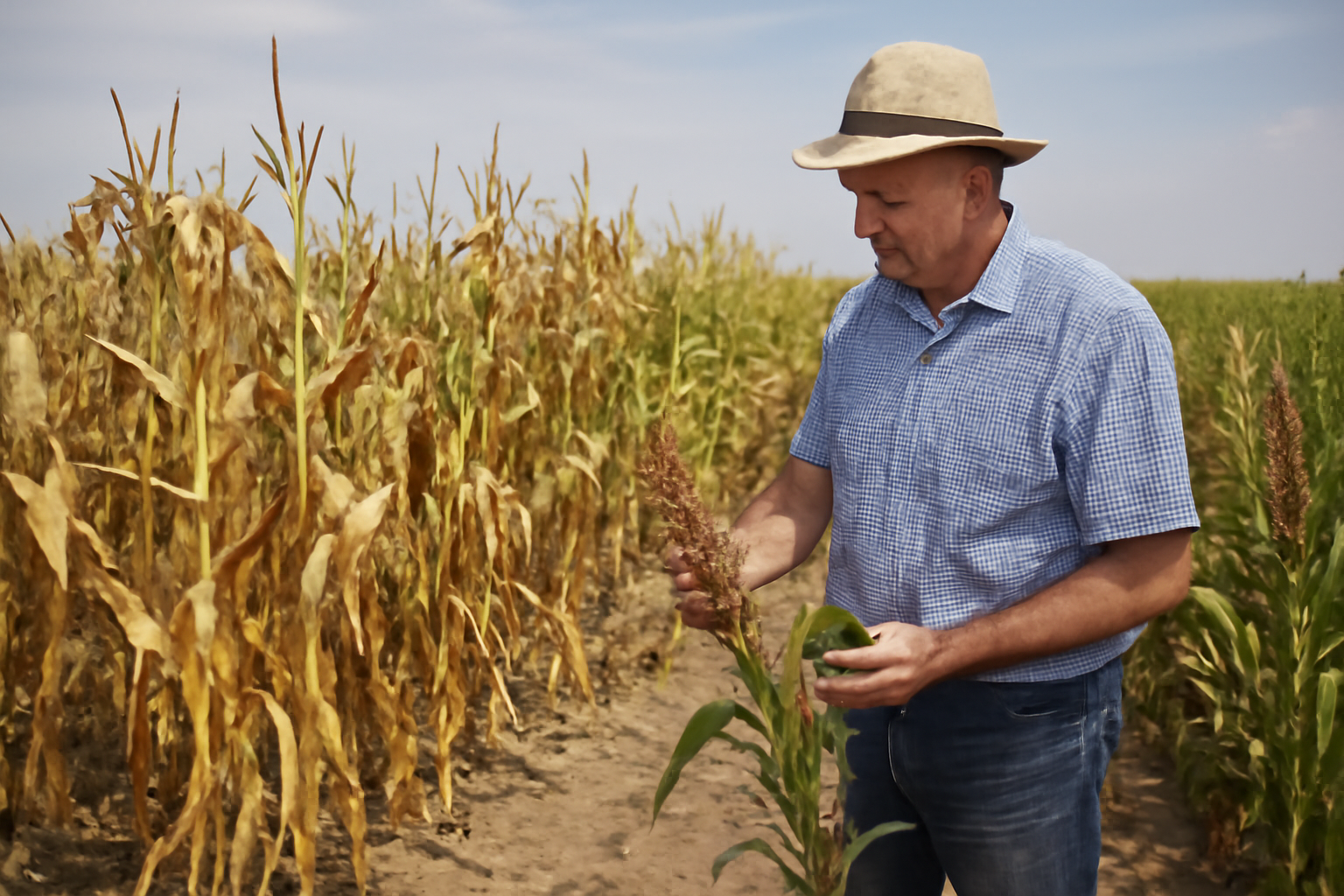
French cereal growers are trialling sorghum varieties of African origin as a hedge against hotter, drier summers, after heatwaves and continuing drought damaged maize crops across Europe. French producers say almost half of this year's maize harvest is unusable.
Maize bore the brunt of the summer
Maize is the European summer crop most exposed to heat and water stress. It is sown in spring and pollinates and fills grain in the middle of summer, exactly when temperature peaks and soil moisture deficits bite hardest. Crops that lose pollination or are forced into early senescence produce small, light, poorly formed grain, and what is harvested may fail the quality specifications that feed mills, starch plants and food processors work to.
That is the situation French producers describe this year: a crop that exists in the field but, on their own assessment, close to half of which cannot be used as intended. The damage is not confined to France, since European maize has been hit hard by this summer's heatwaves and the ongoing drought, making the shortfall regional rather than a single-country problem.
Why growers are looking at African sorghum
Sorghum is the obvious candidate on agronomic grounds. The crop originated in the semi-arid tropics of Africa, roots more deeply than maize, uses water more efficiently per unit of biomass and can effectively idle during a heat or drought episode, resuming growth when conditions improve. Varieties selected under African conditions carry that tolerance in a more concentrated form than material bred for temperate northern Europe, which is why French growers are testing them rather than relying on existing European genetics alone.
The work is a preparation exercise rather than a switch already made. Growers are looking at how the varieties behave under French day length, sowing dates and soil types, what yields they deliver in a normal year rather than only in a hot one, and whether the grain finds buyers at a price that competes with maize.
What it means downstream
France is among the European Union's largest maize producers and a regular supplier to feed and starch users elsewhere in the bloc, so a harvest of this quality is felt well beyond the farm gate. Compound feed manufacturers facing short or out-of-specification domestic maize must source replacement energy grain, shift rations toward other cereals, or import. Starch and wet-milling plants have less room to manoeuvre than feed users, because their processes are tied tightly to grain specification.
For growers the calculation is about repetition. One damaged harvest is a bad year; a run of summers in which heat cuts short the maize grain fill changes what can be planted profitably without irrigation. The sorghum trials are a response to that second scenario.
Points to watch
- Seed availability, and how quickly African-bred sorghum material can be multiplied for French conditions
- Whether feed formulators and buyers will contract sorghum in volume, since the crop needs an outlet before acreage moves
- The scale of replacement demand from feed and starch users holding damaged maize
- How much of the affected crop is diverted to alternative uses rather than written off
- Irrigation access, which largely determines which maize areas remain viable