French drought lifts fruit and vegetable prices as harvest losses deepen
After 53 days of extreme heat and prolonged drought, French fruit and vegetable production has fallen while irrigation costs have increased. Tomato output was down 25% by late July, and losses in several vegetable crops have pushed wholesale and retail prices sharply higher.
Heat and drought reduce French harvests
France’s prolonged drought and 53 days of extreme heat are constraining fruit and vegetable supplies, raising production costs and feeding through to wholesale and retail prices. TRT Français reports that drought continues across almost all French departments, forcing growers to spend more on irrigation while harvesting smaller volumes.
The production losses are substantial across several crops. By late July, the fruit and vegetable sector estimated that the tomato harvest was 25% lower, even though the drought had not yet ended. Lettuce losses were put at 30% to 50% in some production areas, while carrot output was down by at least 20%. Broccoli losses ranged from 40% to 70%.
Heat peaks have also affected product appearance. Uneven growing conditions have produced fruit and vegetables that are less uniform in size and shape. Major retailers have responded by promising growers greater tolerance on cosmetic standards and sizing, potentially allowing more of the reduced harvest to reach consumers rather than being rejected.
Wholesale prices signal pressure at retail
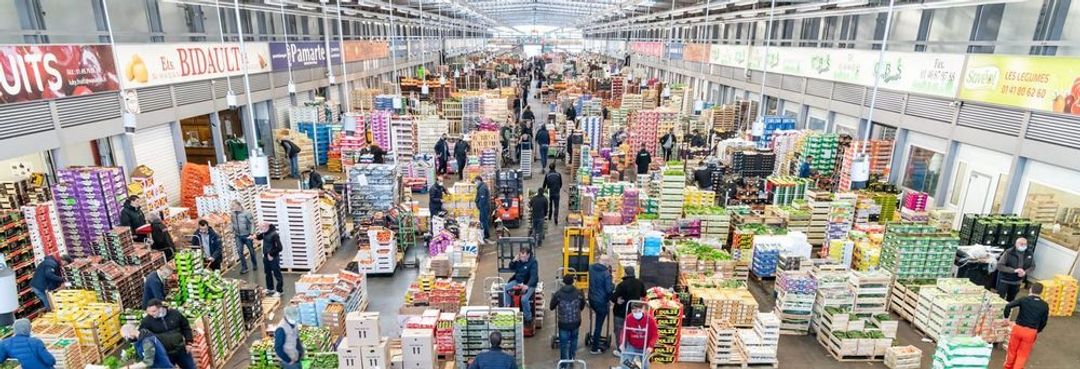
Prices at the Rungis wholesale market illustrate the supply pressure. On 12 September, broccoli and aubergines were both trading at €4 per kilogram. Green beans reached €8.89 per kilogram, while standard tomatoes cost €3.56 and vine tomatoes €6.16 per kilogram. Because these are wholesale quotations, prices paid by consumers are higher.
Retail tomato prices of €4.50 to €5 per kilogram have become common, according to TRT Français, while elongated and vine varieties have approached €7. A grocery manager in Fussy, in the Cher department, published a photograph of tomatoes priced above €8 per kilogram at a shopping centre and said his store had sold its final comparable tomatoes at €5.95.
A survey published in early September by the national federation Familles rurales, based on 118 supermarket price checks conducted in June 2026, found that prices were rising for every vegetable surveyed. Fruit prices were also increasing, apart from a limited number of exceptions. The results indicate that the inflationary effect was already broad before the full impact of the later summer drought reached shops.
Shortages spread beyond summer vegetables
Reduced availability is increasingly visible in supermarkets. NielsenIQ recorded a 20% out-of-stock rate for packaged salads in hypermarkets and supermarkets during the first week of August. Courgettes, tomatoes, cucumbers, cabbages and potatoes could also be affected as lower output moves through supply chains.
David Lecomte, NielsenIQ’s director of consumer research, told TF1 that prices for carrots, potatoes and onions were also likely to increase in September because these crops had been particularly affected by drought. This broadens the pressure from highly seasonal produce to staple vegetables purchased throughout the year.
Growers and retailers face difficult choices
The market must absorb both reduced volumes and higher irrigation expenses. Producers need prices that cover the extra cost of water and crop losses, while retailers face consumer resistance as shelf prices rise. Complaints on social media have included allegations that large retailers are inflating prices artificially, although the reported harvest losses and wholesale quotations show significant pressure earlier in the supply chain.
Dominique Schelcher, chief executive of Coopérative U, urged shoppers in Le Parisien in late August to buy produce even when it looked less attractive, arguing that doing so would support French farmers. For growers and buyers, accepting irregular shapes and sizes can preserve saleable supply. It cannot, however, replace volumes lost to heat and water scarcity, leaving the French produce market exposed to elevated prices and intermittent shortages.