French beef herd faces faster liquidation as feed shortages pressure farmers
French suckler-cow farmers could accelerate herd liquidation by the end of 2026 as scarce forage limits their ability to winter cattle. Rising dairy-cow sales are already weighing on meat prices, while strong calf exports to Italy and Spain offer only partial support.
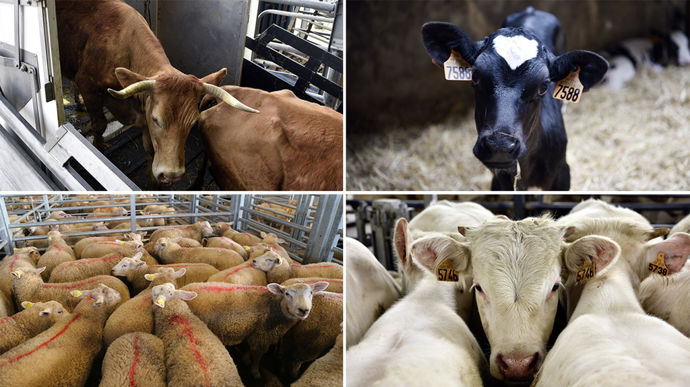
Forage shortage threatens breeding capacity
France’s suckler-cow sector faces a potentially sharp wave of herd liquidation by the end of 2026, as farmers struggle to secure enough forage for winter, La France Agricole reported. The decline combines demographic exits from farming with repeated production crises. The immediate concern is not simply the number of cattle sold, but the loss of breeding animals that determine future calf and beef output.
Emmanuel Bernard, president of the French livestock and meat association Interbev, has urged farmers to preserve pregnant cows to protect the country’s calf-producing capacity. Producers are therefore selling weaned calves and young females first, while also culling adult animals earlier than planned when they cannot feed them through winter. The lack of autumn grass regrowth and rapidly declining hay stocks point to a difficult and prolonged winter feeding period.
Dairy-cow sales add pressure to beef prices
The suckler herd has so far shown resilience, but liquidation is already advancing in the dairy sector. Sales accelerated in recent weeks, creating congestion in the meat market and allowing processors to lower prices. Good Prim’Holstein, Normande and Montbéliarde dairy cows are moving toward €5.00, while lower-quality cows are approaching €3.50, down €1.50 from a year earlier. Demand for culled bulls has also weakened.
France retains the European Union’s largest cattle production potential, according to La France Agricole, making preservation of the breeding base important to farmers, finishers, calf integrators and meat processors. Producer prices had moved in a more supportive direction during 2025, but the market registered a marked reversal in autumn 2026. Household purchasing power, mild weather, political instability and social unrest are all constraining meat demand.
Weak domestic demand meets strong calf exports
Commercial activity for slaughter cattle is subdued. Limited supply is supporting better-quality Blonde d’Aquitaine, Parthenaise, Limousin and butcher-grade Charolais females, but mid-range Charolais, Aubrac, Salers and crossbred cattle are meeting heavier resistance, with prices capped between €6.70 and €7.00. Young Charolais bulls are valued at €6.30-€6.50, with prices stable in France and Spain, rising in Germany and easing in Italy.
The store-cattle market faces a sharper imbalance. Farmers are selling calves to conserve feed for pregnant cows, but French buyers are purchasing cautiously according to forage availability and expected finished-cattle returns. Exports to Italy and Spain remain high and prices there are attractive, yet they have not prevented the broader market from weakening. Charolais U calves weighing 400-450 kg sell at around €4.30, while females have fallen to approximately €4.70-€4.80.
Future supply risks are building
Finishers are holding back because dry feed raises costs and, more importantly, roughage needed for rumination is scarce. Heavy cattle that can be finished quickly still attract selective demand, but animals requiring more feeding through winter face wider discounts. Some cattle carrying enough meat are being sent directly to slaughter. The bottleneck also makes it difficult to place animals now to compensate for what La France Agricole expects to be a very large cow deficit in spring.
Other livestock categories reflect the same pressure. Weak veal consumption has caused stocks and delayed farm departures to rise. Integrators seeking to offset losses on finished calves placed at more than €400 are pressing purchase prices down by €30-€50, with heavy black calves below €200. The immediate increase in slaughter and live-animal sales may lift market availability, but the removal of cows and replacement females would reduce France’s production base and could tighten domestic beef supply after the liquidation phase.