Freeze-Dried Fruit Demand Pulls New Investment Into Europe's Supply Chain
European output of freeze-dried fruit and vegetables passed 15,000 tonnes in 2024, with Germany, the UK, France and the Netherlands holding 71% of regional capacity. Italy, a net importer, runs 8,000-12,000 tonnes of capacity against ingredient imports estimated at €600-800 million in 2026. Global market valuations range from $3.1 billion to $9.4 billion depending on scope.
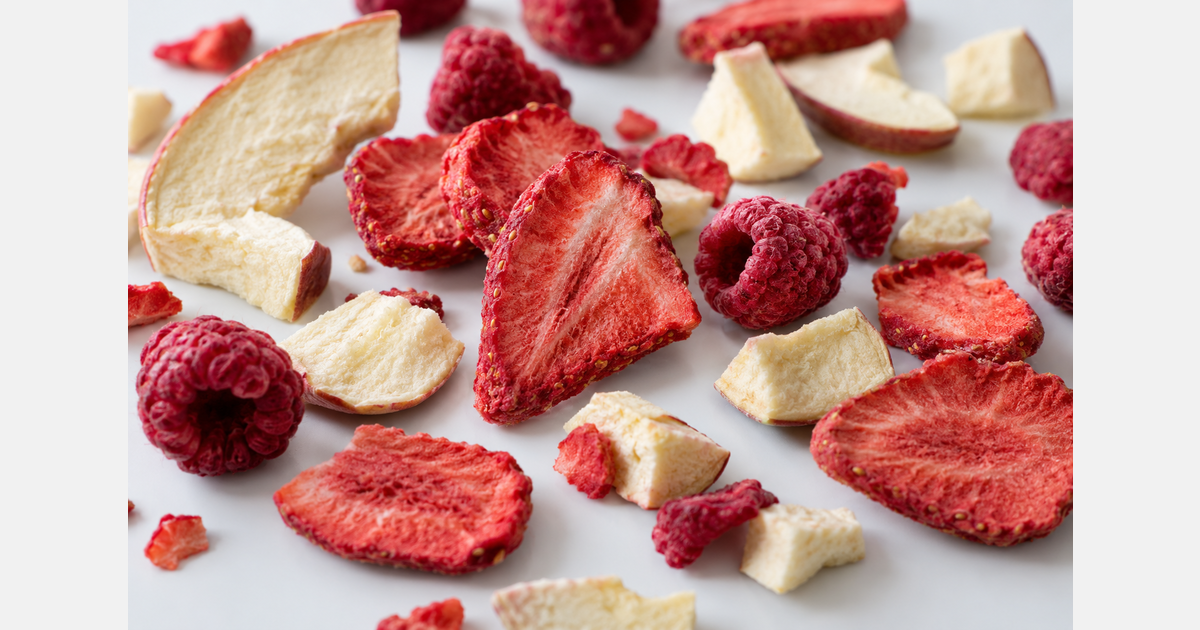
Rising demand for healthy snacks, clean-label ingredients and shelf-stable formats is drawing new investment into Europe's freeze-dried fruit supply chain, according to FreshPlaza Italia, which compiled estimates from GMInsights, Future Market Insights, Market Growth Reports and IndexBox.
Global valuations differ widely depending on what is counted. The world freeze-dried fruit market was valued at between $3.1 billion and $9.4 billion in 2024-2025, the range reflecting whether the perimeter covers fruit only, fruit and vegetables, or all freeze-dried foods. Forecast compound annual growth runs between 6.6% and 9% through 2032-2036.
European figures hinge on definitions
The same definitional problem shapes the European numbers. FreshPlaza puts the European freeze-dried fruit segment at about $262 million in 2024, while the broader freeze-dried fruits market on the continent is estimated at $2.63 billion in 2025 — a gap that reflects different perimeters rather than a single comparable series. Projections point to that value doubling by 2035. Fruit accounts for more than 57% of the European market for freeze-dried fruit and vegetable products, making it the dominant category.
Capacity concentrated in four countries
European output of freeze-dried fruit and vegetables passed 15,000 tonnes in 2024, of which roughly 9,600 tonnes was fruit alone. Germany, the United Kingdom, France and the Netherlands together hold 71% of regional processing capacity.
Italy sits outside that group. Despite a substantial fresh produce sector, it remains a net importer of freeze-dried ingredients. National freeze-drying capacity is estimated at 8,000 to 12,000 tonnes a year, concentrated mainly in the north-east, and is not enough to cover domestic demand. Imports are put at €600 million to €800 million in 2026.
That imbalance is what makes dedicated plants attractive. Domestic surpluses of apples, pears, peaches, citrus and berries could be converted into higher-value ingredients rather than moving as fresh product.
Where the demand sits
Retail is only part of the pull. Food manufacturers use freeze-dried fruit across multiple applications, from snacks to functional foods and infant nutrition. Reported indicators include:
- Plant-based brands used freeze-dried fruit in 63% of their products in 2024.
- Online sales of freeze-dried fruit and vegetables grew 54%, led by health- and fitness-oriented buyers.
- Plant-based options reached 67.3% penetration in Italy in 2025, with average spending rising.
- 79% of Italians report eating at least one snack a day, with fresh and dried fruit among the preferred mid-morning and afternoon choices.
Italy's dried and dehydrated fruit market, which includes freeze-dried product, was valued at $502 million in 2024 and is projected to reach $844 million by 2033, a compound annual growth rate of 6%. The snack segment within it was worth €160 million in 2025, up 4.9% year on year. FreshPlaza notes that freeze-dried fruit is not yet measured separately in national reports.
Trade balance points to unused potential
Italian fresh fruit and vegetable exports hit a record €6.68 billion in 2025, up 11% in value and 8.1% in volume on 2024. The processed ingredients segment — powders, concentrates, frozen and freeze-dried goods — runs the other way: imports of €600 million to €800 million against exports of €400 million to €550 million in 2026.
Processing more domestic fruit would cut that dependence and open export flows to high-income markets in northern Europe, North America and Asia, where demand for natural and functional ingredients is growing. FreshPlaza flags capacity and cost constraints as the main obstacles but describes the outlook as structurally positive, supported by clean-label demand, e-commerce growth and wider industrial applications. For Italian operators, the task is closing the capacity gap and positioning domestically produced freeze-dried fruit as a premium, traceable and sustainable ingredient.