France postpones industrial packaging producer responsibility scheme to 2027
France has postponed its extended producer responsibility scheme for professional packaging by six months, to 1 January 2027. The delay affects an annual waste stream of 8 million tonnes and gives companies only a short period to prepare after fee schedules are published.
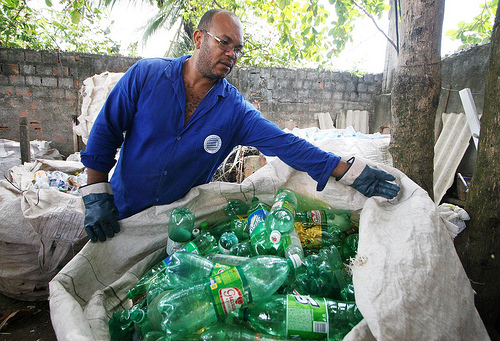
Implementation moved to January 2027
France has postponed the entry into force of its extended producer responsibility scheme for professional packaging until 1 January 2027, six months later than originally planned. According to Green et Vert, Mathieu Lefèvre, minister delegate for the ecological transition, said the contributors had not yet been fully identified and the fee schedules of the three approved producer responsibility organisations—Léko Pro, Citeo Pro and Twiice—were published too late for an efficient launch.
The scheme will govern an annual professional packaging waste stream of 8 million tonnes, compared with 5 million tonnes of household packaging. Household packaging has been covered by extended producer responsibility since 1992, while industrial items such as pallets, drums, chemical containers and protective films have remained outside an equivalent system for financing their end of life.
The new framework absorbs and expands the food-service packaging scheme introduced in March 2024. Its scope includes sales, grouped, transport and primary-production packaging. Green et Vert estimates that each month of postponement leaves about 650,000 tonnes outside the planned organised collection and financing system.
Complex waste streams require traceability
Industrial packaging presents practical recycling and reuse challenges. Chemically treated wooden pallets require specialised recovery routes. Metal drums may contain chemical or food residues, while plastic containers ranging from 20 to 200 litres need decontamination. Citeo Pro estimates that as much as 70% of this material could potentially be reused or recycled, according to Green et Vert.
The three approved organisations still need common technical protocols for marking, weighing and reporting. The options described by Green et Vert include barcodes or RFID chips, shared traceability databases and harmonised recyclability criteria. The ministry has committed to completing the technical work by September 2026.
Lefèvre has also called for the organisations’ 2027 fee schedules to be published in September 2026, four months before implementation. Companies would then have about three months to join an organisation, include the charges in their 2027 budgets and adapt logistics and reporting processes. Small and medium-sized businesses may face greater preparation difficulties than large groups because they generally have fewer administrative and technical resources.
French timetable diverges from European rollout
The postponement comes as the European Union introduces the Packaging and Packaging Waste Regulation, adopted in 2024. Green et Vert reports that the PPWR sets targets including a 15% reduction in packaging waste by 2040 and a minimum recycling rate of 70% for all materials in 2030. It also establishes requirements concerning ecodesign, recyclability and recycled content, alongside a progressive prohibition of some single-use packaging.
Comparable professional packaging systems have operated in Germany and the Netherlands since 2023, while Spain launched its industrial packaging scheme in January 2026. Companies active across several EU markets must therefore manage different fee schedules, reporting obligations and recyclability criteria while the PPWR seeks greater harmonisation.
The delay also postpones the economic signals created by modulated fees. Such charges can make difficult-to-recycle packaging more expensive and encourage mono-material designs, reusable containers and packaging without problematic additives. Producers in chemicals, food processing and logistics will retain their current arrangements for another six months, while recyclers and packaging technology providers must wait longer for regulated volumes and clearer demand.