Flavescence dorée confirmed in all 22 Hungarian wine regions after Bükk detection
Hungary has confirmed flavescence dorée in Bükk, the country’s last wine region previously considered free of the disease. Authorities established containment zones after detecting the pathogen in Mályi, Miskolc and Tibolddaróc.
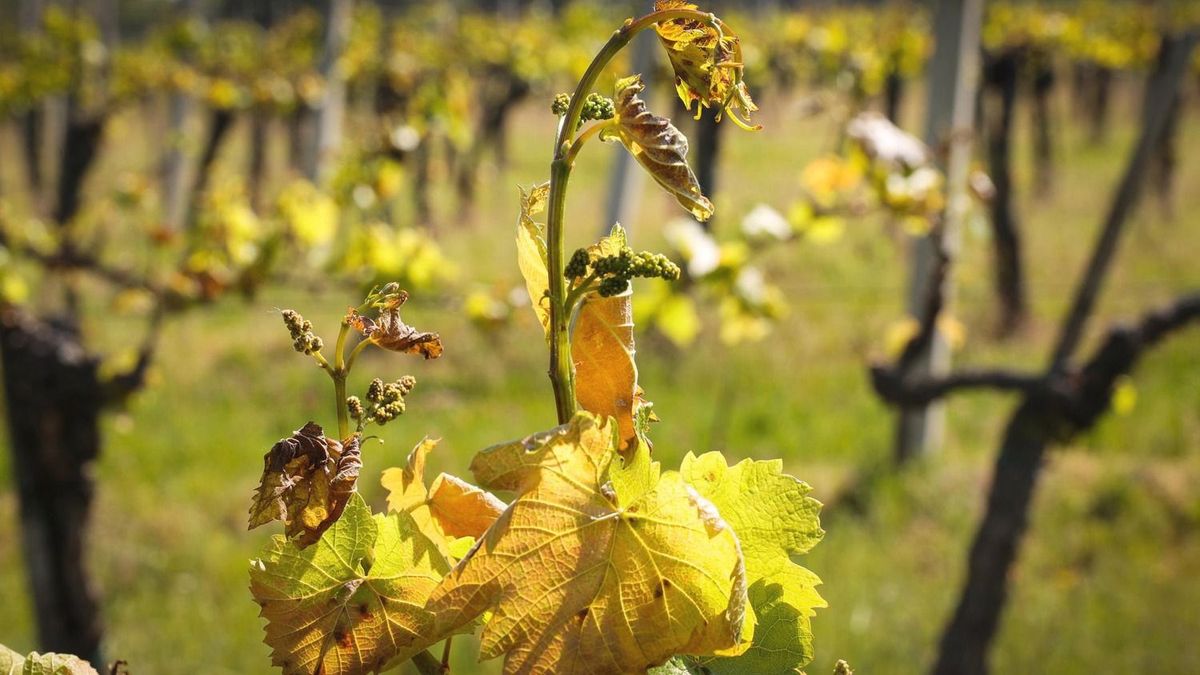
Pathogen reaches Hungary’s final unaffected wine region
Flavescence dorée has now been confirmed in all 22 Hungarian wine regions after laboratory testing identified the quarantine pathogen in Bükk, the last region previously regarded as unaffected. According to Világgazdaság, Hungary’s National Food Chain Safety Office, or Nébih, detected the FD phytoplasma in samples collected in Mályi, Miskolc and Tibolddaróc in Borsod-Abaúj-Zemplén County in mid-August.
Quarantine and plant-health measures began immediately after the positive results. Authorities designated a one-kilometre infected zone around each affected vineyard, where every grapevine must be inspected. Plants showing symptoms must be destroyed under official orders, while grapevine propagation material may neither be marketed nor removed from the affected area.
A further three-kilometre buffer zone surrounds the infected area. Intensive surveillance will be conducted there, alongside a compulsory control programme targeting the American grapevine leafhopper, the principal vector responsible for spreading the disease.
Rapid expansion since 2025
Hungary first identified flavescence dorée in August 2013. Nébih’s laboratory found the pathogen in leaf samples from the Lenti area of Zala County and in grapevine leafhoppers captured near Kerkateskánd. The disease subsequently spread across the country, with its expansion accelerating sharply in the latest period.
In July 2025, when the disease was confirmed in the Somló wine region, 15 Hungarian wine regions were classified as affected. By autumn, the pathogen had also been found in regions including Eger, Mátra and Tokaj. The Bükk findings remove the last disease-free wine region from the national map, although they do not mean that every Hungarian vineyard is infected. Conditions can vary substantially between individual plantations within the same region.
Yield losses and higher production costs
Nébih data indicate that infection can reduce grapevine yields by 20–50%, while the number of diseased plants may increase as much as tenfold in a single year without adequate intervention. If growers fail to control the American grapevine leafhopper, 80–100% of the vines in a vineyard can become infected. Particularly susceptible varieties may disappear from an affected plantation within a few years.
More vulnerable varieties include Chardonnay, Zweigelt, Kékfrankos, Pinot noir, Pinot gris, Cabernet sauvignon, Cabernet franc and Riesling. The disease poses no danger to people, and the pathogen does not pass into wine. Its economic impact on growers can nevertheless be severe because they face lost production, the removal of infected vines, additional pest-control expenses and restrictions on the movement of propagation material.
No plant-protection product can directly eliminate the phytoplasma. Control therefore depends on finding and destroying infected vines quickly and suppressing leafhopper populations. Nébih says treatments against the insect remain important after the harvest, while new vineyards and replacement planting should use only officially inspected, healthy propagation material. Visual symptoms alone are insufficient to confirm infection because other diseases can cause similar changes; laboratory testing is required.