Italy withdraws Felce Azzurra liquid soap over EU-banned fragrance Lilial
Italy's Ministry of Health has notified the EU Safety Gate system of the withdrawal of Felce Azzurra Elegante liquid soap in 750 ml bottles, barcode 8001280024351, because it contains butylphenyl methylpropional, known as Lilial. The fragrance has been banned in EU cosmetics since March 2022 as toxic for reproduction. The case points to unsold stock and non-updated formulations as the weak link in compliance.
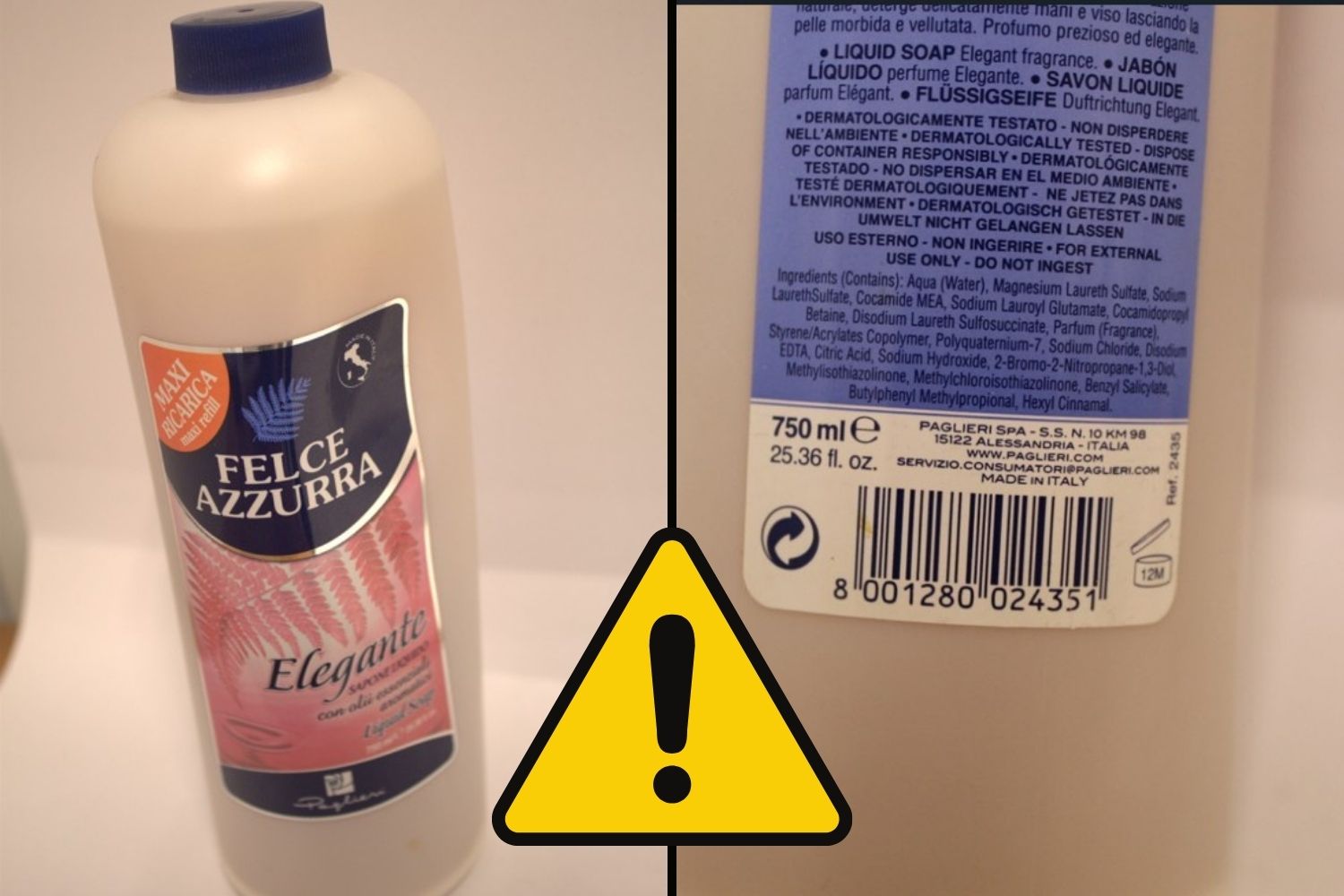
Recall notified through the EU Safety Gate system
Italy's Ministry of Health has notified the European Union's Safety Gate rapid alert system of the withdrawal from the Italian market of Felce Azzurra Elegante liquid soap, sold in 750 ml bottles and identified by the barcode 8001280024351, according to greenme.it. The product was manufactured in Italy.
The reason for the withdrawal is the presence of butylphenyl methylpropional, the synthetic fragrance known commercially as Lilial, whose scent recalls lily of the valley. The Safety Gate entry covers the Elegante line of the liquid soap specifically. Consumers who have a bottle carrying that barcode at home are advised to check it before using it again and to consider returning it to the point of sale, following the instructions set out in the official alert notice.
Lilial has been prohibited in EU cosmetics since March 2022
Lilial is classified as toxic for reproduction, an assessment established by the EU's Scientific Committee on Consumer Safety. That classification led to a total ban on the use of the substance in products intended for contact with the skin, in force across the European Union since March 2022. From that date the ingredient should have disappeared from formulations sold in the bloc.
For manufacturers and distributors of personal-care goods, the practical consequences are narrow and well defined:
- the substance may not be used in cosmetics placed on the EU market, with no tolerated level in products that touch the skin;
- formulations dating from before March 2022 have to be reworked, not simply relabelled;
- batches produced under the old recipe cannot legally be sold down after the cut-off.
Warehouse remainders remain the weak point
greenme.it notes that the ingredient is still turning up four years after the prohibition, and reads the case as evidence that the control chain continues to struggle with warehouse remainders, older batches and formulations that were never updated. Lilial is not a newcomer to cosmetics alerts: recent years have brought a run of seizures of detergents and cosmetics that still contained the substance despite the ban.
Those earlier cases concentrated on low-cost products and on lines that had sat unsold on shelves for years, according to the same report. The Felce Azzurra withdrawal breaks that pattern. The brand is among the best known and most widely distributed in Italian large-scale retail, which places the issue on mainstream supermarket shelves rather than at the discount end of the market.
Compliance implications for personal-care suppliers
The alert is a single-product action: one line, one pack size, one barcode. Its significance for the sector lies in what it says about traceability rather than in the volume involved. A ban that has been in force since March 2022 leaves no room for transitional arguments, so the presence of the substance in a product made in Italy and sold through general retail points either to residual stock, to a production lot filled with an unrevised formulation, or to both.
For suppliers, importers and private-label buyers working with European personal-care ranges, the operational takeaways are the same as in previous Lilial cases: verify formulation versions against production lots, check physical inventory rather than relying on supplier declarations, and treat any recipe drafted before March 2022 as requiring documentary confirmation. Distributors handling slow-moving personal-care inventory carry the same exposure, since the older the stock rotation, the higher the chance that a pre-ban formulation is still sitting in the chain. Retailers, for their part, are the point where a Safety Gate entry becomes a shelf withdrawal and a consumer return process.