FAO index: wheat up 5.8%, sugar 5.6% and vegetable oils 2% in July 2026 as meat falls
International prices for cereals, sugar and vegetable oils rose in July 2026, according to the FAO Food Price Index. Wheat gained 5.8%, maize 3.6%, sugar 5.6% and vegetable oils 2.0%, driven by heat waves, supply concerns and geopolitical tensions affecting energy markets. Meat prices fell 2.8%, the first monthly decline of the year.
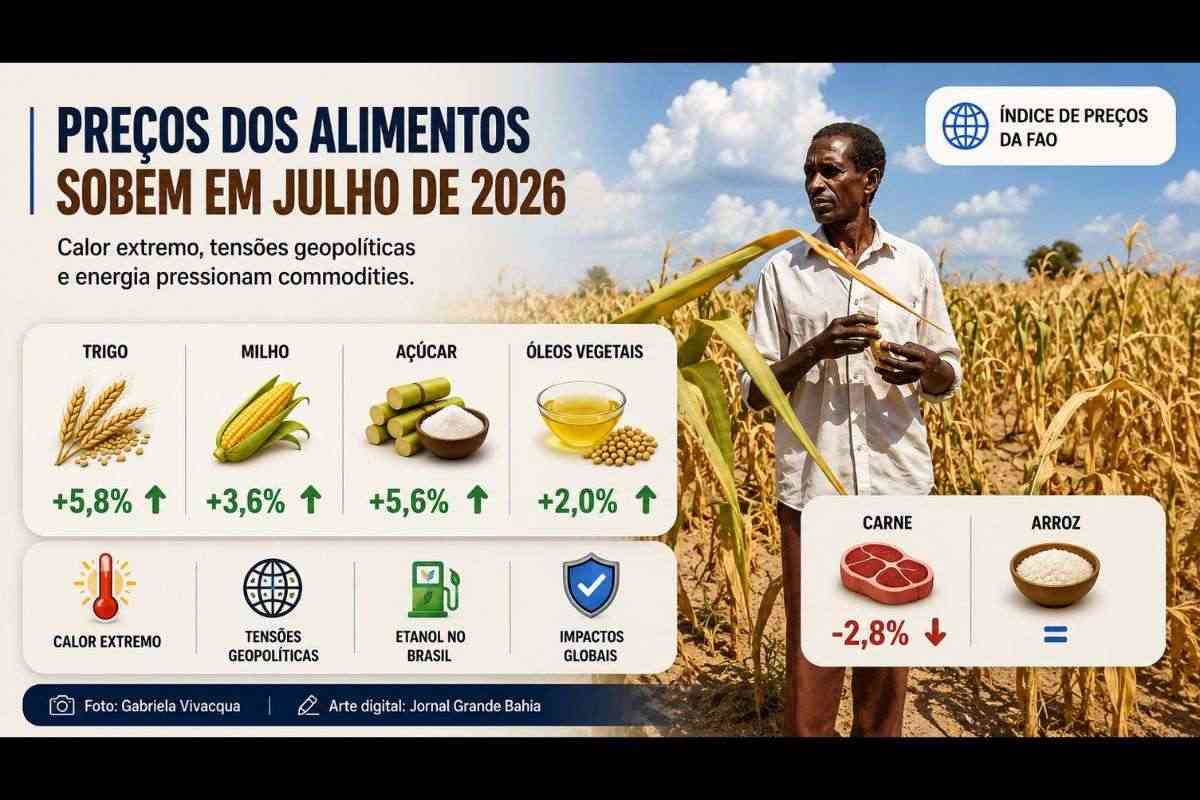
Global food commodity prices rose in July 2026, with the increases concentrated in cereals, sugar and vegetable oils, according to the Food Price Index of the Food and Agriculture Organization of the United Nations (FAO). Heat waves in producing regions, supply concerns and the effect of geopolitical tensions on energy and food markets were cited as the main drivers in a report published by Jornal Grande Bahia.
Cereals lead the July increase
The FAO Cereal Price Index rose 3.4% from June and stood 6.9% above its July 2025 level. Within the group, international wheat prices gained 5.8% and maize advanced 3.6%, while rice remained broadly stable over the month.
Wheat recorded one of the largest increases among the cereals tracked by the FAO. The move was driven in part by concern over possible disruption to exports through the Black Sea, a corridor directly exposed to the conflict between Russia and Ukraine. Heat waves in major producing countries added to the pressure by raising questions about crop conditions and future availability of the grain.
Maize was supported by hot and dry weather in parts of the United States and by developments in energy markets against a backdrop of heightened geopolitical tension.
Sugar caught between weather and ethanol
Sugar prices rose 5.6% from June and were 8% above July 2025. The FAO pointed to weather conditions in important producing areas, expectations around the El Nino phenomenon in Asia and the possibility of greater use of sugarcane for ethanol production in Brazil.
The increase came amid concern over hot and dry conditions in the European Union and potential El Nino effects on agricultural output in Asian countries. In Brazil, a temporary increase in the mandatory ethanol blend in gasoline could direct a larger share of cane to the biofuel, reducing the raw material available for sugar manufacturing and, in turn, the supply reaching the international market. Improved harvesting conditions in the main producing regions of Brazil's Centre-South limited the upward pressure on quotations.
Vegetable oils at the highest level since 2022
The FAO vegetable oil index rose 2.0% from June, reaching in July its highest level since June 2022. Palm and soybean oil quotations drove the segment. Palm oil gained on strong demand from Indonesia's biodiesel sector and higher international crude oil prices, with the energy backdrop also shaping wider market conditions for vegetable oils. Soybean oil rose on feedstock demand in the United States and growing international import demand. Moving in the opposite direction, sunflower and rapeseed oil prices retreated over the period.
Meat breaks its 2026 run
The international meat market behaved differently. Prices fell 2.8% in July from the record set in June, the first monthly decline of 2026.
- Poultry: lower quotations linked mainly to prices in Brazil, in a context of greater availability for export.
- Pig meat: higher supply weighed on the international market, particularly in the European Union.
- Bovine meat: international quotations retreated, mainly reflecting reduced import demand in Asian markets.
The FAO data show weather and geopolitical factors continuing to affect different food production and trading chains. For cereals, the effects were visible both in production prospects and in export flows. In sugar, decisions on the use of cane for ethanol in Brazil have joined weather among the variables the international market is pricing. In vegetable oils, biodiesel demand and the path of crude oil prices contributed to the gains.
In summary, the July 2026 index showed wheat up 5.8%, maize up 3.6%, sugar up 5.6% and vegetable oils up 2.0%, while meat fell 2.8% and rice was stable. The results reflect a combination of weather, supply, demand, energy and geopolitical tensions in international markets.