Export requirements drive FSC-certified forestry expansion in Vietnam’s Quang Tri
Quang Tri is expanding certified, long-cycle timber plantations as US and European buyers demand legal and traceable wood. The province has more than 64,100 hectares under sustainable forest management certification, while new agreements target larger FSC areas and stable industrial supply.
Certification reshapes plantation management
Demand for legal, traceable wood is changing how forests are planted and managed in Quang Tri, a major forestry area in central Vietnam. Quang Tri newspaper reports that the province has more than 217,000 hectares of production plantations. Of this area, 23,500 hectares have been converted to large-timber forests and more than 64,100 hectares hold FSC or VFCS/PEFC sustainable forest management certification.
The Quang Tri Association of Certified Forest Household Groups directly manages more than 5,600 hectares of FSC forest across 15 communes and wards in southern Quang Tri. The portfolio comprises 3,400 hectares of plantations belonging to 557 households and 2,100 hectares of natural forest managed by five communities. The association operates through 43 local branches.
Certification is encouraging growers to extend acacia rotations. Tran Quang Dieu of the Trieu Thuong branch said moving from a five-year small-timber cycle to an FSC-certified large-timber cycle of eight to 10 years raises profit by about VND50 million per hectare. Longer rotations also eliminate one replanting round, saving VND20 million to VND25 million per hectare in seedlings, land preparation and labor.
Certified timber secures higher-value outlets
Market surveys cited by Quang Tri put round acacia logs for sawing at about VND1.6 million to VND1.7 million per tonne, depending on diameter. Woodchip material is priced between VND1.42 million and VND1.55 million per tonne. Large trees yield a greater share of sawlogs suitable for export-processing plants, giving growers an incentive to accept the longer period before harvest.
Since October 2025, five association branches have sold more than 20,470 tonnes of FSC timber, including nearly 14,000 tonnes of sawlog material and more than 6,500 tonnes of woodchip material. Trieu Thuong alone supplied more than 11,400 tonnes. Scansia Pacific continues to purchase FSC sawlogs and helps finance the association’s periodic certification assessments.
Phu Hung Agricultural Production and Services Cooperative illustrates the commercial model. It began FSC certification across more than 500 hectares of plantations in 2013 and now has over 178 hectares of certified large-timber forest. Its sawlogs can meet requirements in the United States and Europe. The cooperative reported profit exceeding VND6 billion in 2025 and has 581 member households.
Processors and forest groups build long-term supply
Two memoranda of understanding signed at a sustainable forest management event link Sepon Group with WWF-Vietnam and the household association. The agreements are intended to expand FSC acreage and develop a responsible wood supply chain. During 2026-2029, the association and WWF-Vietnam aim to add 300 to 500 hectares of FSC-certified acacia forest annually.
A separate 2026-2030 agreement with Sepon Group’s Cam Lo Energy Pellet Plant provides for maintaining at least 3,500 hectares of FSC-certified supply area and delivering no less than 20,000 tonnes of raw material a year. The arrangement gives the plant a defined certified feedstock base while offering growers a clearer route to market.
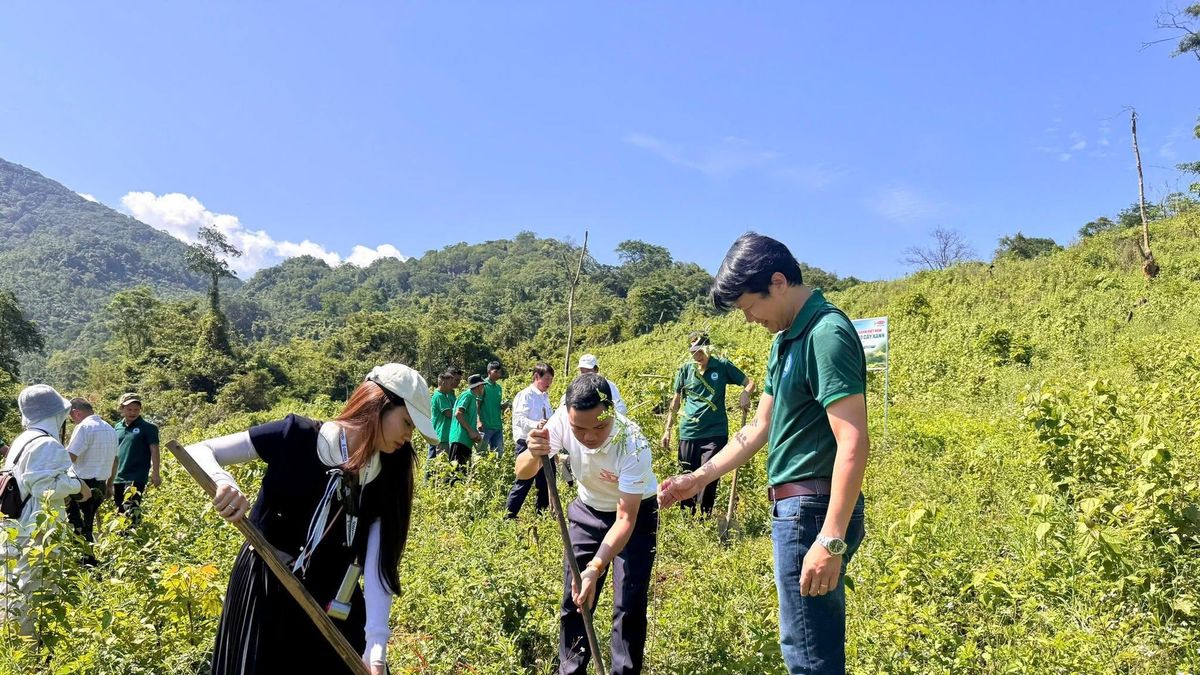
Supporting measures extend beyond commercial plantations. The program is providing 20,000 native seedlings and fertilizer for planting along acacia forest boundaries. Acecook Vietnam has allocated VND205 million to plant 10,500 native trees for five communities in the natural forests of Huong Phung and Huong Lap. These plantings are intended to reinforce protective forest belts, reduce storm damage and improve ecological diversity. Together, certification, purchasing commitments and better field data are moving traceability from an export requirement into the operating model of Quang Tri’s forestry sector.