Exceptional 2026 Asti grape harvest meets full cellars and tighter yields
Asti growers have harvested ripe, high-quality grapes in 2026 despite record heat. Full cellars and a saturated wine market are nevertheless forcing producers to restrict yields, limiting the commercial benefit of the favorable season.
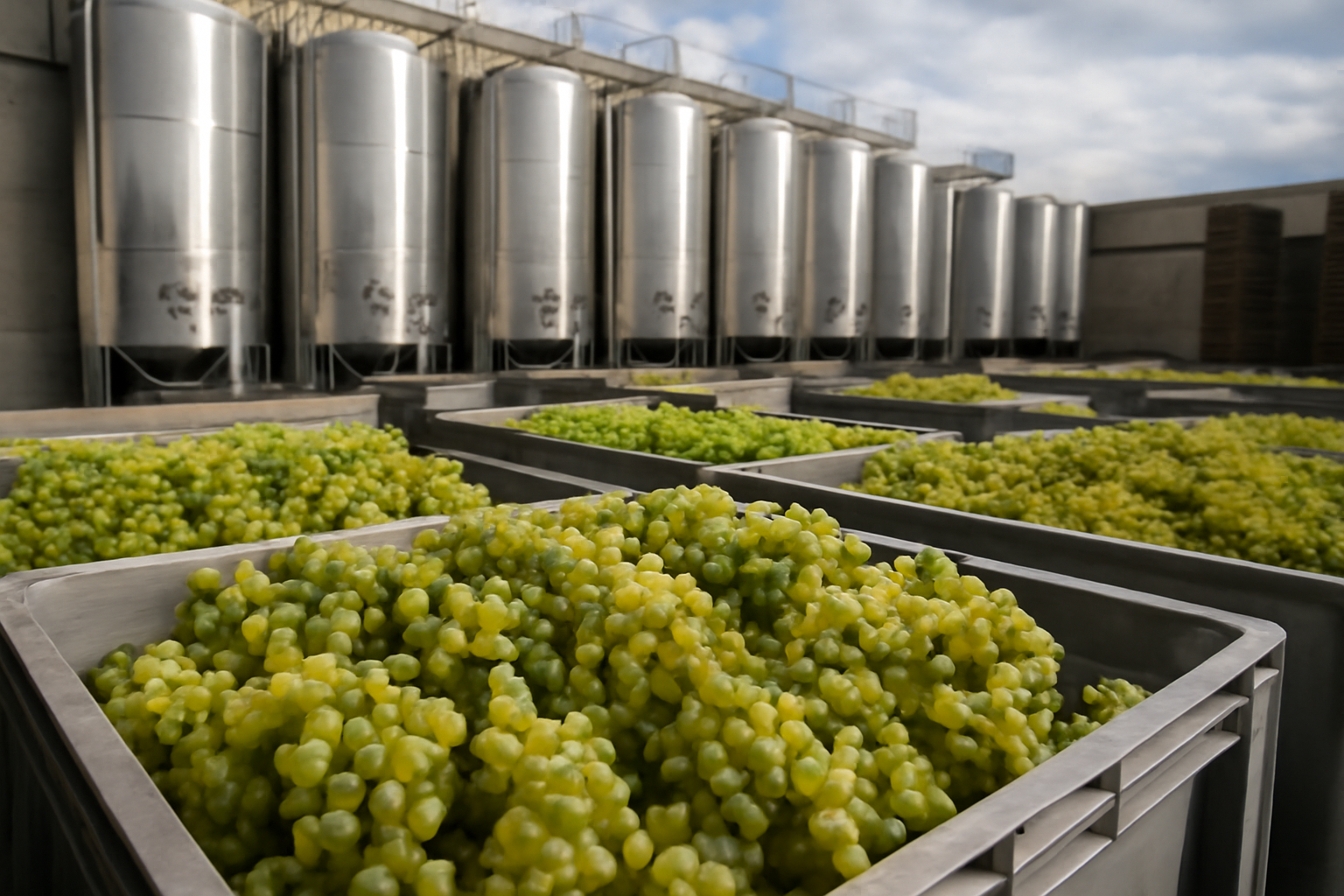
A high-quality harvest under difficult conditions
Asti winegrowers are reporting an exceptional 2026 grape harvest, with the crop described as “five-star” in quality. The grapes reached maturity despite record heat, giving producers strong raw material at the end of a demanding growing season.
The favorable condition of the grapes would normally support higher production and provide wineries with greater flexibility when selecting fruit. This year, however, quality in the vineyard is colliding with a markedly less favorable situation inside the cellars.
Inventories are already high, and available storage is under pressure. The result is an unusual imbalance: growers have delivered ripe grapes after difficult weather conditions, but the supply chain cannot convert the full agricultural potential of the harvest into additional wine production.
Full inventories force tighter production
Producers are responding by restricting yields. The measure reduces the volume that can move from vineyards into winemaking, even though the harvested grapes themselves meet high quality expectations. The constraint therefore comes primarily from existing wine stocks and market saturation rather than from a shortage or deterioration of fruit.
For growers, lower permitted output weakens the financial benefit of an otherwise successful season. Vineyard costs have already been incurred, and record heat added pressure during the production cycle. Restricting yields means that part of the crop’s potential value cannot be realized through normal processing volumes.
For wineries, the calculation is different. Processing more grapes would add wine to cellars that are already full, increasing inventory exposure in a saturated market. Limiting production protects storage capacity and reduces the risk of carrying still more unsold stock, but it also means accepting less output from an unusually strong harvest.
Quality alone cannot resolve the surplus
The tension in Asti illustrates how vineyard performance and market conditions can move in opposite directions. High-quality grapes support the product’s future positioning, but they do not by themselves clear existing inventories. Until stocks decline, production decisions will remain tied to cellar capacity and the market’s ability to absorb wine.
The immediate effect is likely to be felt across the local chain. Growers face tighter volume limits, processors must prioritize the grapes they accept, and wine producers have to balance the value of the 2026 crop against the cost and risk of holding additional inventory.
The harvest therefore represents an agricultural success but a commercial constraint. Asti has the raw material for a strong vintage, yet full cellars are preventing producers from using that advantage at full scale. The key issue is no longer whether the grapes reached maturity, but how much wine the market can absorb without adding further pressure to inventories.