European potato harvest falls by up to 30% after acreage cuts and drought
European potato harvests are down by as much as 20%, with local peaks of 30%, after farms cut their production base by an average of 10 percentage points following the 2025 price collapse and then faced drought and heat. Italian yields are 7% to 21% below the last five years, while Trentino holds both volume and quality, with Copag expecting to exceed 4,500 tonnes.
Acreage cuts collided with a dry season
European potato growers are closing the season with harvests down by as much as 20% and prices moving sharply higher, according to ildolomiti.it, which describes a production and commercial crisis with few precedents in Europe and in large parts of Italy. In some areas the fall reached 30%.
Part of that contraction was planned. After the 2025 production surplus and the price collapse that followed it, European farms reduced their production base by an average of 10 percentage points. The cut took hectares out of the ground and trimmed supply before the season began.
The weather did the rest. Sparse winter and spring rainfall, high temperatures and a long period of drought left the large producing countries struggling, with France, Germany, the Netherlands, Belgium and Greece all affected. ildolomiti.it attributes the shortfall primarily to the effects of climate change on this year's growing conditions.
Italian yields 7% to 21% below the five-year picture
Italy recorded lower average yields, with the decline ranging from 7% to 21% compared with the last five years. A smaller planted area combined with weaker yields per hectare is the mechanism behind the price spike now visible on European markets, where a tighter crop meets fresh-market and processing demand that has not contracted at the same pace.
Trentino keeps both volume and quality
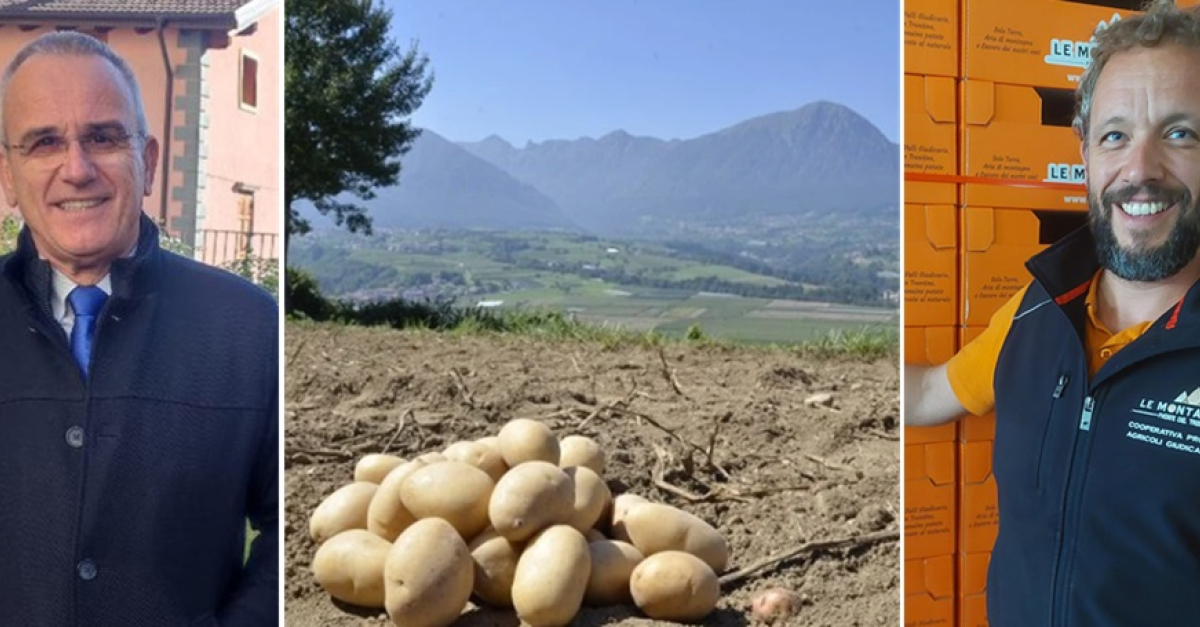
Trentino is the exception in the Italian picture, with no significant collapse in output. Production in the Lomaso area was good, according to Mara Baldo, president of Cia-Agricoltori Italiani del Trentino, who notes that part of the hectares used for maize last season were converted to potatoes. She describes the potato as a low-cost crop capable of a reasonable return, even if results are not always optimal because it is a demanding vegetable.
Copag, the Giudicarie agricultural producers' cooperative with around ninety members, gave a positive preliminary assessment as harvesting neared completion. Director Luca Armanini said quality is good across the varieties grown on member farms and that quantity is confirmed, with the cooperative expecting to exceed 4,500 tonnes of potatoes. Final accounts will be closed later.
On varieties, Armanini said Cicero remains the most widely grown yellow-flesh potato, while Camelia and Levante are gaining ground season by season and, in his view, are set to match Cicero within a few years. Alouette is the red variety best suited to the area, while the white-flesh Kennebec holds a small, almost niche position.
Altitude explains much of the resilience. The potato needs warmth but tends to stall above 25 degrees Celsius; in a mountain area with regular humidity, vegetative development and tuber maturation were supported rather than checked.
Hail, delayed deliveries and an uncertain price outlook
In the Val di Gresta, Trentino's organic vegetable district, the blow was cushioned but not avoided. Gianni Carotta, mayor of Ronzo Chienis and president of the val di Gresta fruit and vegetable consortium, said bad weather and in particular a violent hailstorm last month created serious difficulties, although damage was contained as far as possible. High summer temperatures helped rather than hurt tuber maturation at that altitude, and water management and irrigation systems allowed targeted intervention against drought during the vegetative phase.
The hail carried a commercial cost in timing. The crop had to run through a further vegetative cycle to recover and complete maturation, and reaches the market roughly one month later than initially forecast. Carotta said there have been better seasons but that the outcome is acceptable given the summer's conditions. Once harvesting ends, the Festa della patata del Lomaso is scheduled for Saturday 24 and Sunday 25 October.
Commercial signals are described as good. Copag expects profitability to improve, while flagging that significant uncertainties remain.