European pork oversupply drives Danish hog prices sharply lower
Excess pork availability across Europe has pushed Danish producer prices sharply lower over the past year. The decline is reaching supermarkets, but retailers say consumer prices cannot fall at the same pace as farm-gate prices.
Excess supply weighs on Danish producers
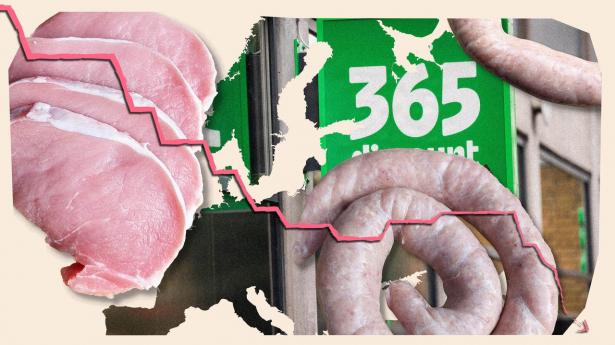
An oversupply of pork across Europe has driven a steep decline in the prices received by Danish hog producers. According to Danish business newspaper Børsen, too much meat is available on the European pig market, causing producer prices to plunge over the past year.
The pressure is not limited to Denmark. Børsen reports that farmers across Europe are facing an earnings crisis as the imbalance between available pork and market demand pushes prices down. The development directly affects livestock producers, but it also creates challenges for processors and traders holding inventories purchased when market conditions were stronger.
For farmers, falling hog prices reduce revenue from every animal delivered while many production costs remain outside their immediate control. Producers must therefore decide whether to maintain output, postpone investment or reduce capacity. The source material does not provide production volumes or specific price levels, but describes the decline as severe and Europe-wide.
Retail prices respond more slowly
The fall in producer prices is already visible in Danish grocery stores, according to retail groups cited by Børsen. However, the reduction at the farm gate is not being transferred to consumers on a one-for-one basis. A senior adviser quoted by the publication characterized the decline in consumer prices as slow.
Coop says it cannot reduce prices on the affected products much further. That position illustrates the difference between the market price of livestock and the final price of packaged pork. Retail prices also reflect slaughtering, processing, packaging, transport, energy, labor and store operating costs. Børsen's report does not quantify these components, but the retailer's response indicates that lower raw-material prices do not automatically produce an equivalent reduction at the checkout.
This lag matters for both ends of the supply chain. Farmers experience the price decline immediately through lower payments, while consumers receive only part of the benefit and with a delay. Processors and retailers must manage the gap between changing procurement costs and the prices of products already moving through their systems.
Pressure spreads across the European pork chain
Persistent excess availability can intensify competition among producers, slaughterhouses and suppliers seeking buyers. In an integrated European market, weak prices in one large producing area can influence negotiations elsewhere because processors and retailers can compare offers from multiple origins.
The immediate issue for the industry is whether lower prices stimulate enough consumption to absorb the surplus. Børsen's account confirms that supermarket prices have begun to react, but also shows that retail reductions have limits. If consumer demand does not expand sufficiently, the adjustment will remain concentrated among farmers and other upstream businesses.
Market participants will consequently watch producer quotations, retail promotions and signals of output reductions. The available report does not identify a recovery date or a specific catalyst that could rebalance supply. For Danish hog producers, the present situation remains defined by abundant European pork, sharply weaker selling prices and limited evidence that the surplus has cleared.