European and global pork market slides into deep mid-2026 crisis
The European and global market for live pigs and pork fell into a severe downturn in mid-2026. A combination of unfavourable trade conditions and rapidly rising EU pork production has pushed prices lower and squeezed farmer margins.
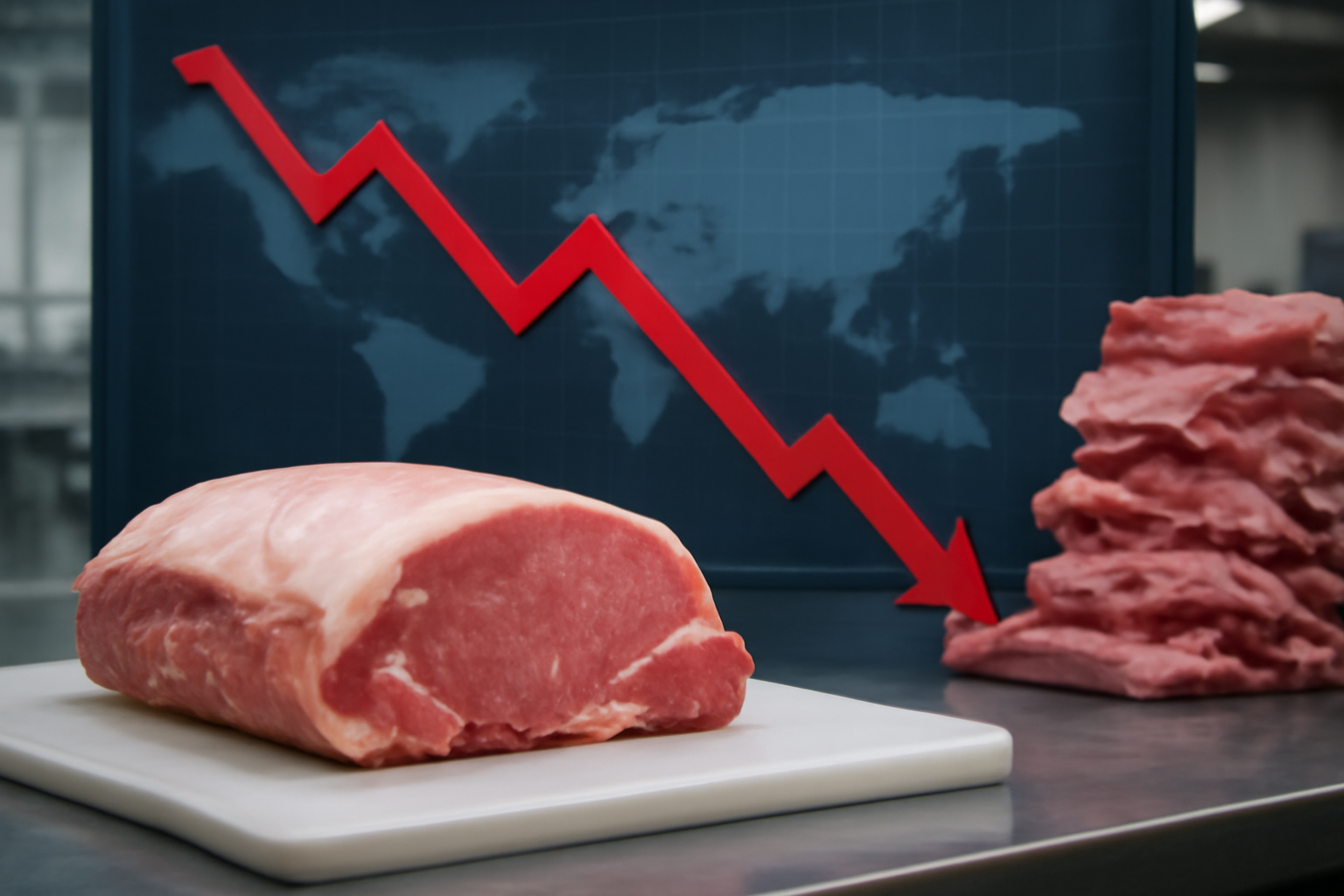
Pork market enters a deep downturn in mid-2026
The European and global market for live pigs and pork has fallen into a severe crisis in the middle of 2026, with producer margins under heavy pressure. The downturn follows a combination of unfavourable trade conditions and rapidly rising pork production inside the European Union, a pairing that has pushed live-hog and wholesale prices lower and left many farms struggling to cover their costs.
Two forces pressing on prices
The current weakness stems from two developments hitting the sector at the same time. On the trade side, conditions have turned unfavourable, weighing on the export demand that European producers rely on to clear surplus supply. At the same time, pork output within the EU has been growing quickly, adding more animals and more meat to a market that is already well supplied.
The mechanics are straightforward for anyone tracking the sector. When domestic and Community production climbs while foreign buyers pull back, the extra supply stays inside the European market. That surplus flows through to lower live-hog prices and softer wholesale quotations, and the effect compounds the longer trade demand remains subdued.
Margins squeezed across the chain
For farmers, the result is a direct hit to margins. Falling prices for finished pigs meet production costs that do not fall as quickly, so the gap that determines whether a farm makes money narrows or disappears. The framing from Poland — that producers thought conditions could not get worse, only to see them deteriorate further — captures the mood across much of the sector in mid-2026.
The squeeze is not limited to a single country. Because the European pig market is deeply integrated, with live animals, weaners and carcasses moving across borders, price weakness in one region spreads quickly to others. A downturn described as both European and global points to demand and trade problems that reach beyond the EU's internal balance.
What importers and exporters are watching
For exporters, the key question is when trade demand recovers enough to draw down the surplus building inside the EU. Until that happens, the pressure on prices is likely to persist, and additional production only adds to the overhang.
For importers, a well-supplied and weak European market can mean more competitively priced pork available for purchase, at least while the downturn lasts. For producers, the immediate priority is surviving a period in which output is high, trade is difficult and margins have turned against them.
- Rising EU pork production is adding supply to an already well-stocked market.
- Unfavourable trade conditions are limiting the export demand needed to absorb it.
- Live-hog and wholesale prices are under pressure, squeezing farmer margins.
- The downturn is described as both European and global in scope in mid-2026.