European Commission sends India-EU free trade agreement to Council for approval
The European Commission asked EU member states on 11 September 2026 to authorise the signature and conclusion of the free trade agreement with India, negotiated to a close in January 2026. India would eliminate or reduce duties on 96 percent of EU goods, saving European exporters about €4 billion a year, with the steepest cuts in wine, spirits and vegetable oils.
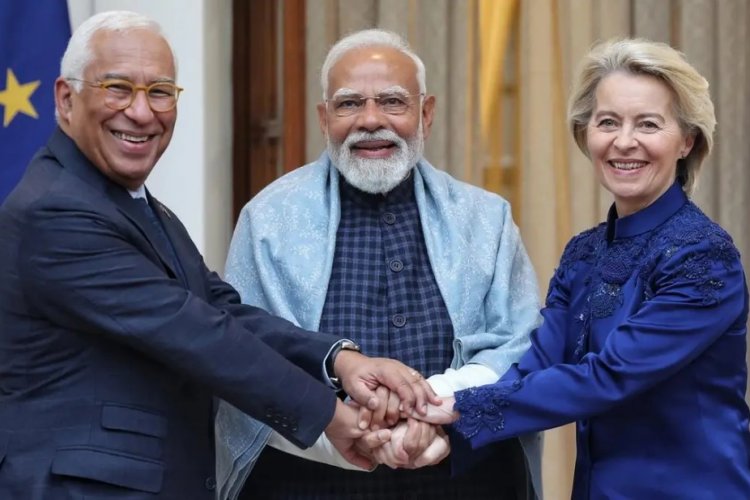
The European Commission has referred the proposed free trade agreement between the European Union and India to the Council of the European Union, asking member states on 11 September 2026 for formal authorisation to sign and conclude the deal. Negotiations between the two sides closed in January 2026. Council approval would clear the way for signature, after which the consent of the European Parliament is required before the agreement can take effect. India is running its own internal procedures to finalise the text.
Trade in goods and services between India and the European Union exceeds €180 billion a year and supports around 800,000 jobs inside the bloc. If ratified, it would be the largest trade agreement India has ever concluded — a deal New Delhi has called the “mother of all deals”. The stated aims are to reduce or remove duties on most goods, strip out unnecessary trade barriers, and establish predictable rules for trade and investment.
What the EU side gains on tariffs
According to the European Commission, India will eliminate or reduce tariffs on 96 percent of EU goods under the proposed agreement. That translates into roughly €4 billion a year in duty savings on European products, a figure that reflects how high Indian applied rates currently sit across manufactured and processed goods.
India, for its part, expects preferential market access on 97 percent of tariff lines, covering 99.5 percent of the trade value of its exports to the bloc, according to the Indian position reported by Rural Voice.
Agri-food carries the steepest cuts
Agriculture is one of the most consequential chapters of the text. The Commission puts EU agri-food exports to India at €1.3 billion in 2024 — only 0.6 percent of the bloc's total agri-food exports. The constraint is tariff level: Indian duties on agri-food products average around 36 percent and reach 150 percent on some lines.
- Olive oil, margarine and other vegetable oils: duties of up to 45 percent to be cut to zero.
- Processed foods including bread, biscuits, pasta and chocolate: tariffs of up to 50 percent to be eliminated.
- Wine: the 150 percent duty falls to 20 percent for premium products and 30 percent for mid-range.
- Spirits: the maximum rate of 150 percent drops to 40 percent.
Indian export lines set to benefit
On the Indian side, the products expected to win better access to the European market include tea, coffee, spices, grapes, cucumbers and gherkins, dried onion, fresh fruit and vegetables, and processed foods. These are high-volume categories where even modest tariff relief changes landed cost across large shipment volumes.
Sensitive sectors kept out
Both sides fenced off politically difficult products. The European Union excluded sugar, rice, chicken, milk powder, honey, bananas, soft wheat, garlic and ethanol from tariff liberalisation. India retained protection for dairy, cereals, poultry, soymeal and a number of fruits and vegetables. For producers and traders in those categories, the tariff landscape is unchanged.
A negotiation that began in 2007
Talks on an India-EU trade agreement opened in 2007 and stalled in 2013. They were relaunched in 2022, and the fourteenth and final formal round concluded in October 2025, followed by continued discussion at technical and political level until the January 2026 close.
Two elements remain unfinished. Negotiations on geographical indications and on an investment protection agreement are still under way, meaning parts of the economic relationship will stay open even once the trade text is signed. The sequence from here — Council authorisation, signature, parliamentary consent — sets the timeline for when exporters on either side can actually price the new duty rates into contracts.