Early European Soymeal Buying Lifts Argentina’s Crushing Advantage Over Brazil
European buyers are bringing forward soymeal purchases as the EU prepares to enforce deforestation requirements. Strong demand has supported a $6-per-tonne premium for Argentine meal over Brazilian product and helped Argentina’s crushing industry operate above 85% of capacity.
European buyers move earlier
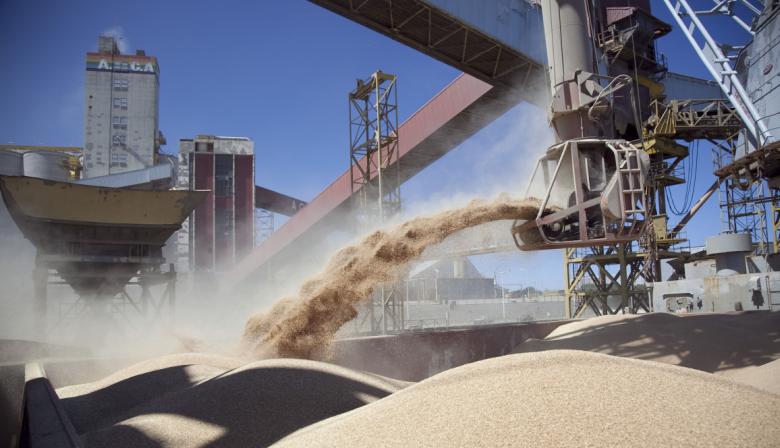
European buyers are advancing purchases of Argentine soybean meal, strengthening demand for the country’s main processed agricultural export and helping its crushing industry gain ground against Brazil. The buying pattern comes as importers prepare for a European rule that will require evidence that food products originate from deforestation-free areas.
Dante Romano, a professor and researcher at the Agribusiness and Food Center of Universidad Austral, told NewsDigitales that Argentine soybean meal was trading at a premium of $6 per tonne over Brazilian meal. He attributed the differential to European buyers seeking supplies before the new requirement takes effect. The unusually firm demand has kept Argentine crushing margins attractive and may increase processors’ need to secure soybeans if exports of by-products remain strong.
The premium is notable because the broader grain market is facing downward price pressure. Argentina’s soybean complex is moving differently, supported by demand for meal rather than by a general rise across agricultural commodities. For European feed buyers, purchasing earlier reduces the risk of supply disruption as documentation requirements tighten. For Argentine exporters, it creates an opportunity to defend or expand market share against Brazilian suppliers.
Crushing plants raise utilization
Argentina crushed 4.25 million tonnes of soybeans in August, according to the Agroindustrial Monitor prepared by the Argentine Oil Industry Chamber and Grain Exporters Center, known as CIARA-CEC. The volume was 1.6% higher than in July and 8.8% above the level recorded a year earlier. Between January and August, plants processed 28.28 million tonnes, an increase of 1.6% year on year.
Stronger oilseed processing pushed utilization of installed crushing capacity above 85%, compared with 74% a year earlier. The rise of more than 10 percentage points is particularly important for the large processing cluster around Greater Rosario, where plant economics depend on maintaining throughput and securing enough raw material to supply export commitments.
Imported soybeans helped sustain operations. Argentina received 644,000 tonnes of soybeans from abroad in August, mainly from Paraguay, equal to 15% of the month’s crush. This flow allows Argentine plants to supplement domestic supplies and use their extensive processing infrastructure more intensively. Continued European demand for meal could therefore increase competition among processors for both locally produced and imported beans.
Oilseed exports support dollar inflows
Sunflower processing also contributed to higher plant use. Crushers handled 506,000 tonnes in August, a record for that period of the year. Processing reached 3.93 million tonnes between January and August, up 22.2% from the same period of 2025.
The broader agricultural export sector generated $3.228 billion in foreign-currency settlements during September, according to CIARA-CEC estimates, 17.3% more than in August. The cumulative total for the first months of 2026 was $22.276 billion. That was 22% below the corresponding period a year earlier but 14% above the historical average for 2008-2025.
The year-on-year comparison is affected by an exceptional policy event in September 2025, when President Javier Milei announced zero export duties and overseas sales reached $7.102 billion in three days. Even with that high base, current soybean meal demand is giving Argentine crushers a commercial advantage. Whether it can be sustained will depend on European purchasing, processors’ access to soybeans and the continuation of competitive crushing margins.