Europe's Leather Industry Consolidates as Weak Demand and Foreign Competition Squeeze Tanners
Europe's leather sector is concentrating as tanners face soft demand, competition from lower-cost producers outside the region and a shrinking domestic hide supply, FashionNetwork reported. A sanitary crisis, drought and falling meat consumption have cut the flow of raw material. In France, livestock farmers now average 50 to 60 years old with few successors.
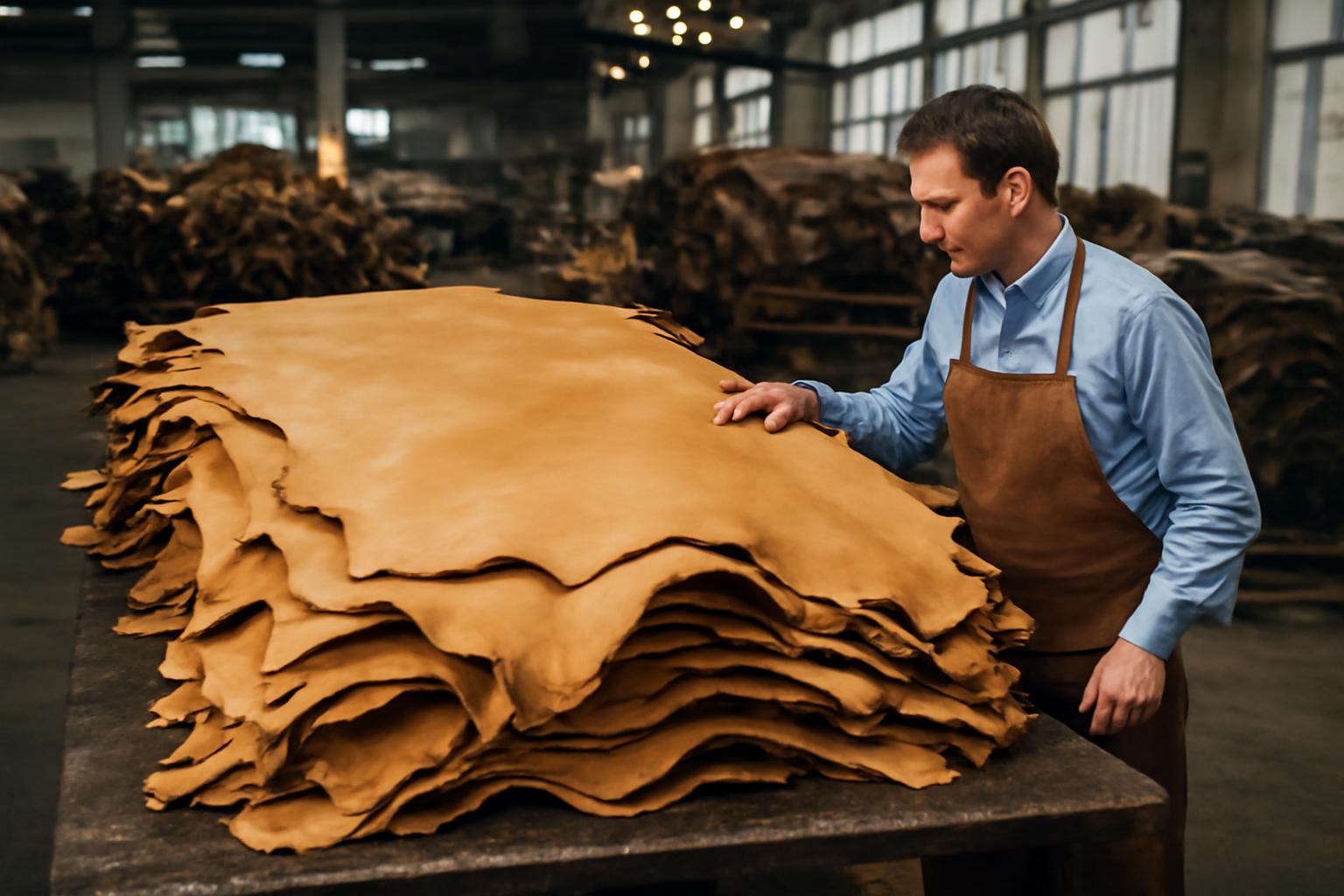
Europe's leather industry is consolidating as tanners face weak demand, competition from lower-cost producers outside the region and a shrinking supply of domestic raw material, FashionNetwork reported. The publication describes a wave of concentration that runs against conditions on the ground in Europe, where a sanitary crisis, drought and falling meat consumption driven by higher prices have cut into the flow of hides.
Concentration against a weakening base
Tanning is a capital-intensive business. Chemical inputs, water treatment, energy and environmental compliance carry fixed costs that fall more heavily on small plants than on large ones. When the volume of raw hides declines and orders from footwear, leather goods and automotive customers are uneven, the smallest operators are the first to close or be absorbed. FashionNetwork frames the current consolidation as a contrast with the European situation rather than as the product of expanding demand. Concentration driven by contraction leaves the survivors larger, but it also removes capacity that is difficult to rebuild once the plants and the skilled labour are gone.
Hides follow the meat market
Hides are a by-product of meat production. The quantity and quality available to European tanners are set by how many animals go to slaughter, not by how much leather brands want to buy. That link sits at the centre of the industry's problem in this cycle: FashionNetwork attributes reduced consumption to higher meat prices, and points to the sanitary crisis and drought as additional pressure on herds. Fewer cattle processed means fewer hides, and a narrower raw material base leaves tanners competing for a shrinking pool of domestic supply.
France: the succession problem
The most concrete figure in the report concerns French livestock farming. The average age of farmers has reached 50 to 60 years, according to FashionNetwork, and the shortage of successors is a recognised concern. Worsening profitability is discouraging generational turnover: when returns on a herd are thin, younger entrants have little reason to take over an operation, and exits at retirement are not replaced. Unlike a cyclical downturn, that loss of capacity does not reverse when prices recover.
- Sanitary crisis affecting herds
- Drought
- Higher meat prices and falling consumption
- Average age of French livestock farmers at 50 to 60 years, with few successors
- Competition from lower-cost producers outside Europe
Competition from outside Europe
European tanners are also losing ground to suppliers outside the region that operate at lower cost, FashionNetwork reports. The gap is structural rather than temporary: labour, energy and environmental compliance are more expensive in Europe, and producers in countries with large cattle herds can offer hides and finished leather at prices European plants cannot match on commodity-grade products. That pushes European tanneries toward the upper end of the market, where traceability, environmental documentation and consistency of finish still command a premium, and where luxury leather goods, high-end footwear and automotive interiors remain the core customer base.
For processors and buyers the implication is a shorter list of larger European suppliers, drawing on a raw material stream tied to a livestock sector contracting for reasons outside the leather trade's control. Brands sourcing European-origin leather face less room to switch on price and stronger competition for hides of consistent quality. For investors, consolidation is the main available route to margin, since neither hide supply nor volume demand is set to expand on current trends.