EuroChem’s Lifosa halts 1 million-tonne phosphate fertilizer plant in Lithuania
Lifosa has suspended production at its 1 million-tonne-per-year phosphate fertilizer plant in Lithuania as record sulfur costs undermine operating economics. The shutdown removes DAP, MAP and NPS capacity from an already constrained market and has added upward pressure to European DAP prices.
Record sulfur costs stop production
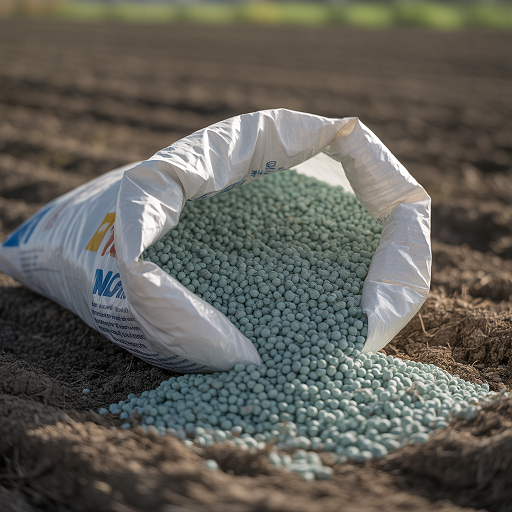
Lifosa, the Lithuanian fertilizer producer owned by Russia’s EuroChem group, has stopped operations at its phosphate fertilizer plant, according to Argus, as reported by zol.ru. The facility has annual capacity of 1 million tonnes of diammonium phosphate, monoammonium phosphate and nitrogen-phosphorus-sulfur fertilizers, commonly known as DAP, MAP and NPS.
The immediate cause is the rising cost of sulfur, an essential feedstock for phosphate fertilizer production. Around 80% of the sulfur used by the plant is converted into sulfuric acid for its manufacturing process. With the raw material reaching record prices, production at Lifosa has become economically unsustainable.
Supply disruption drives sulfur prices higher
According to the source report, the global sulfur market is experiencing an acute shortage following the blockade of the Strait of Hormuz, the suspension of exports from the Middle East and a Russian embargo that remains in effect until the end of the year. Restrictions imposed by China have added further pressure to available supply.
By the end of July, sulfur prices had climbed to $800–1,000 per tonne, while prices in China reached $1,300 per tonne. S&P Global estimates that phosphate fertilizer production is economically unviable at those levels. The pressure is not limited to Lithuania: US producer Mosaic and Canada’s Nutrien have already reduced capacity, while Morocco’s OCP has cut capacity by 50%, according to zol.ru.
The combination of restricted sulfur availability and lower fertilizer output links the upstream and downstream markets directly. Phosphate producers need sulfuric acid to process phosphate rock, so a prolonged shortage can force plants to reduce utilization even when demand for finished fertilizer remains present.
European DAP prices rise despite weak demand
Lifosa’s withdrawal has triggered another increase in finished-product prices. European DAP prices rose during the previous week despite weak demand, the report said. The loss of a plant capable of producing 1 million tonnes annually narrows regional availability at a time when several large international suppliers are also limiting output.
The stoppage is Lifosa’s second in recent years. In 2023, the plant halted operations because sanctions complicated management and logistics, resulting in monthly losses of €3 million. Production resumed only in June 2024, leaving the company exposed once again to the financial and operational consequences of idled capacity.
Artem Suvorov, head of projects at Strategy Partners, told Kommersant that the sulfur shortage would raise production costs worldwide. If high prices persist, individual plants may have to lower utilization further, although market participants have begun searching for alternative supply channels. Experts cited in the report see normalized shipments from the Middle East as the fundamental condition for resolving the shortage.